
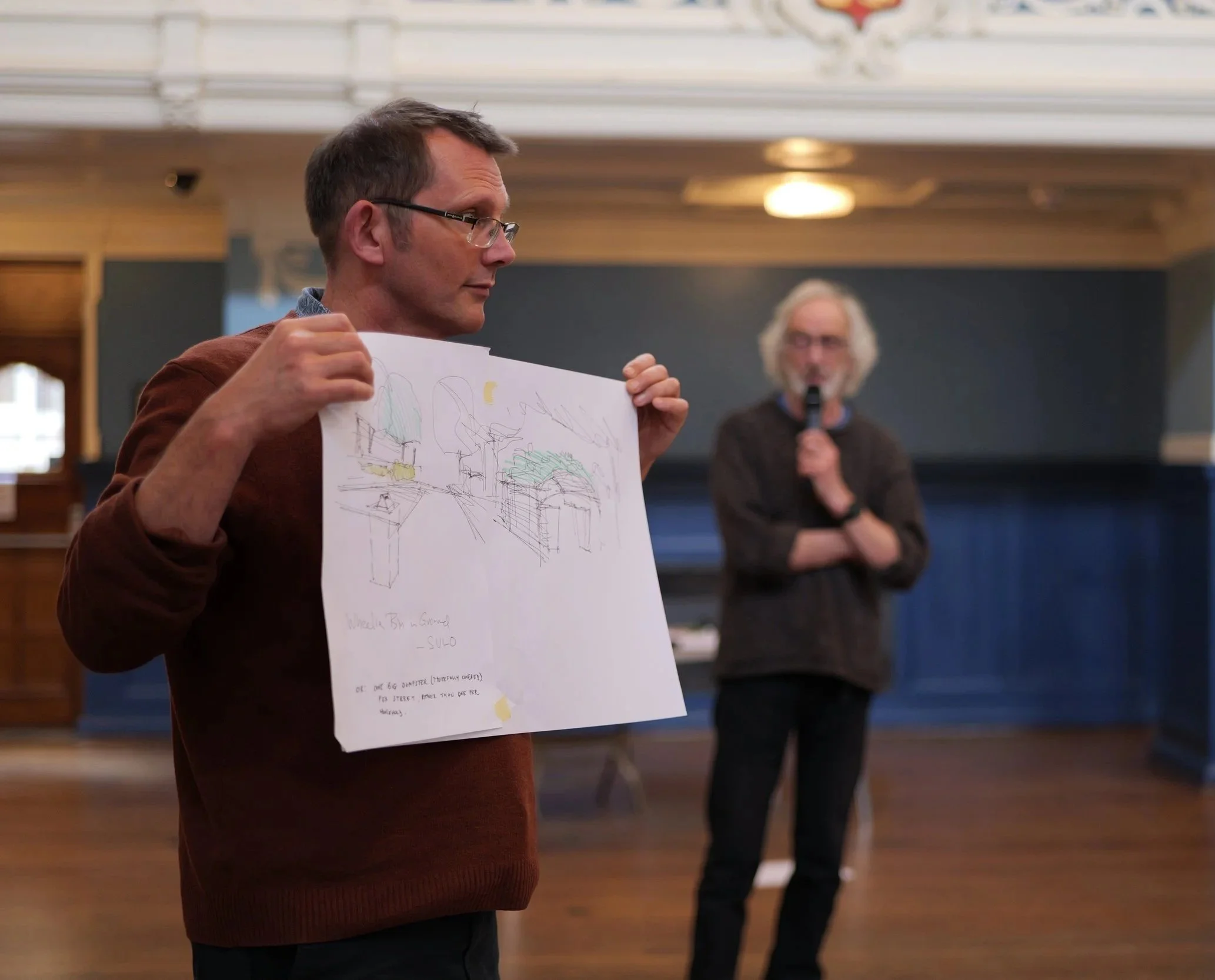
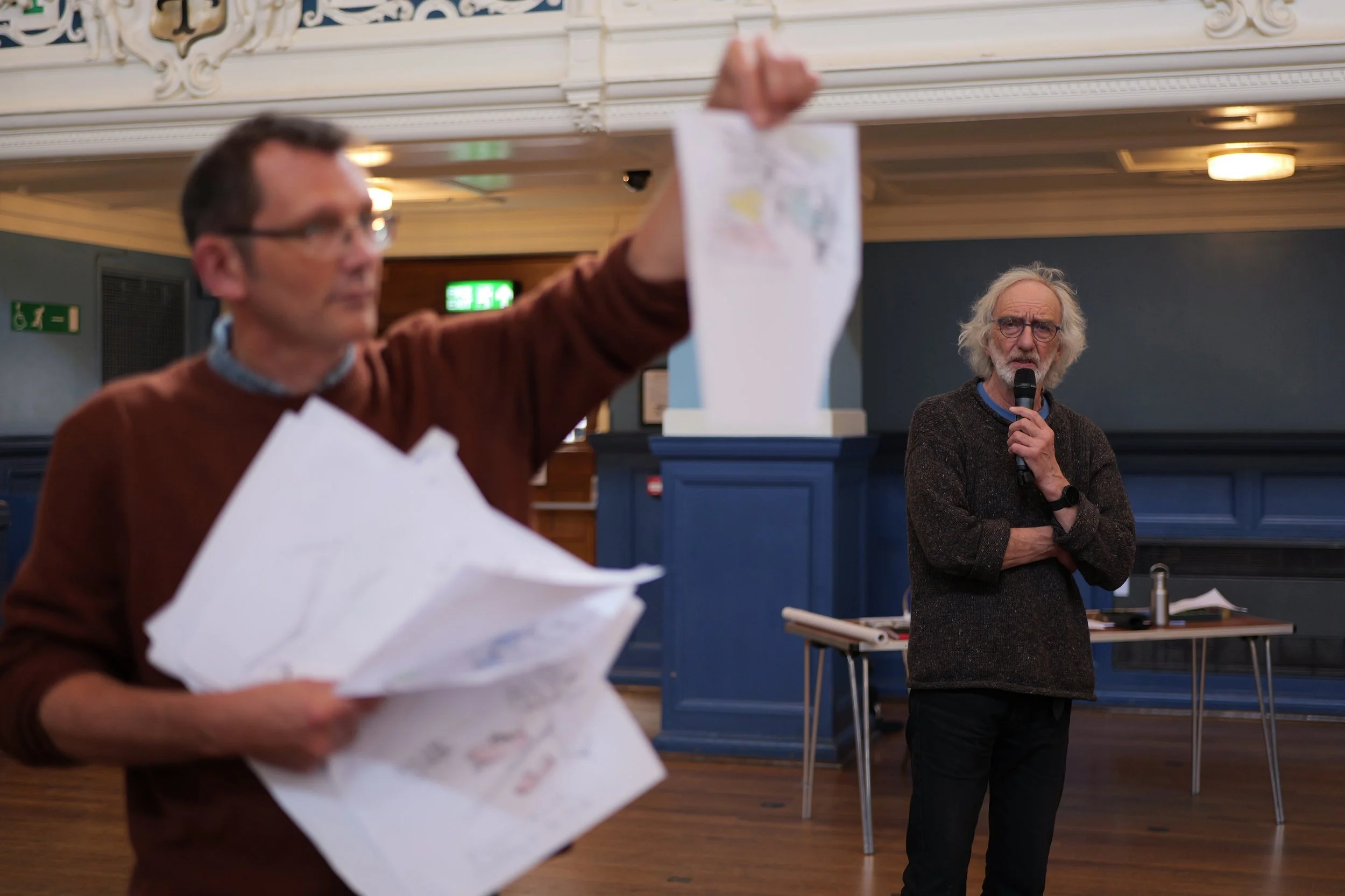
Image 1: Rob Hopkins (Left) and Richard Carman (Right) presenting a sketched out interpretation of people’s vision. Clicked by: Keerthi Raj
About Workshop 2
On Thursday, 16th April, over 60 people from across Oxfordshire gathered in Oxford Town Hall to co-author a vision of thriving streets and neighbourhoods.
Futurist and time traveller Rob Hopkins ignited imaginations and helped participants see past the constraints and limitations that so often become blockers to expressing our deepest longing for our places. Time to dream and imagine together is a vital muscle to flex for unlocking possibilities even where policy, political or funding constraints exist.
If workshop 1 named what people loved about their places - what they wanted more of, less of and what they wanted to keep away - workshop 2, with the help of collective imagination, moved into a different register altogether. It was so much more about imagining a different kind of life within the street and neighbourhood, and there was a tangible shift in emotional vocabulary. Belonging. Joy. Rest. Play. Being a good ancestor. Less about better street infrastructure and much more about what it would feel like to live in them.
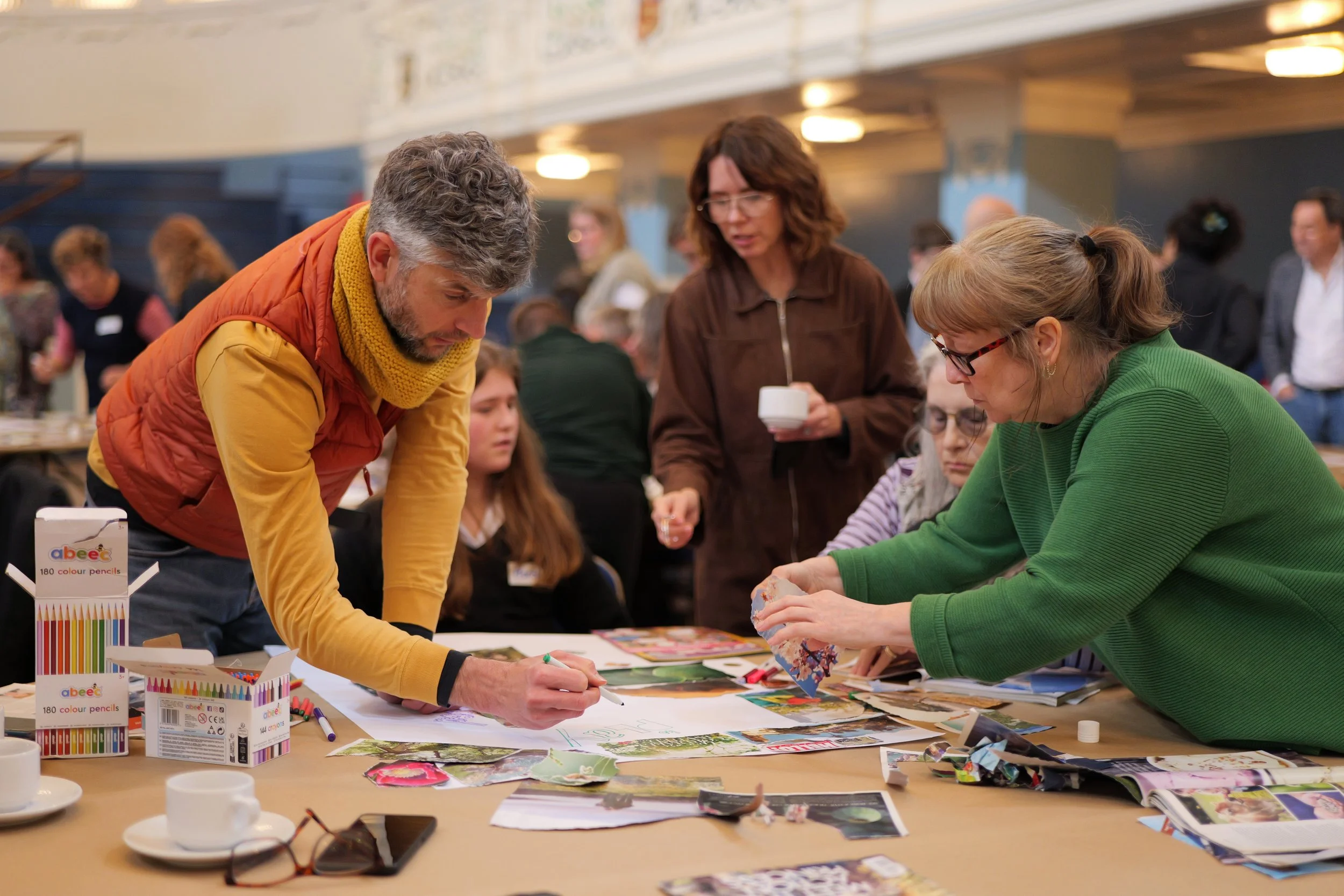
People collaged together and artist and live illustrator Richard Carman worked with groups to develop their ideas on paper - sketching their imaginings independently. All ideas were posted to a gallery space, and comments were invited.
See our video of the day below for a window in.
Glimpses of Our Time Travel
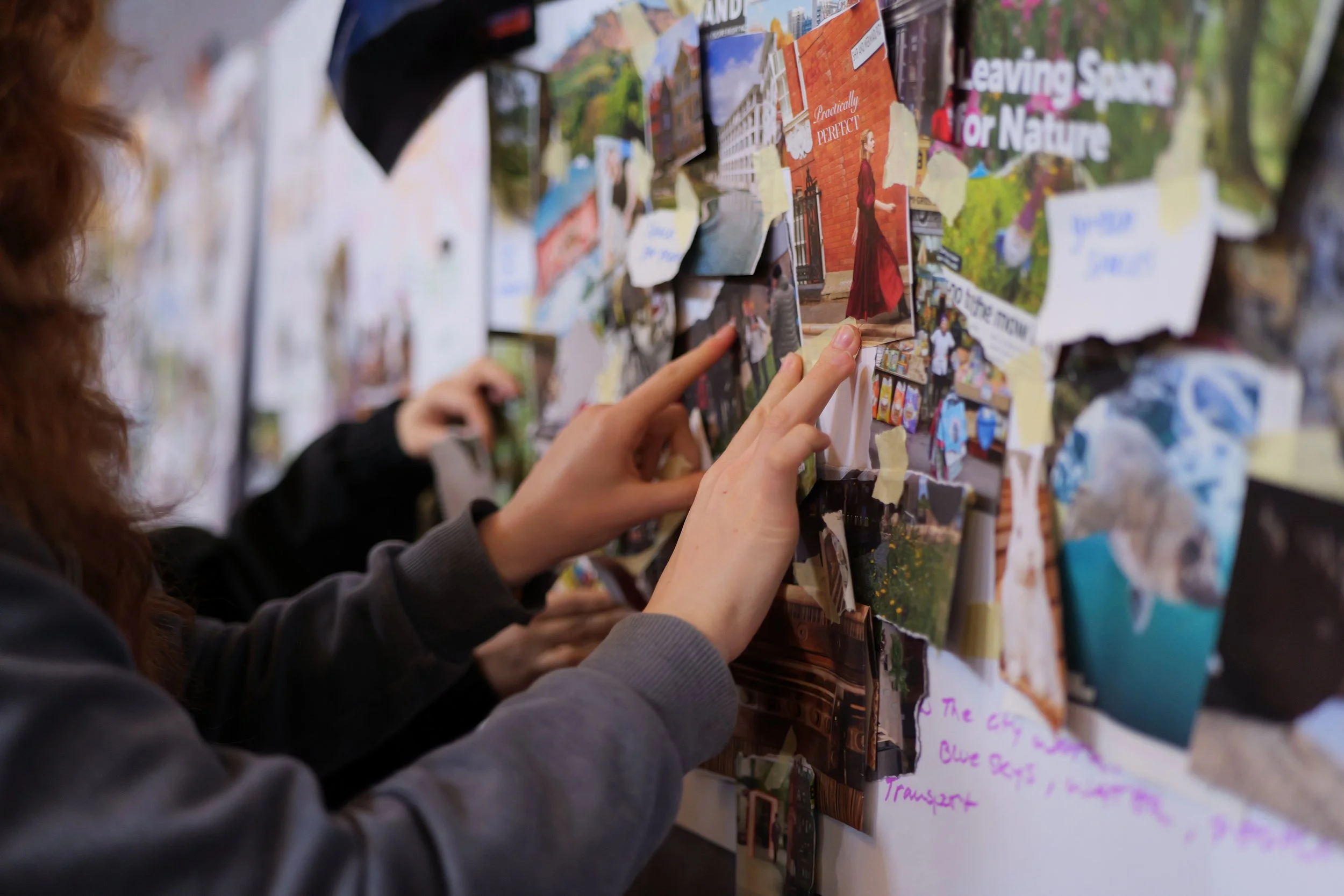
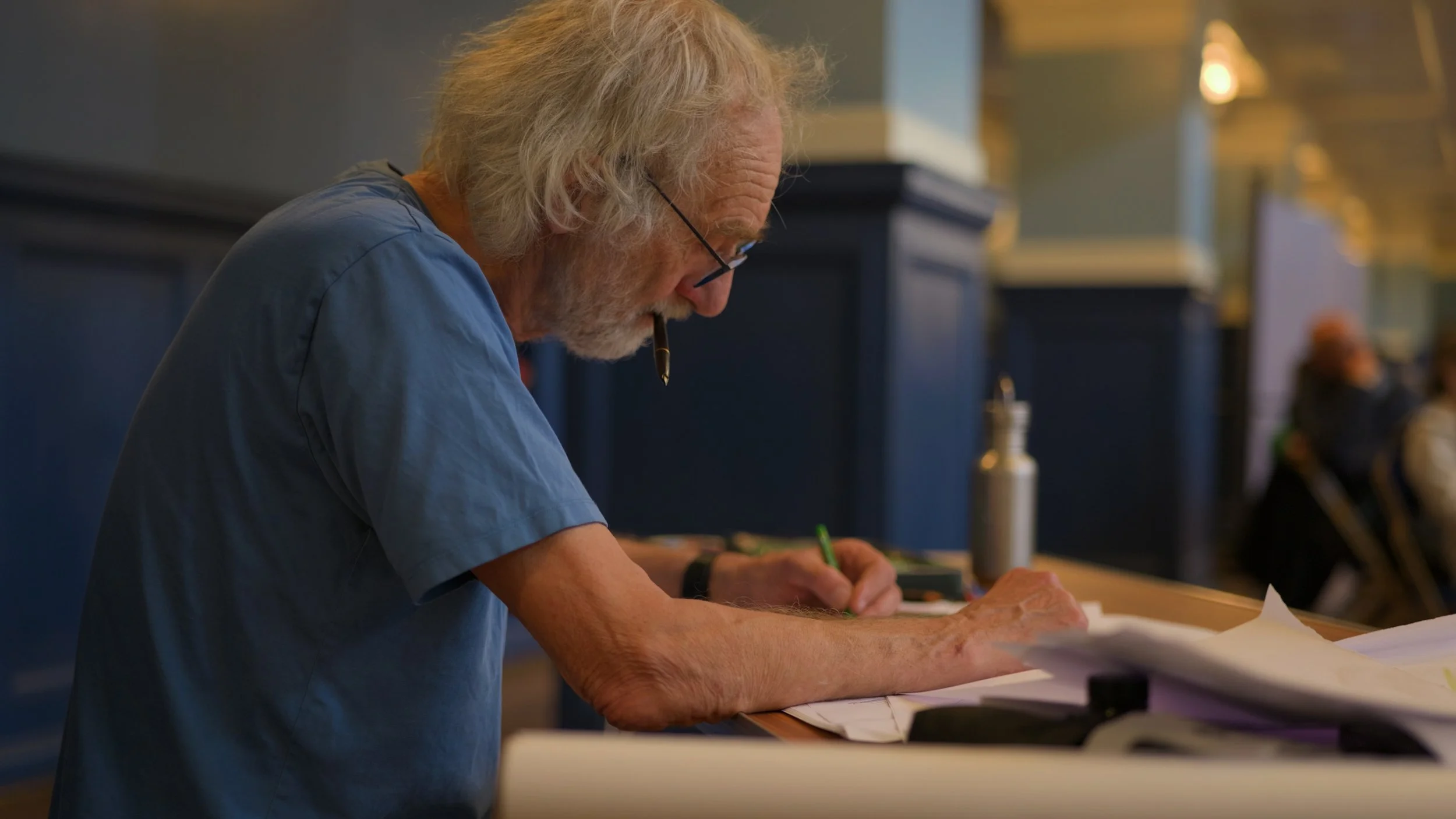
Since Workshop 1, considerable work has been underway to refine the themes, drawing on data from both workshops. The original clusters named what people talked about. The revised themes name what people want: values-led descriptors rooted in how Oxfordshire residents described what good streets and neighbourhoods would actually feel like to live in.
Take 'Nature and Environment'. In Workshop 1 this captured a strong and consistent signals about people valuing trees, green space, wildlife, the sound of birds. 'Living with Nature', the new theme descriptor, now holds that same data but reaches further, reflecting participants' sense that nature isn't a backdrop to street life, it's part of it. It encompasses urban greening, biodiversity, urban food growing and streets designed to support life beyond the human.
'Social Cohesion' has become 'Social Connection and Belonging'. Where cohesion describes a social condition, connection and belonging describe something people feel, or don't. The shift picks up the texture of what participants said: knowing your neighbours, children being out on the street, the street party where everyone brought food from somewhere different. It also draws in the question of who gets to feel they belong, and who doesn't.
'Healthy Lives' didn't map from a single WS1 cluster. It emerged from participant data that ran across multiple themes and includes WS2: concerns about air quality, the value of being able to move actively and freely, the strong voice around children's independence, and the relationship between street design and physical and mental health. Pulling these together into one theme reflects how participants experienced them, as deeply connected, not separate.
These themes have been informed and shaped entirely by workshop participation, with LLM-assisted clustering doing the hard work of early grouping and the ever-important human analysis to ensure integrity and add the values-led frame.
There's more to say about all six themes, and we'll share that in full as the project develops. In the meantime, here’s how they’re shaping up visually with visual snapshots from the group collages.
The Future We Imagine
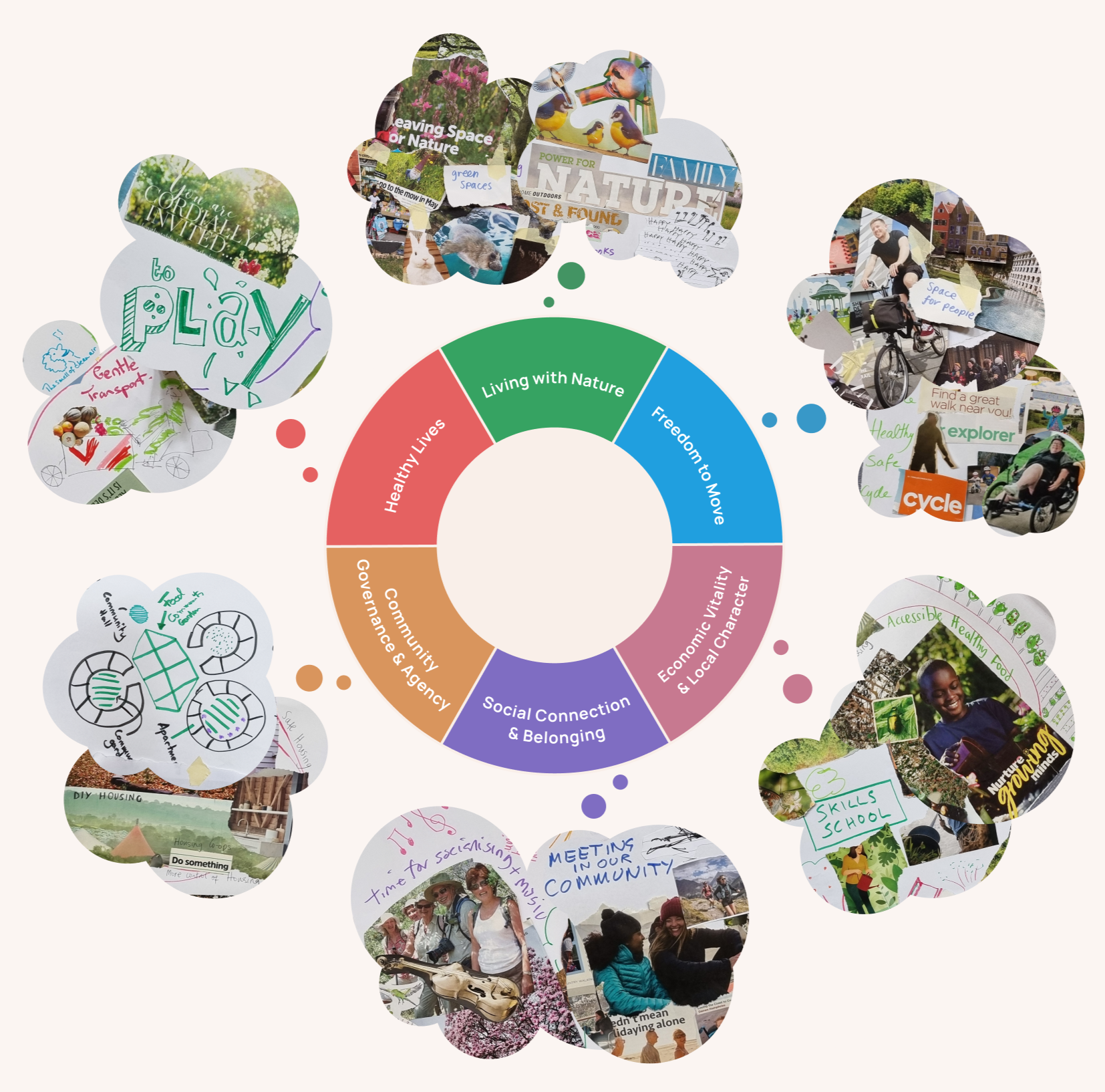
Image 6: A wheel representing the 6 themes that have emerged from workshops 1 and 2, with snapshots of collages created by people in workshop 2
Since Workshop 1, considerable work has been underway to refine the themes, drawing on data from both workshops. The original clusters named what people talked about. The revised themes name what people want: values-led descriptors rooted in how Oxfordshire residents described what good streets and neighbourhoods would actually feel like to live in.
Take 'Nature and Environment'. In Workshop 1 this captured a strong and consistent signals about people valuing trees, green space, wildlife, the sound of birds. 'Living with Nature', the new theme descriptor, now holds that same data but reaches further, reflecting participants' sense that nature isn't a backdrop to street life, it's part of it. It encompasses urban greening, biodiversity, urban food growing and streets designed to support life beyond the human.
'Social Cohesion' has become 'Social Connection and Belonging'. Where cohesion describes a social condition, connection and belonging describe something people feel, or don't. The shift picks up the texture of what participants said: knowing your neighbours, children being out on the street, the street party where everyone brought food from somewhere different. It also draws in the question of who gets to feel they belong, and who doesn't.
'Healthy Lives' didn't map from a single WS1 cluster. It emerged from participant data that ran across multiple themes and includes WS2: concerns about air quality, the value of being able to move actively and freely, the strong voice around children's independence, and the relationship between street design and physical and mental health. Pulling these together into one theme reflects how participants experienced them, as deeply connected, not separate.
These themes have been informed and shaped entirely by workshop participation, with LLM-assisted clustering doing the hard work of early grouping and the ever-important human analysis to ensure integrity and add the values-led frame.
There's more to say about all six themes, and we'll share that in full as the project develops. In the meantime, here’s how they’re shaping up visually with visual snapshots from the group collages.
What if our streets and neighbourhoods worked for everyone?
Nearly 200 'What If' questions were generated by 65 participants in Workshop 2, each responding to a single core question: "What if streets and neighbourhoods in Oxfordshire worked for everyone?"
In groups, we walked the streets of central Oxford to generate them, thinking across policy, funding, governance, design, collaboration and ways of living. Each 'What If' an idea of possibility: what we'd like to see if places worked for everyone.
Below is an early view of how those questions sorted across the six themes. The sorting continues to evolve as our analysis deepens, so think of this as a window into the work in progress rather than a final picture. Pick a theme to explore.