
Belonging. Joy. Rest. And hover shoes.
On Thursday 16th April over 60 people gathered in Oxford Town Hall for Oxfordshire's inaugural time travel experience - envisioning thriving streets and neighbourhoods for the county. We say inaugural because since then a request has come in for a time-travel portal but we’ll come back to that.
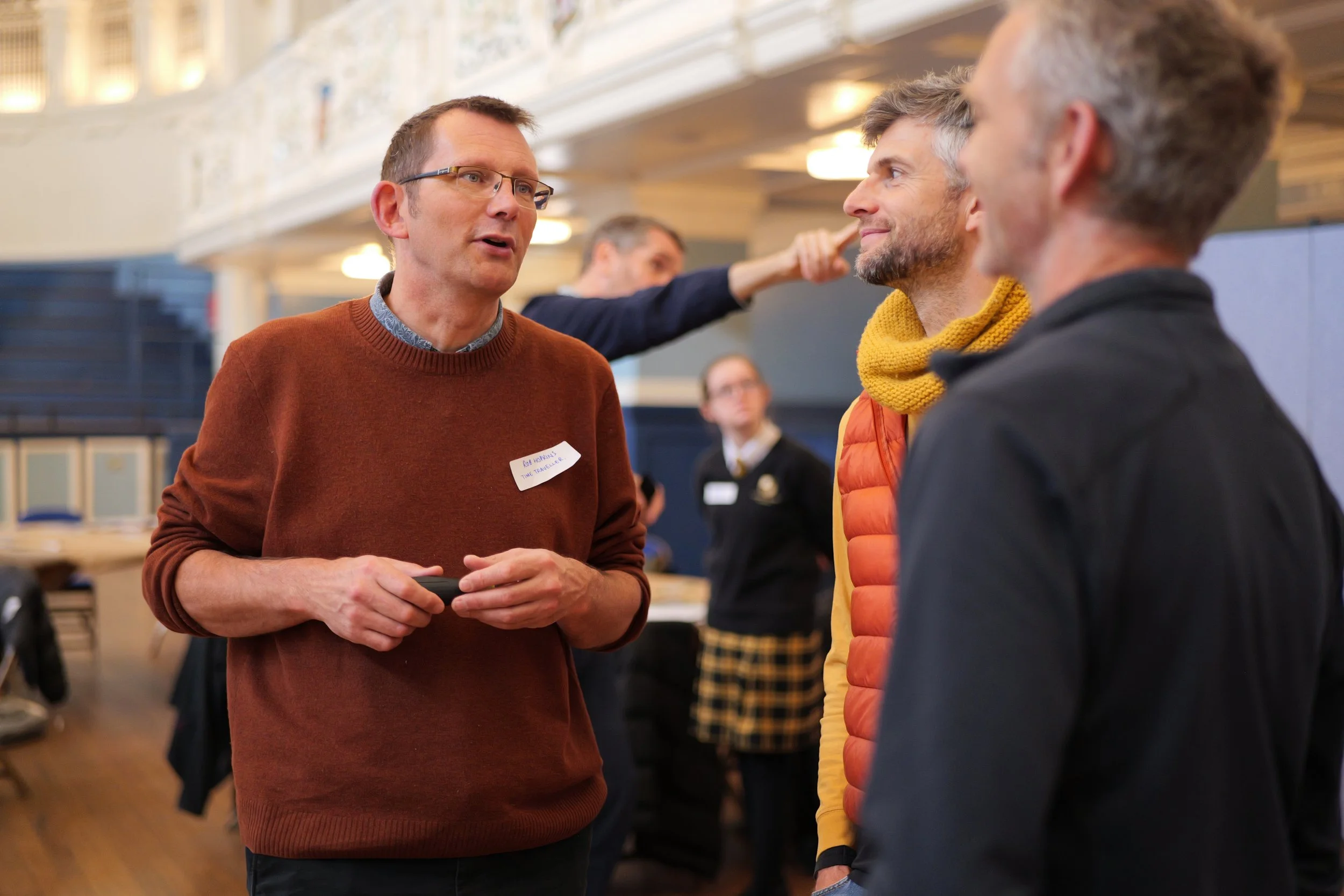
Futurist and time traveller Rob Hopkins ignited imaginations and helped participants see past the constraints and limitations that so often become blockers to expressing our deepest longing for our places. Time to dream and imagine together is a vital muscle to flex for unlocking possibility even where policy, political or funding constraints exist.
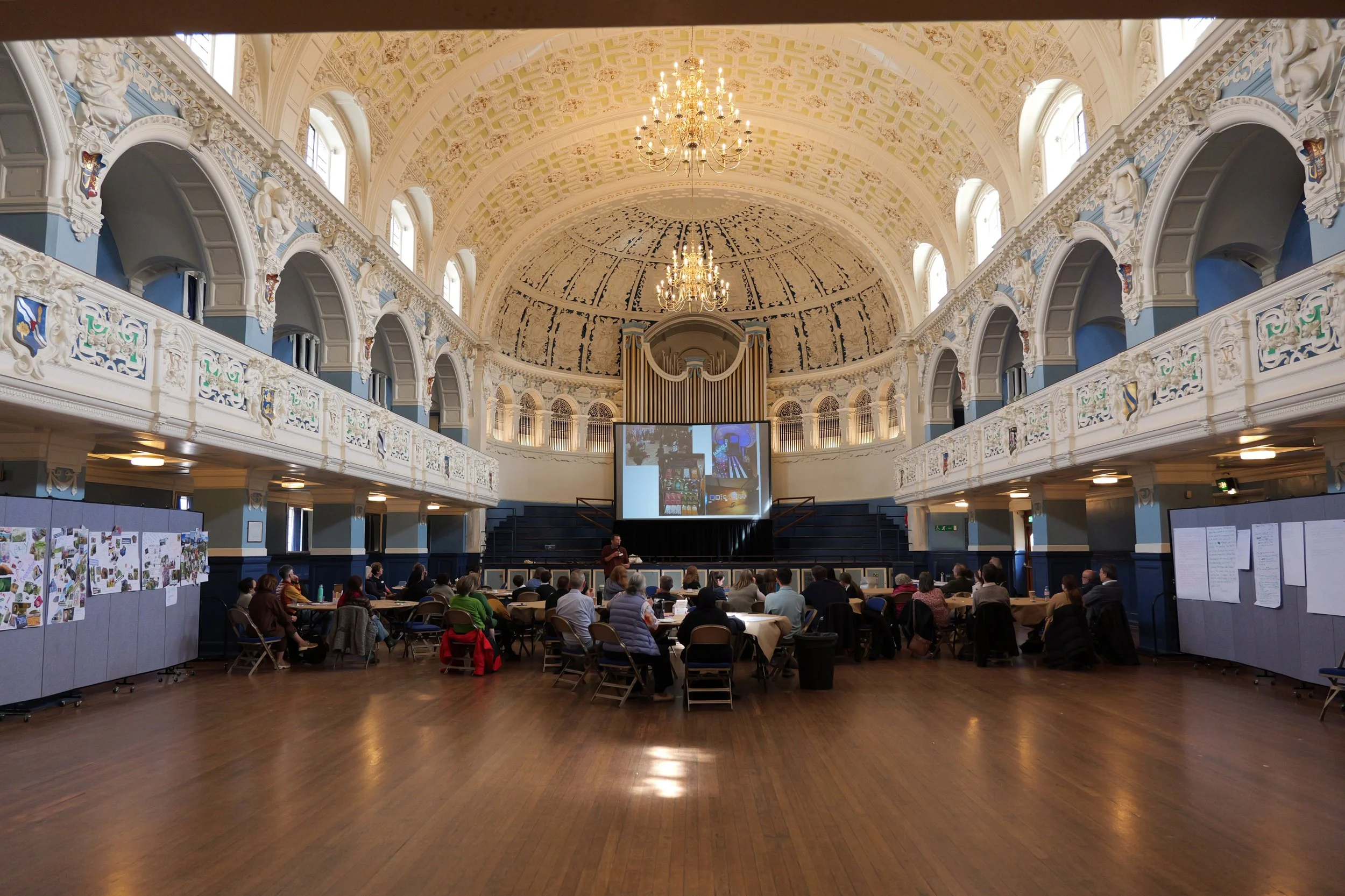
Oxford Town Hall, a place of both tradition and radical thinking on the 16th April.
Photo: Keerthi Raj
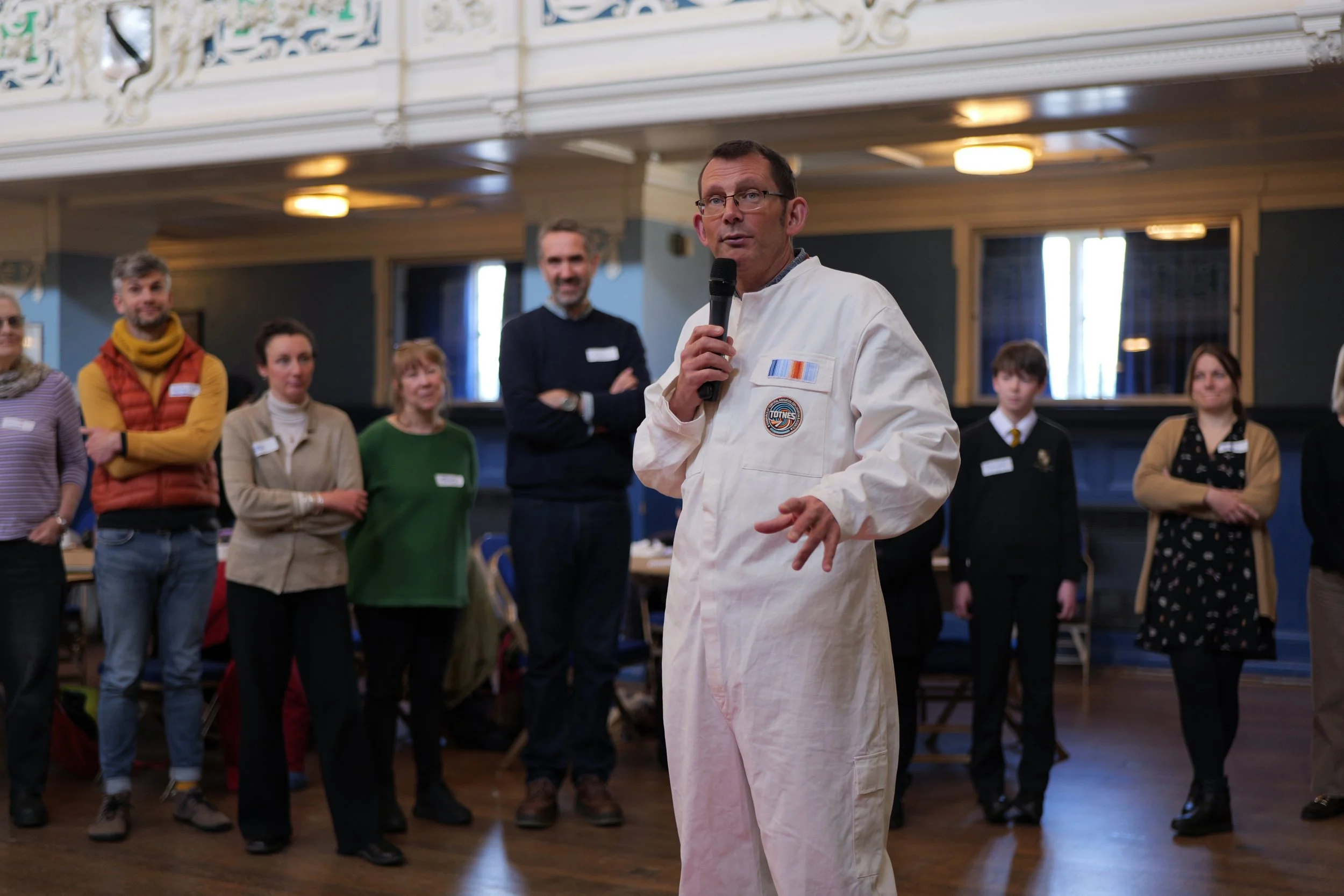
Rob Hopkins. Suited and ready for launch.
Photo: Keerthi Raj
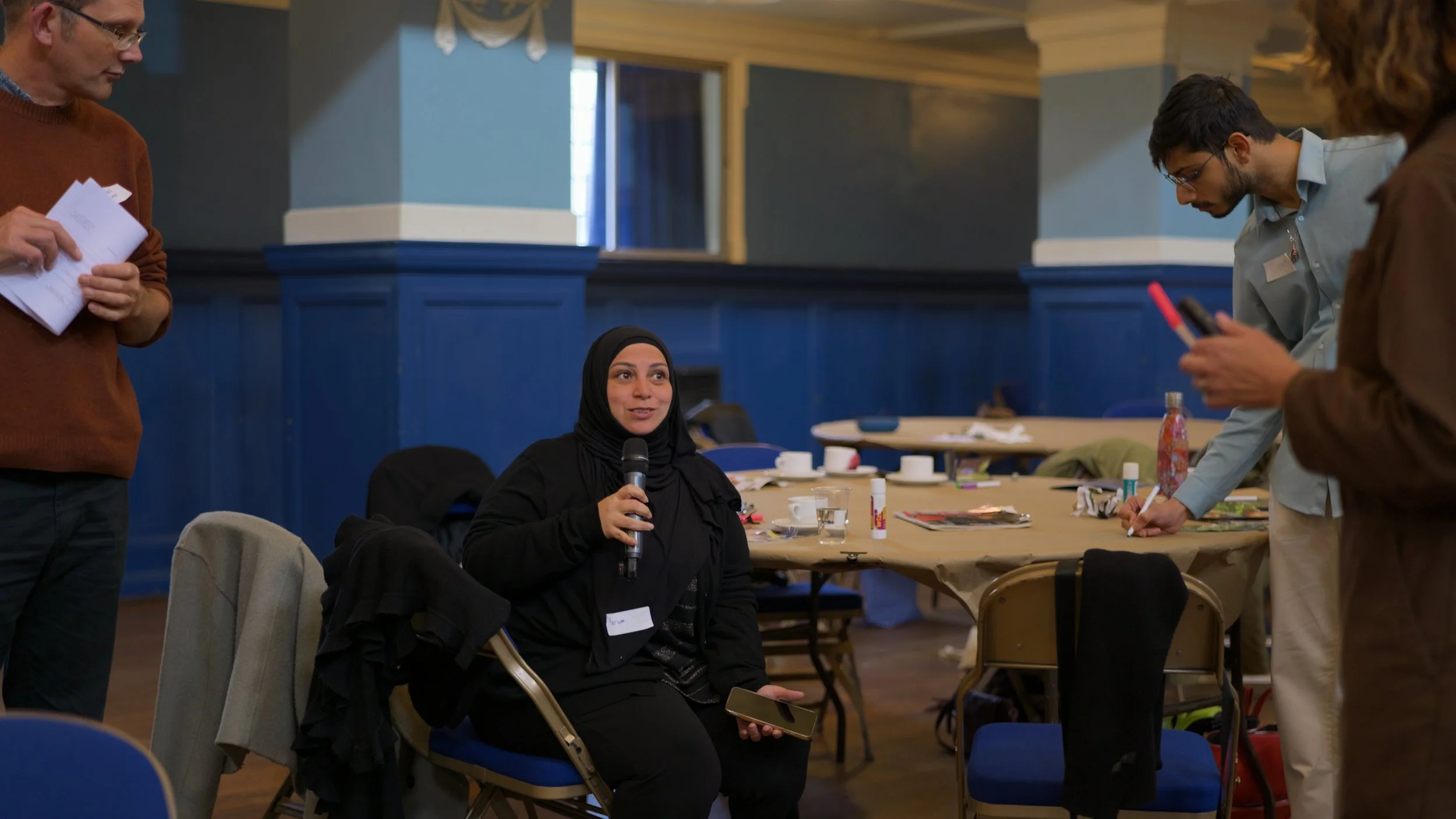
The room brought together a broad mix - residents, business owners, secondary school students, community leaders, and CEOs. Year 8 Geography pupils from Chipping Norton School (who travelled down on the S3 bus no less!), alongside members of Integrate Community CIC, Makespace Oxfordshire, Community First Oxfordshire , CPRE Oxfordshire and the Low Carbon Hub among others. People joined from Abingdon, Bicester, Blackbird Leys, Chipping Norton, East Oxford, Henley, Hook Norton, Littlemore, Thame, Wallingford, Wantage and more. There’s a lot of interest in this work outside of Oxfordshire and Design Futures students from the Royal College of Art in London even managed to bag tickets due to last minute cancellations.
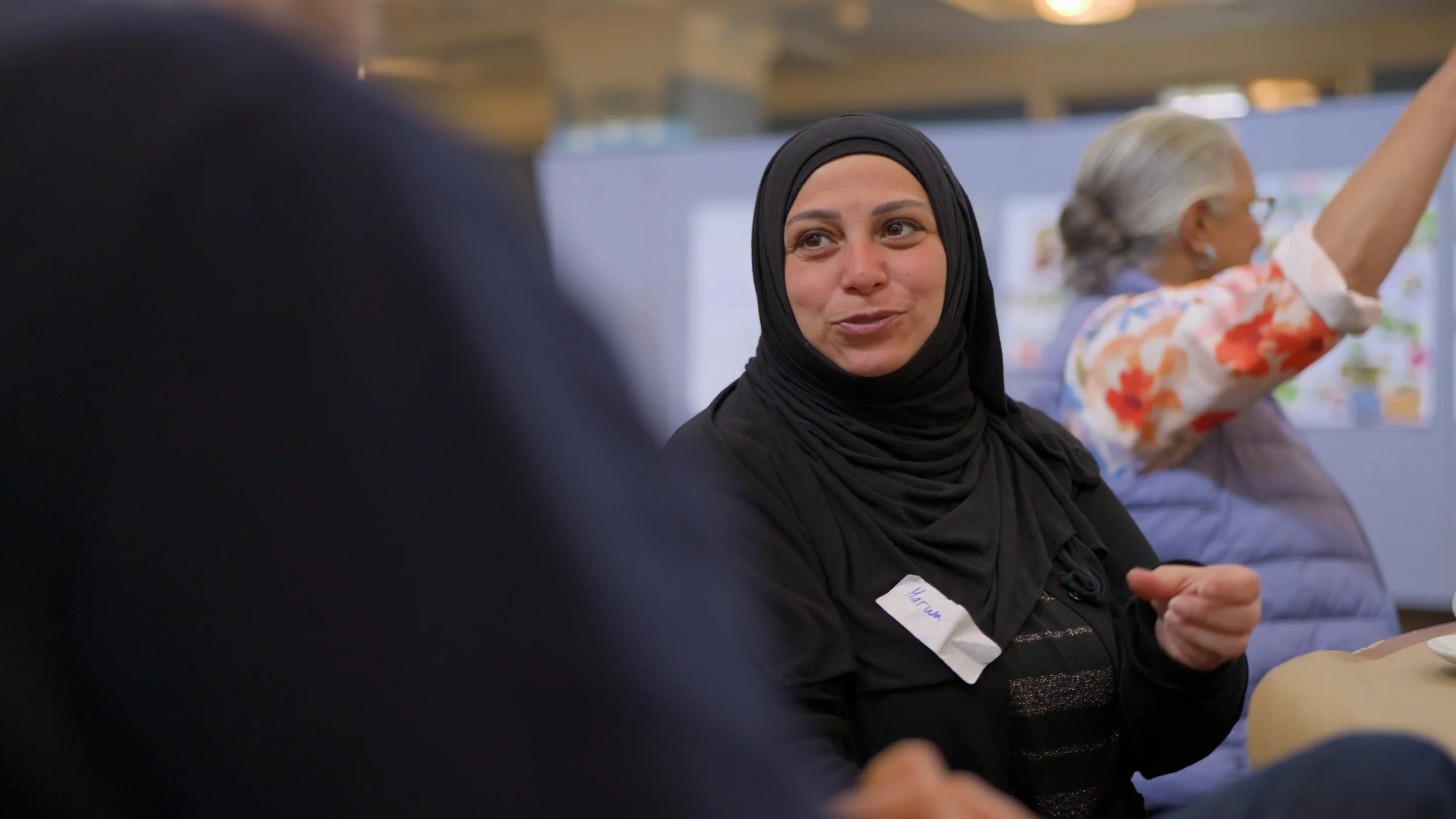
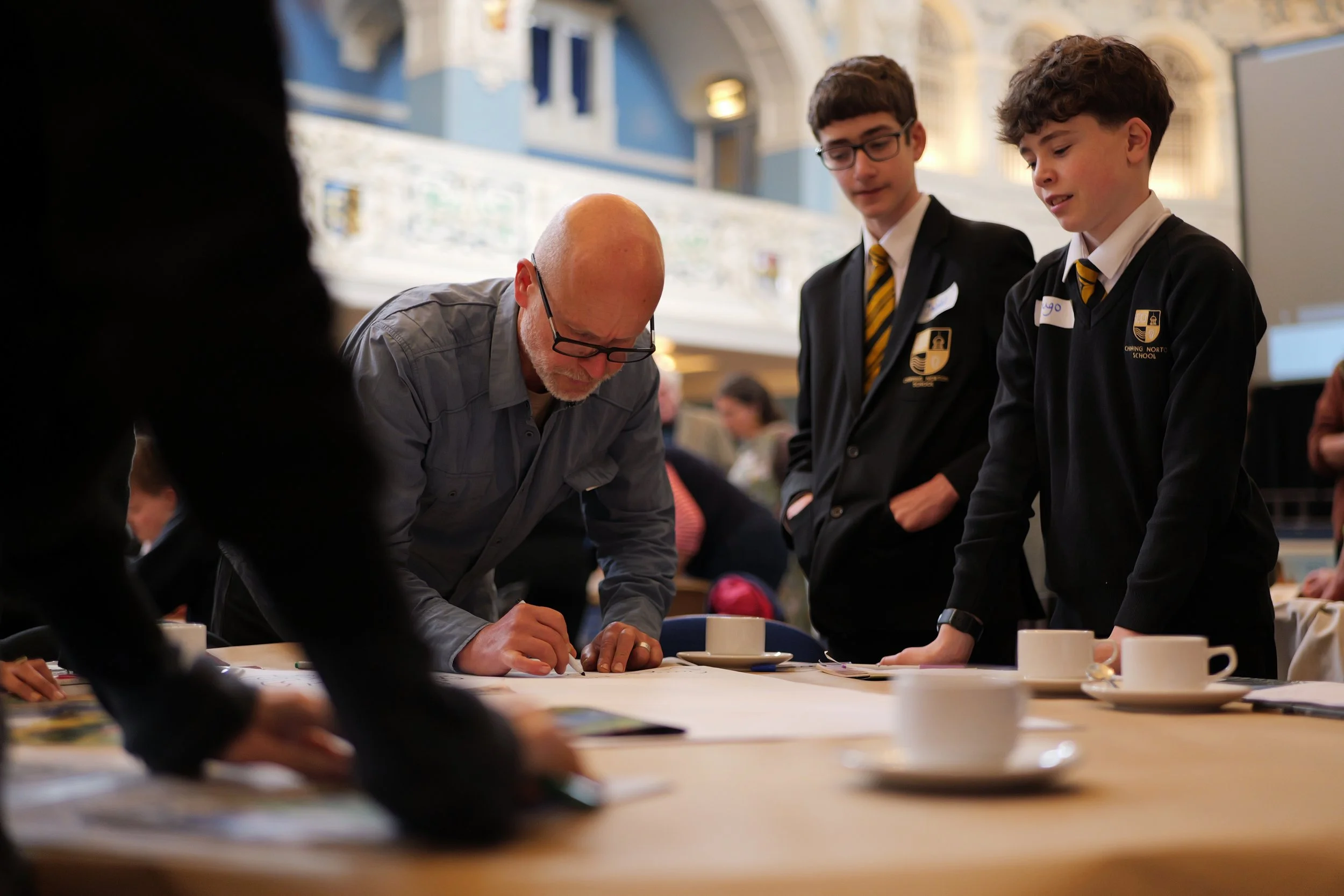
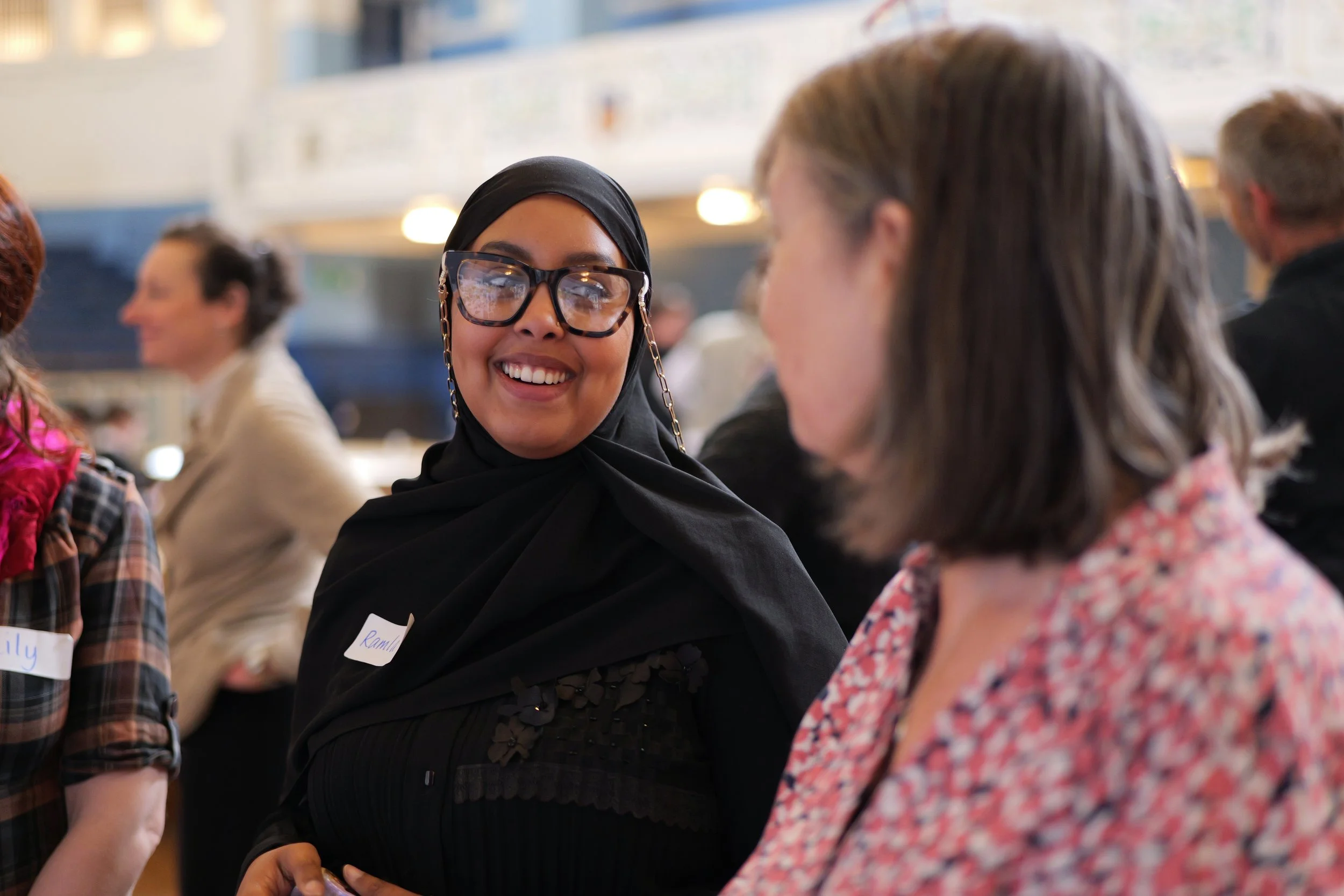
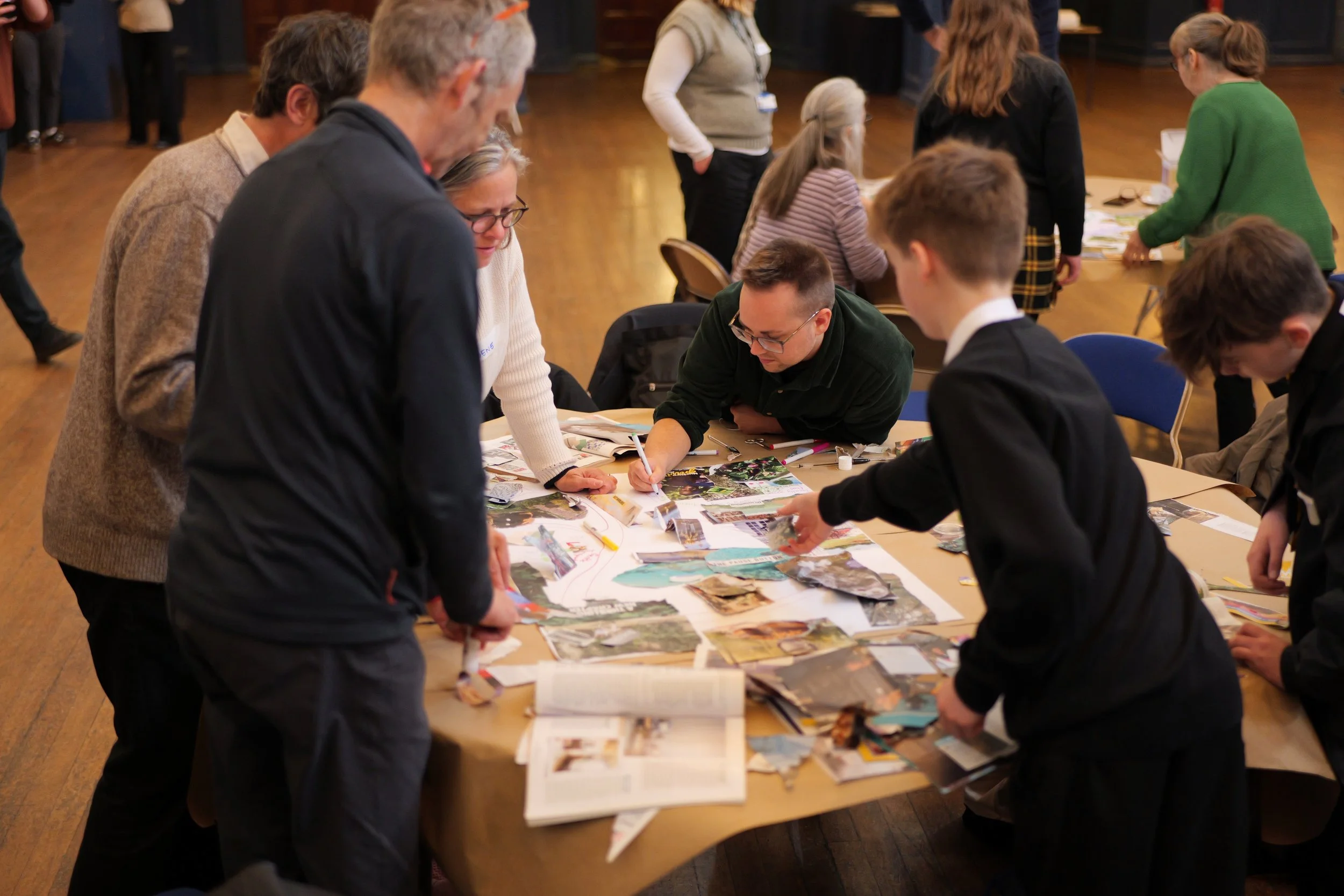
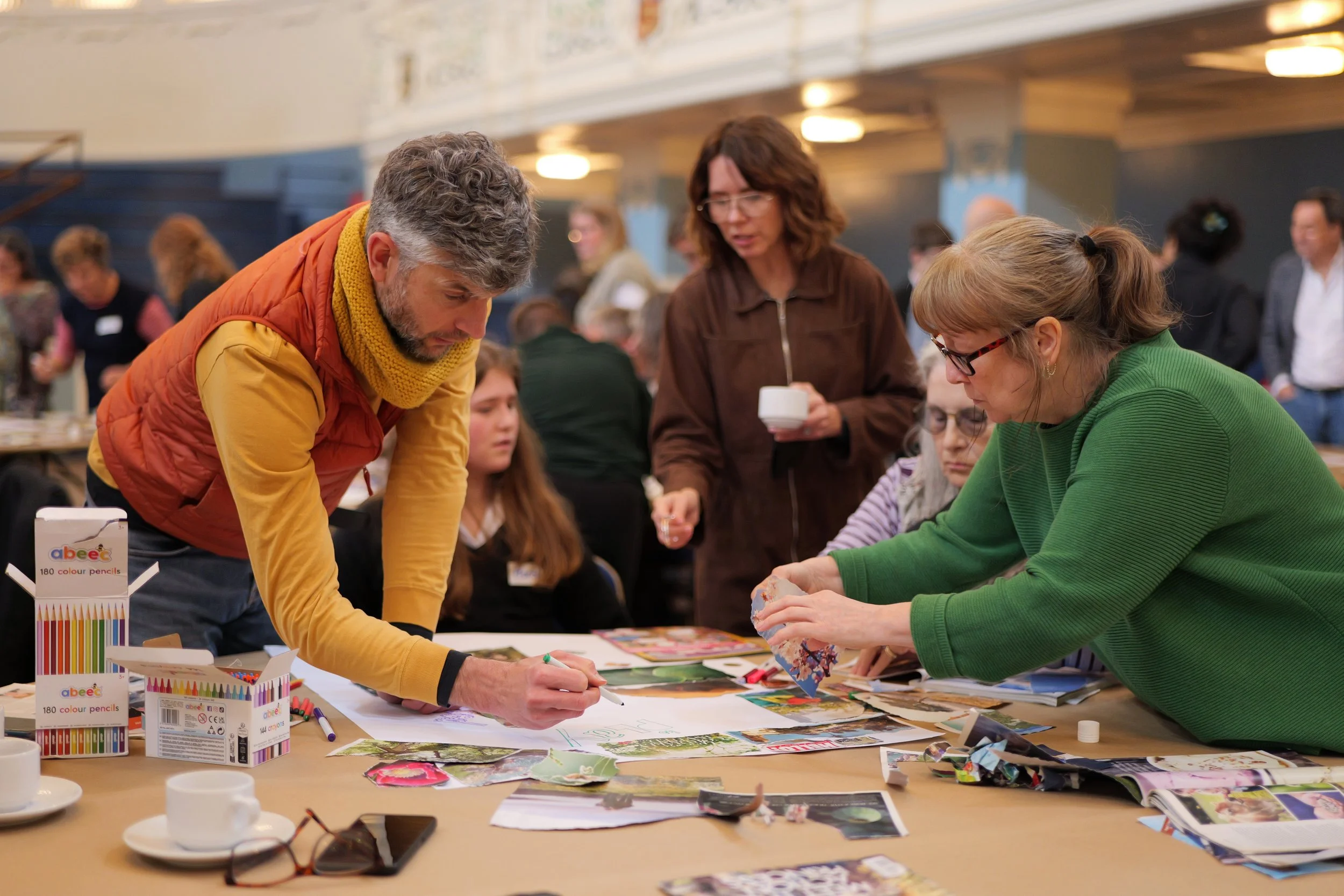
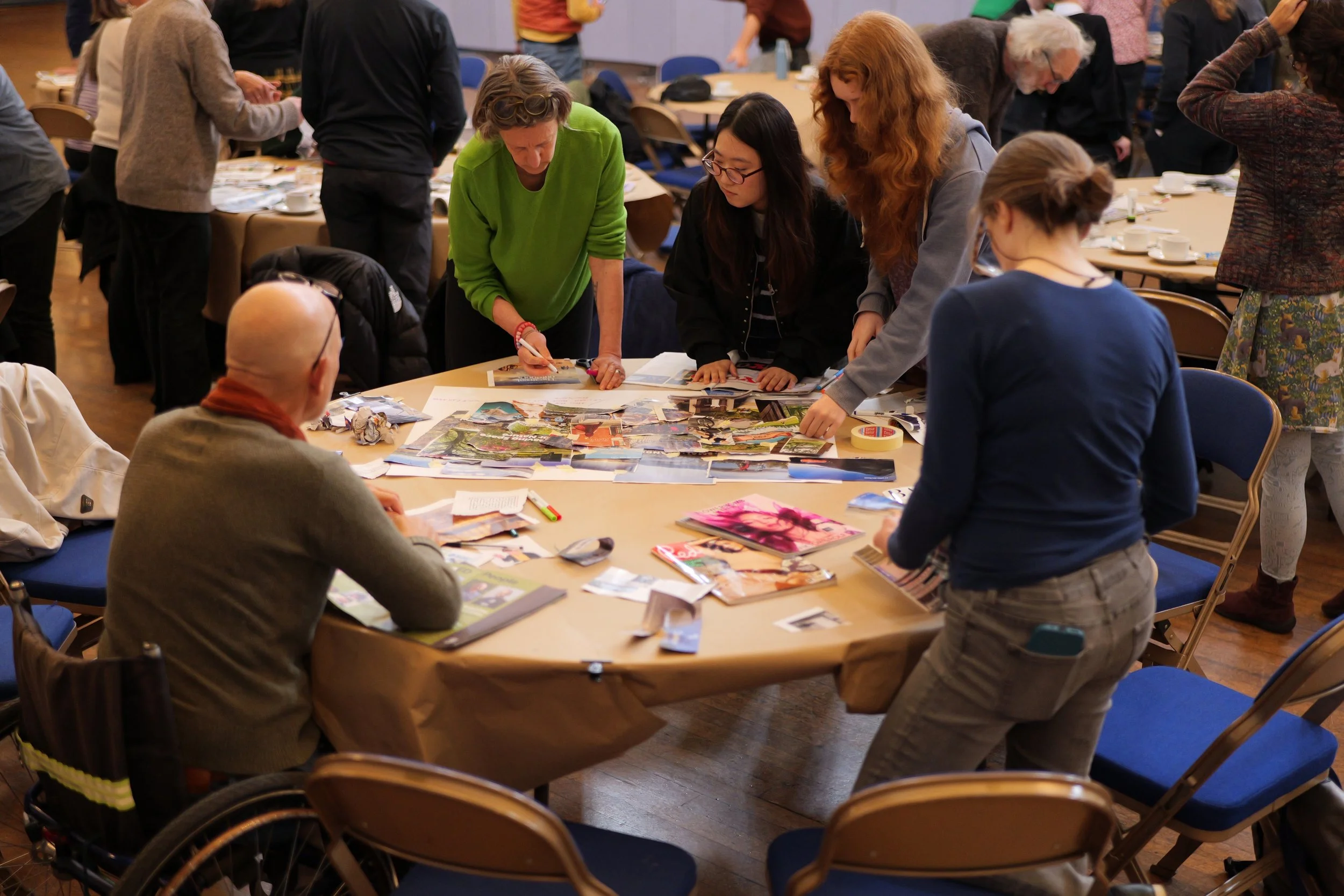
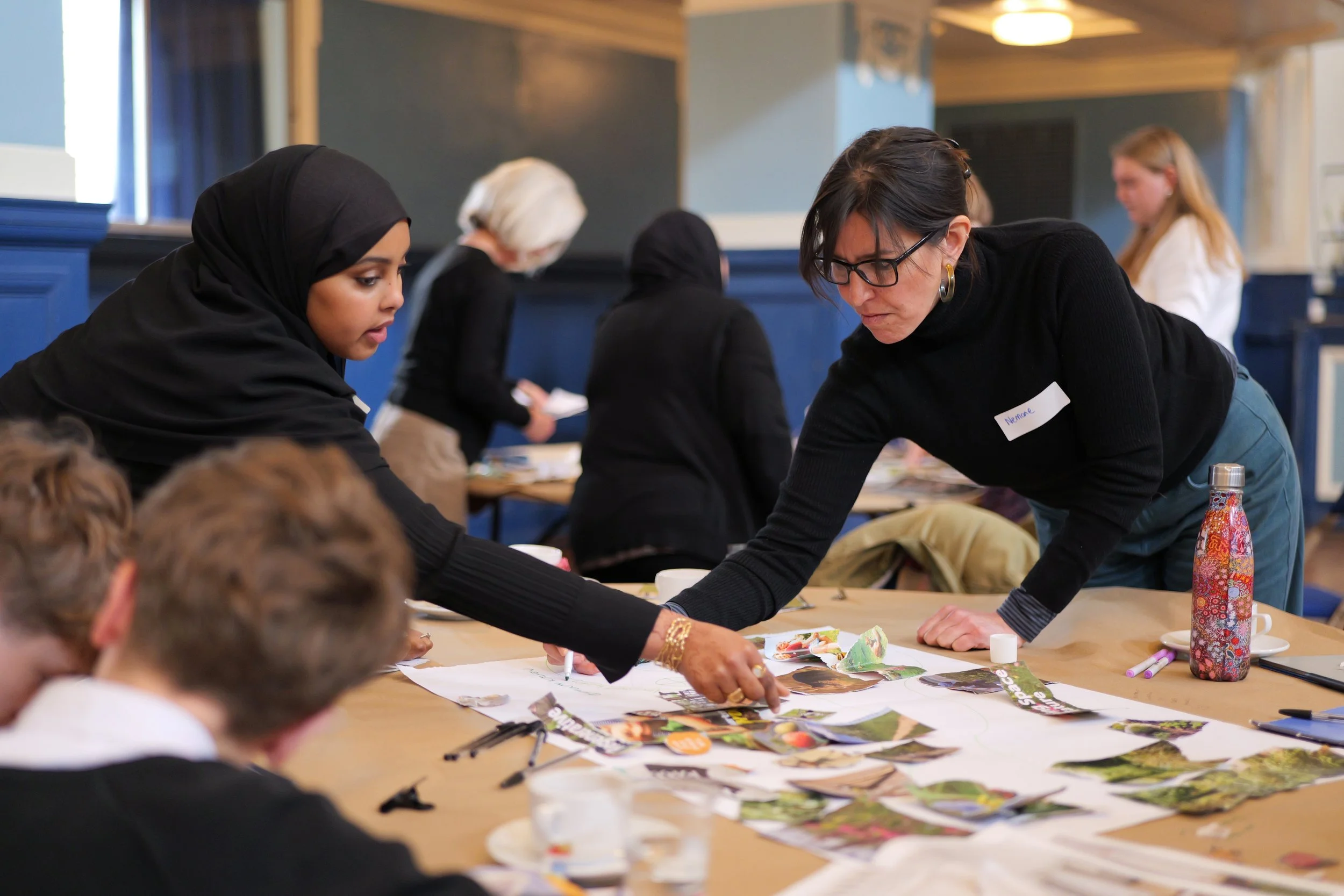
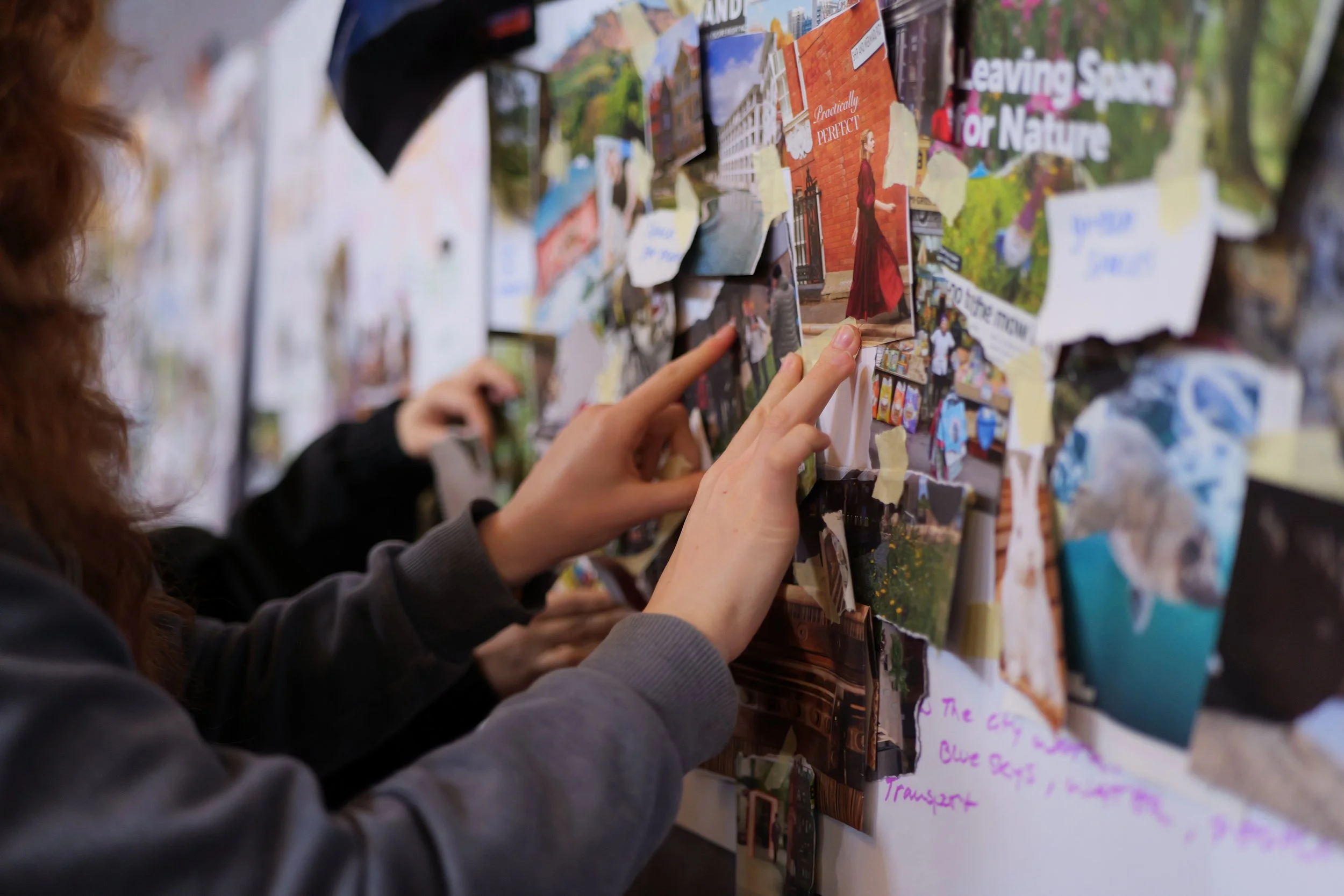
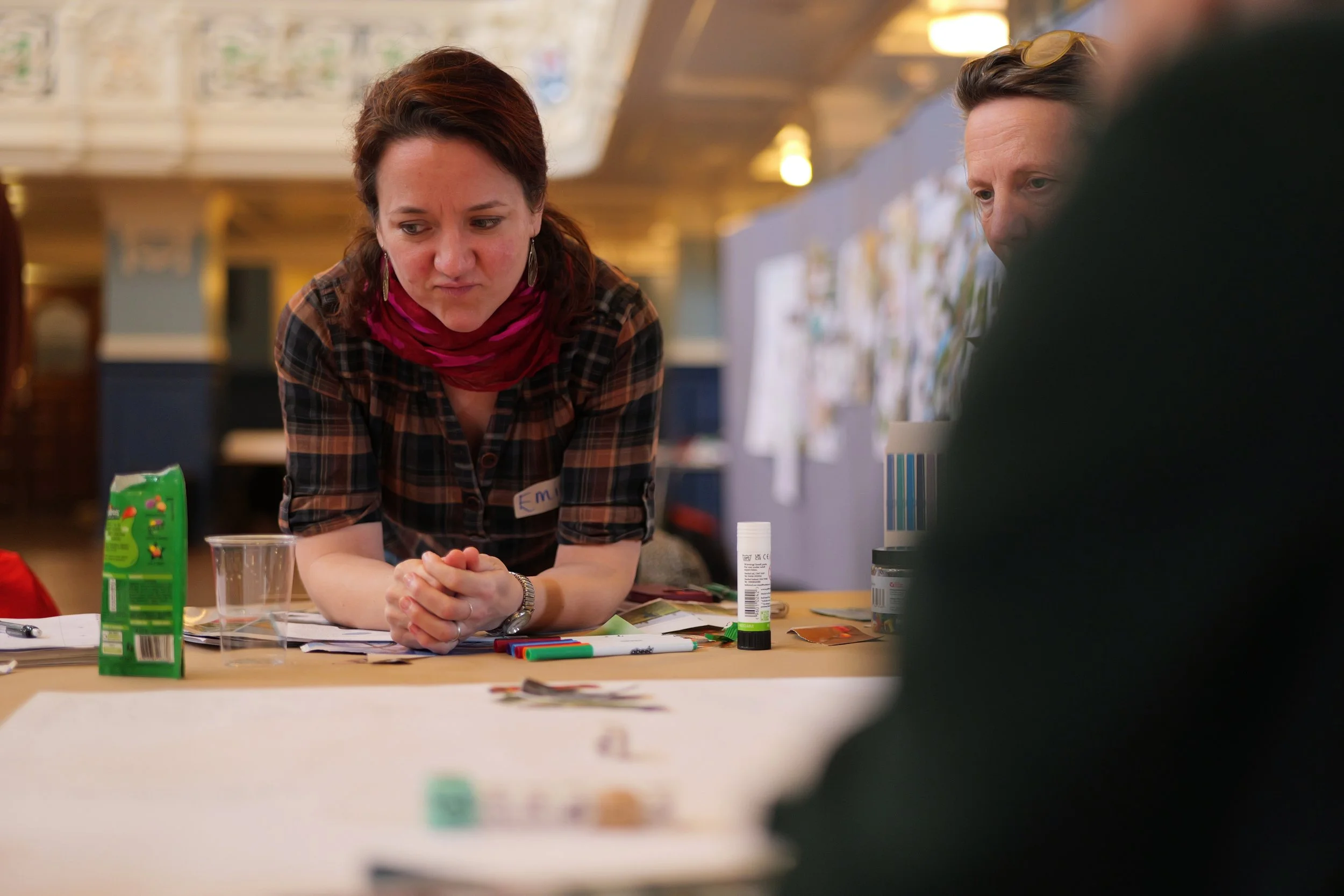
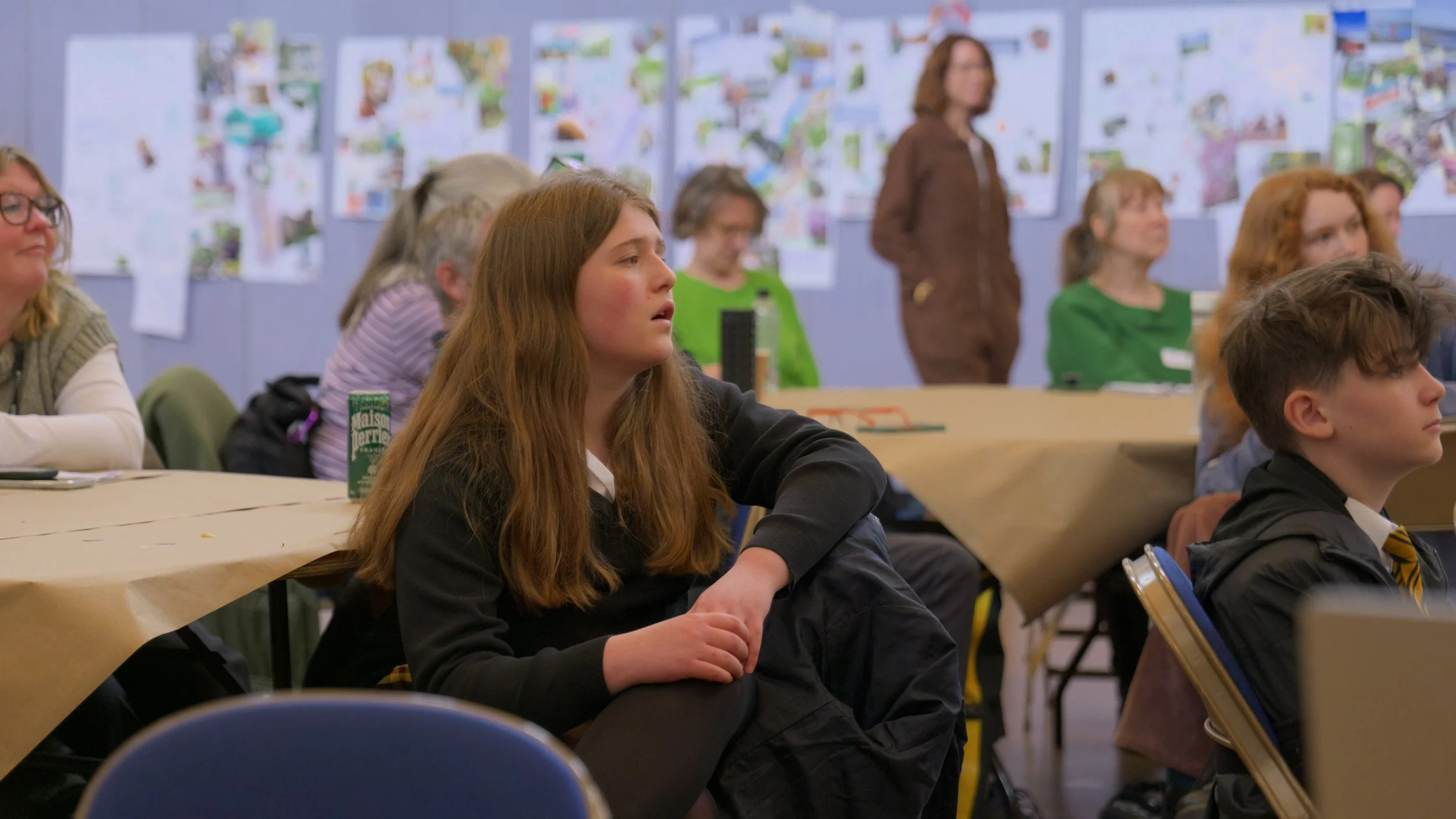
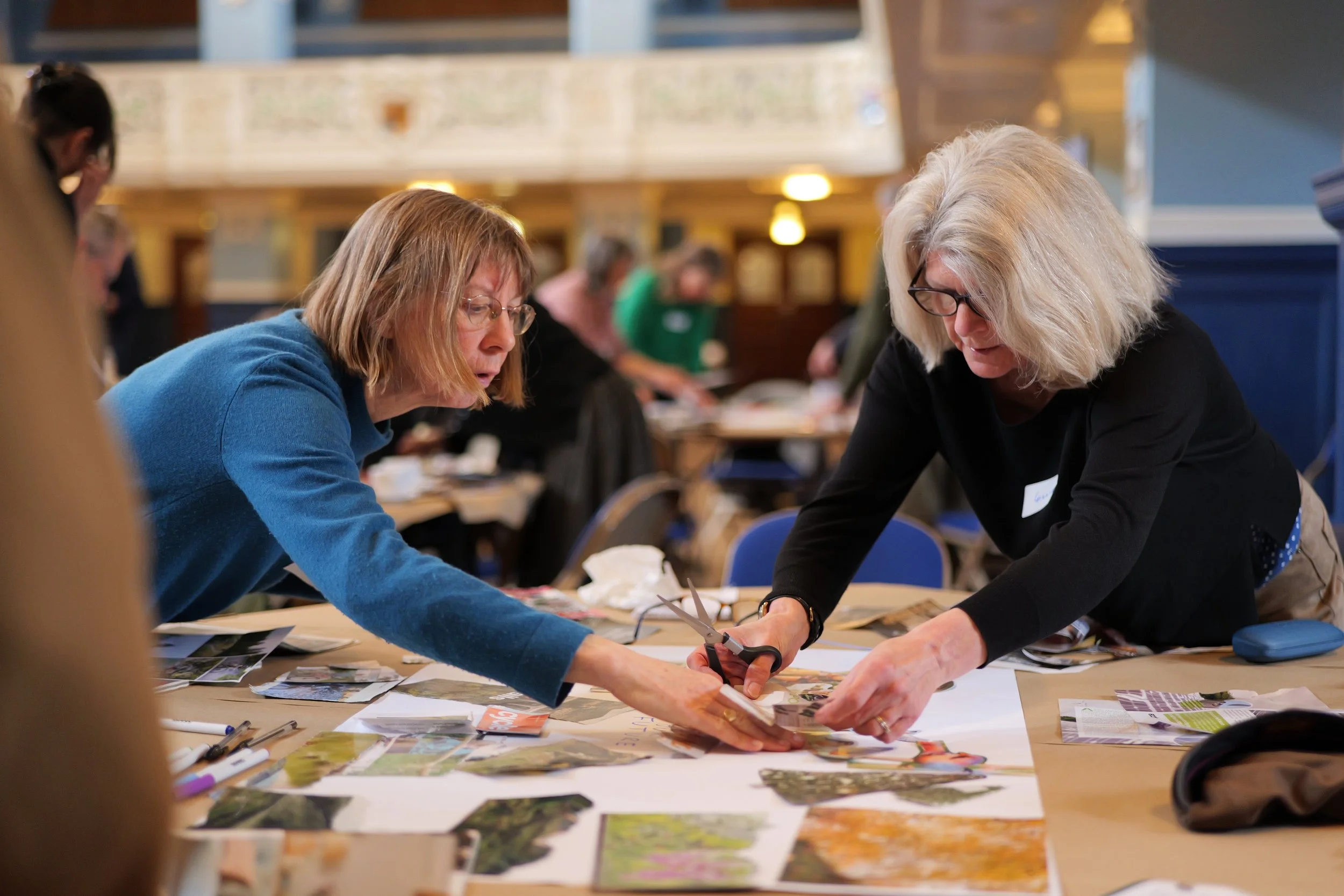
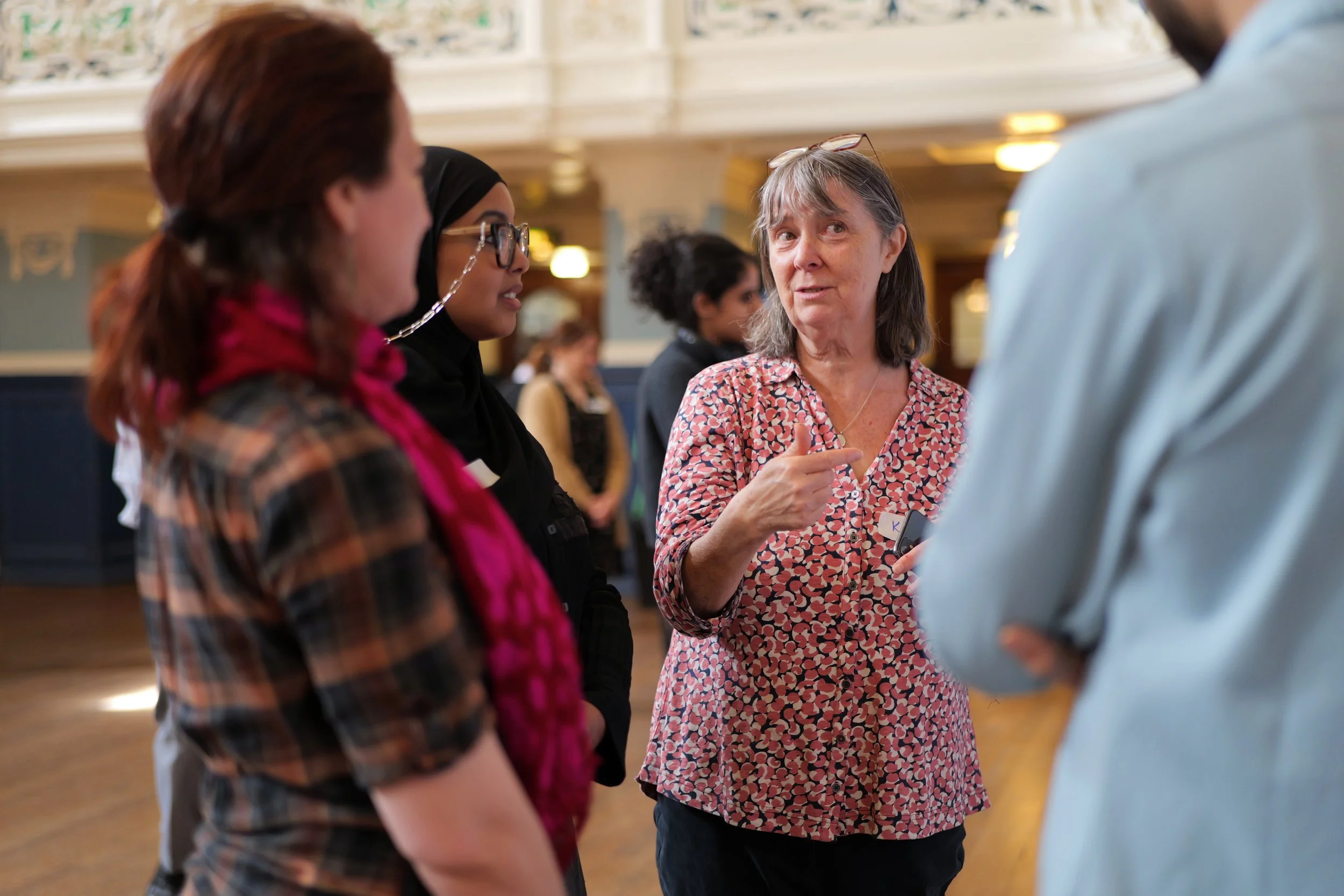
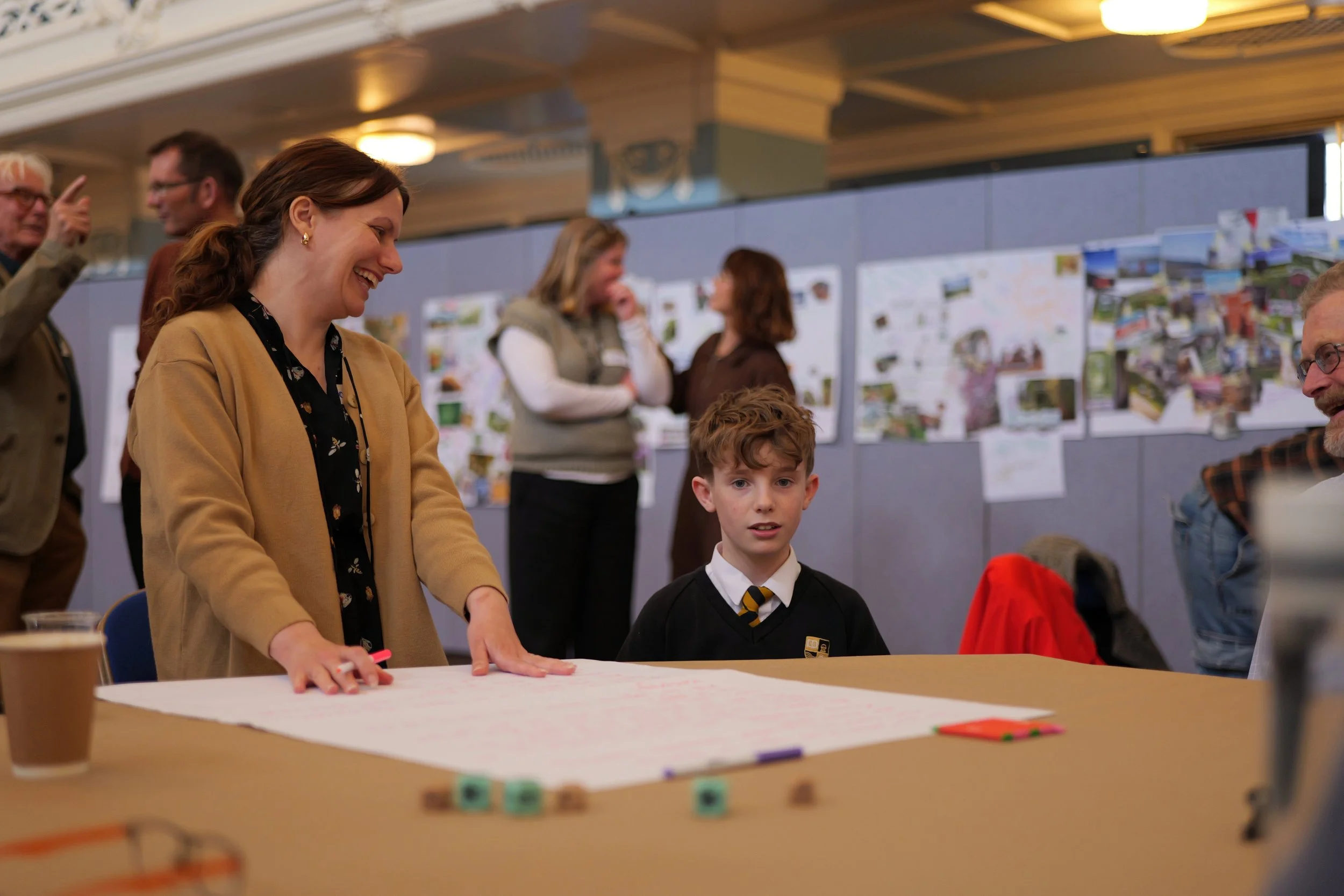
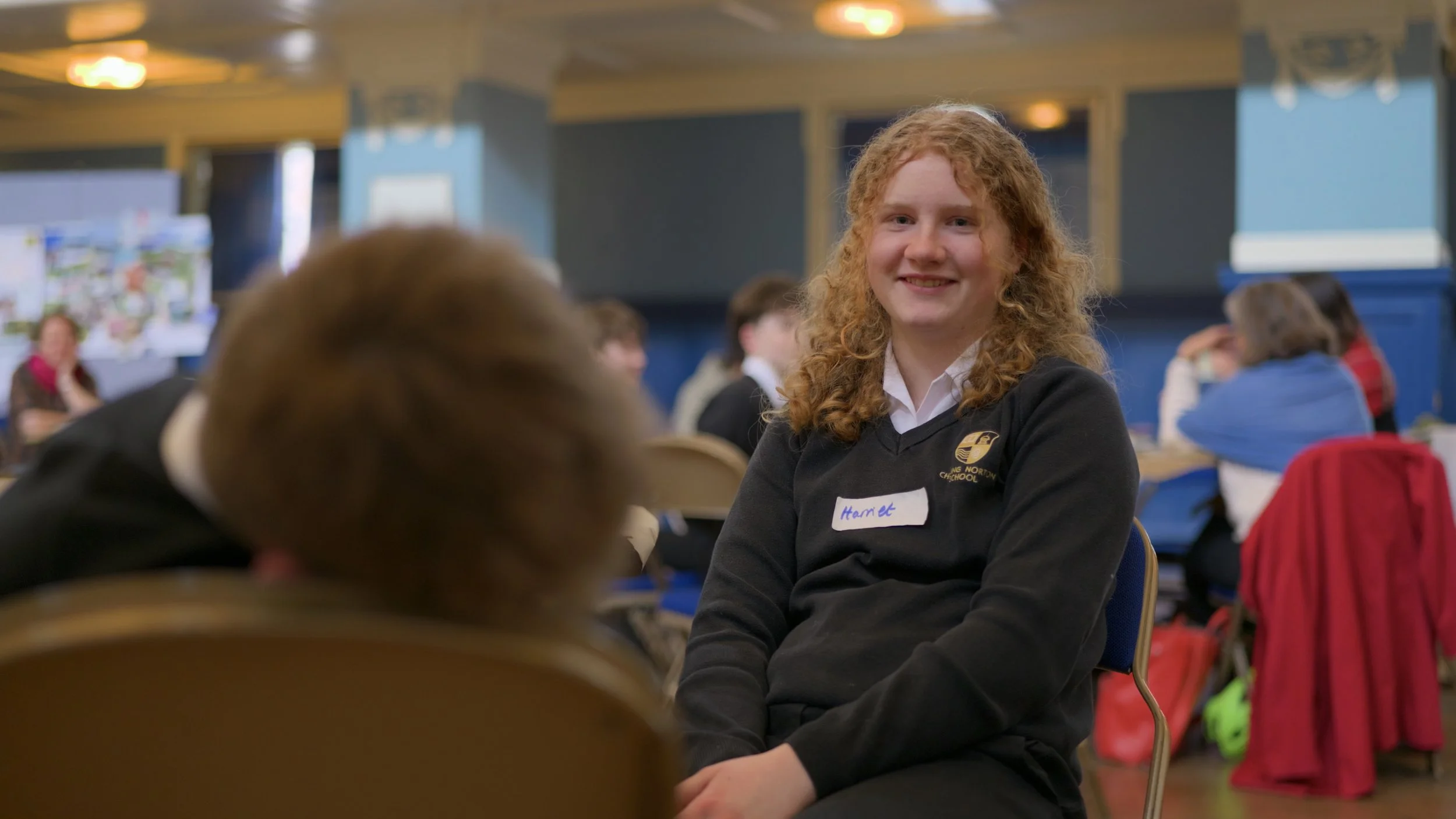
And, like workshop 1, again we found common ground across these perspectives in what people want most from their places.
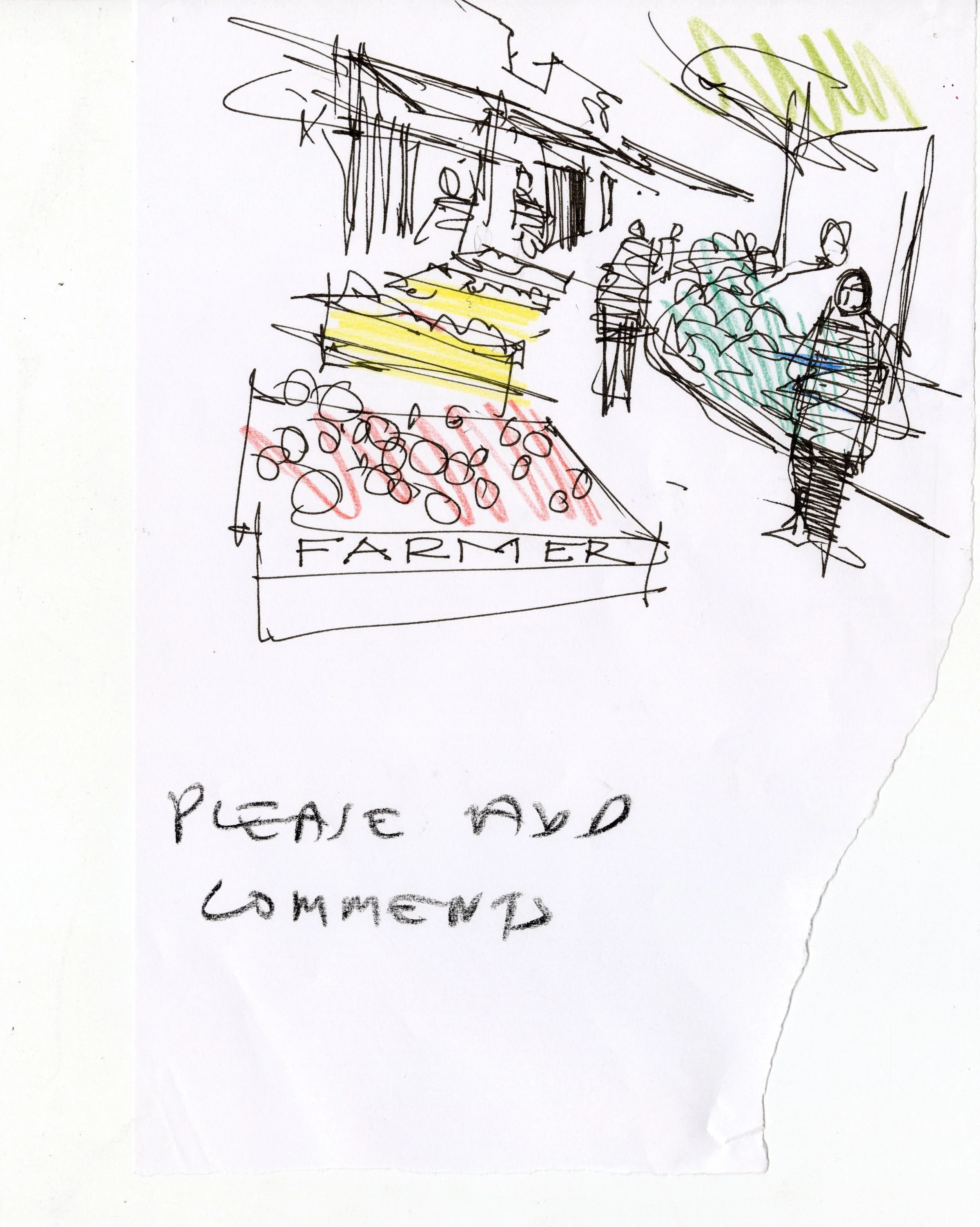
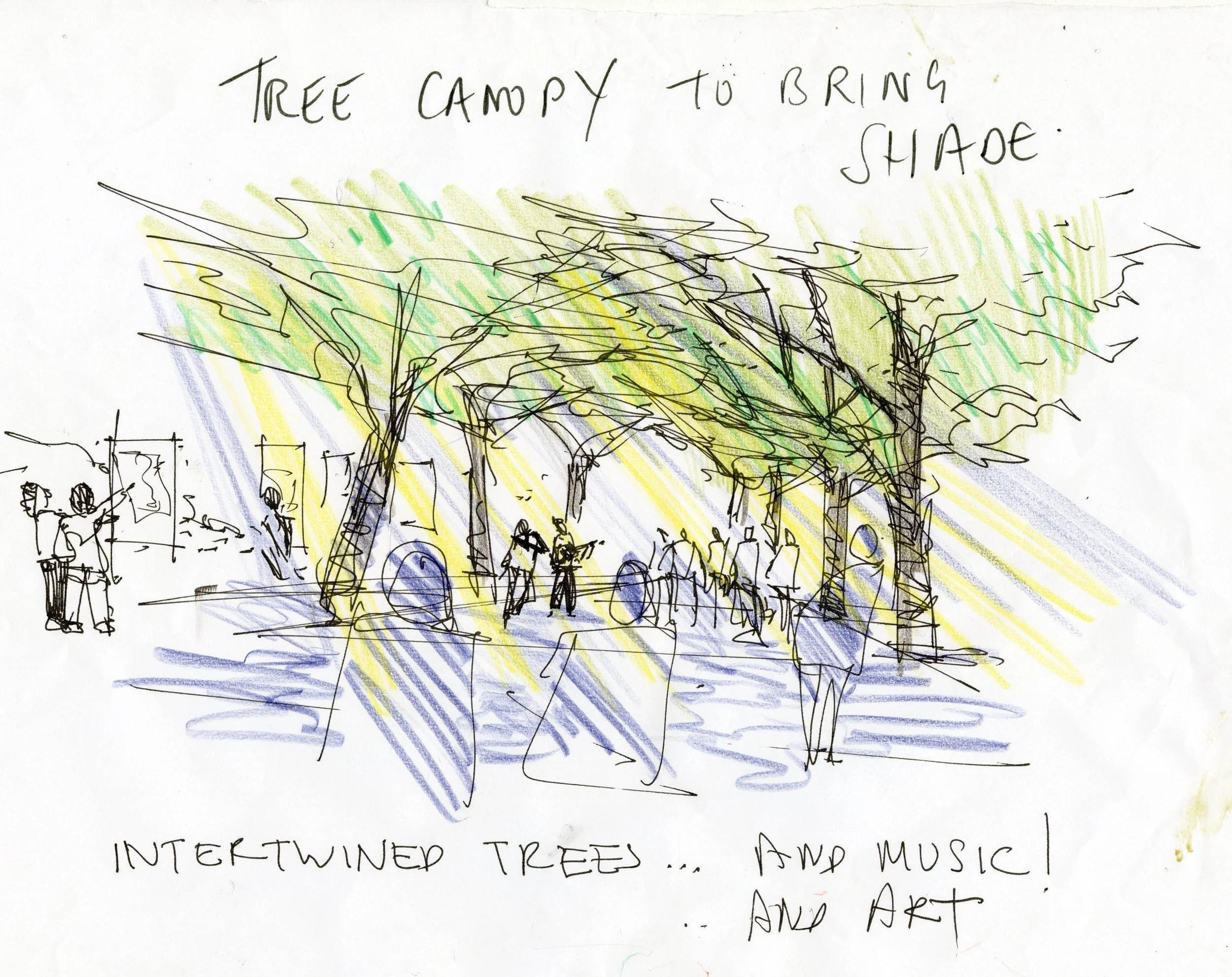
People dreamed of places where buses were free and neighbourhoods were places for slowing down and connecting -- tree canopies for shade, benches to stop and talk, pocket parks, farmers' markets and repair cafes, streets alive with art and music, places to rest and linger, lovely wide pavements and safe walking routes. Of gentle transport and cargo bikes carrying children to school. Of thriving local businesses where everyone can get what they need close to home and bump into someone they know on the way. Of parking spaces turned into growing beds, and solar panels powering the street beneath them. And hover shoes. With high chance that came from one of the year 8s from Chippy School.
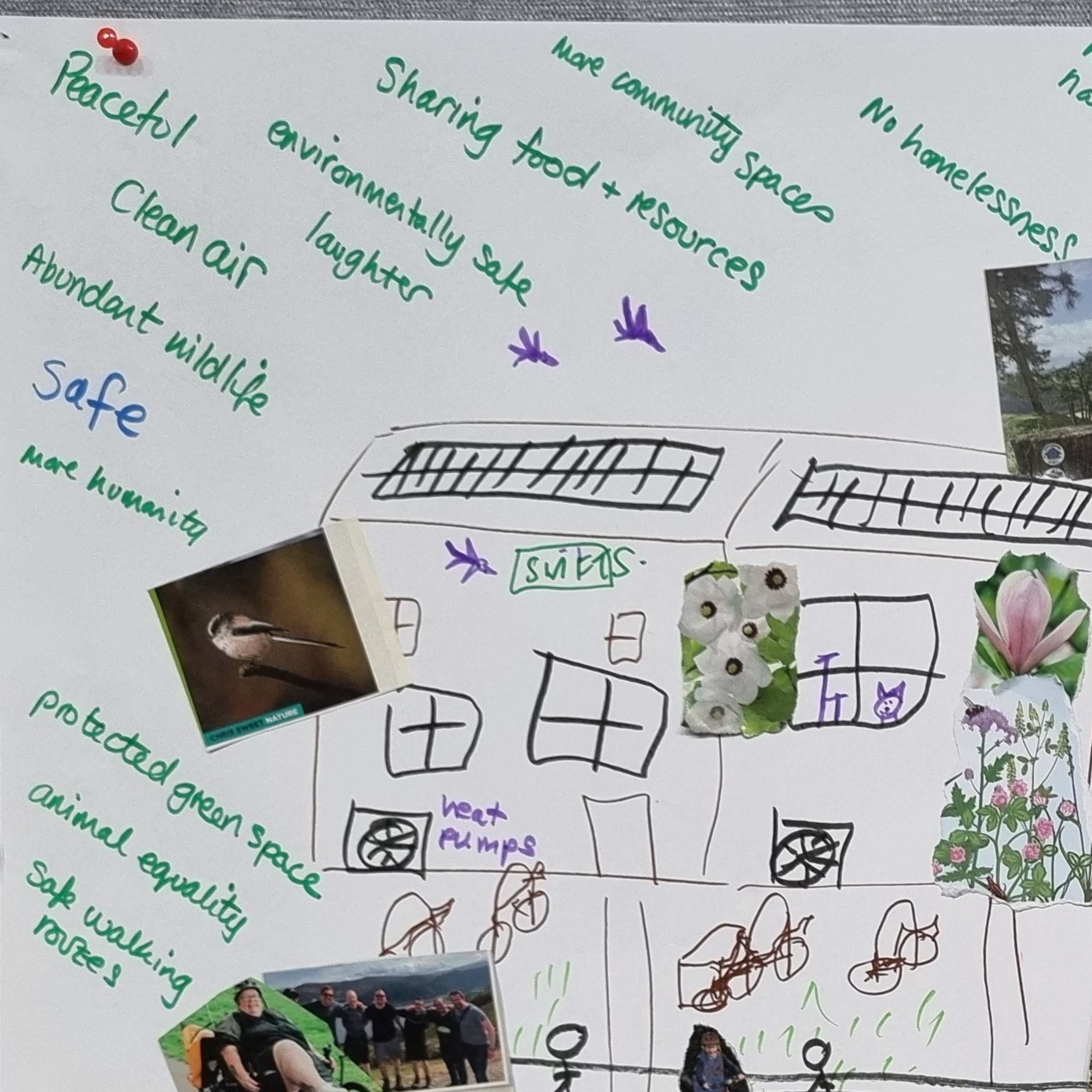
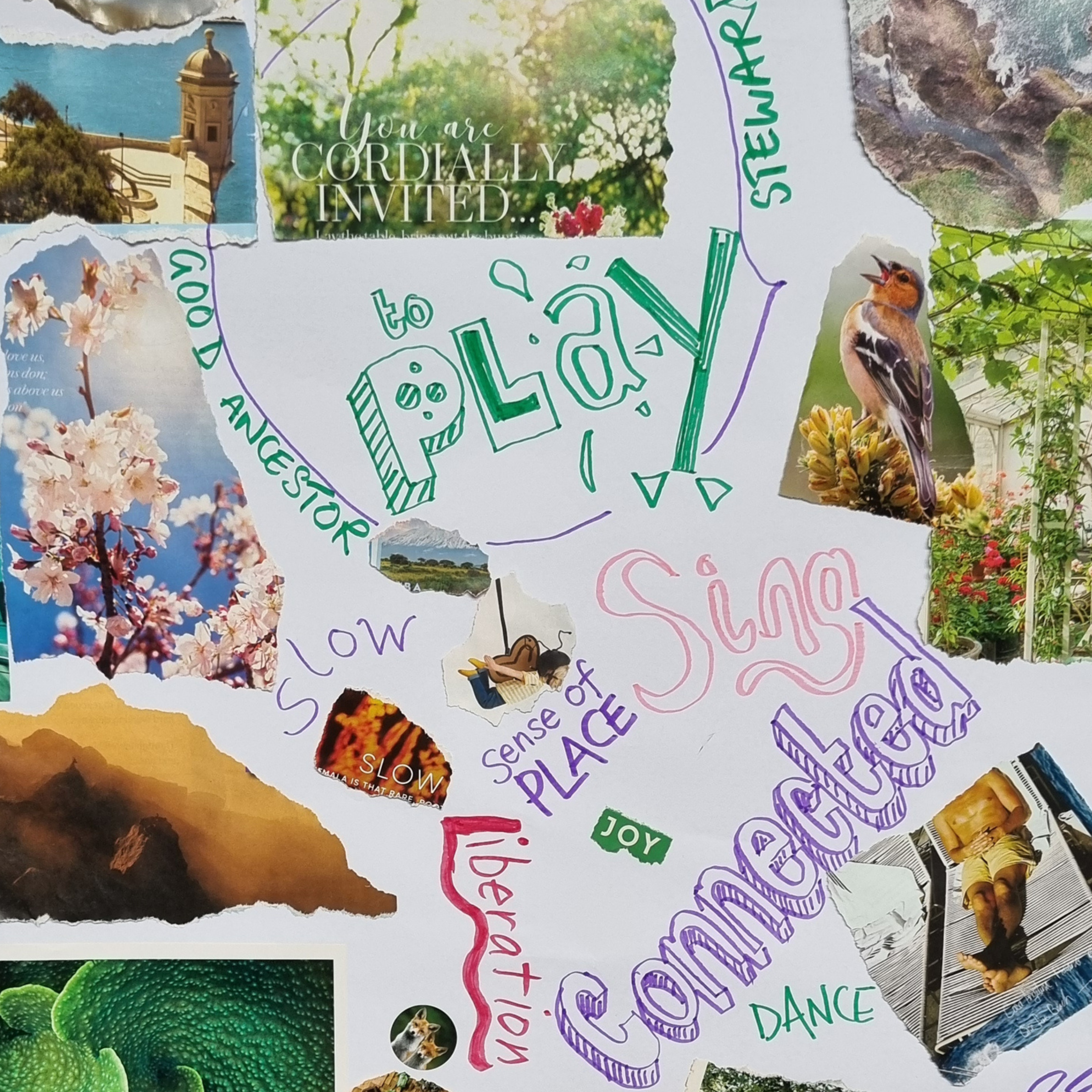
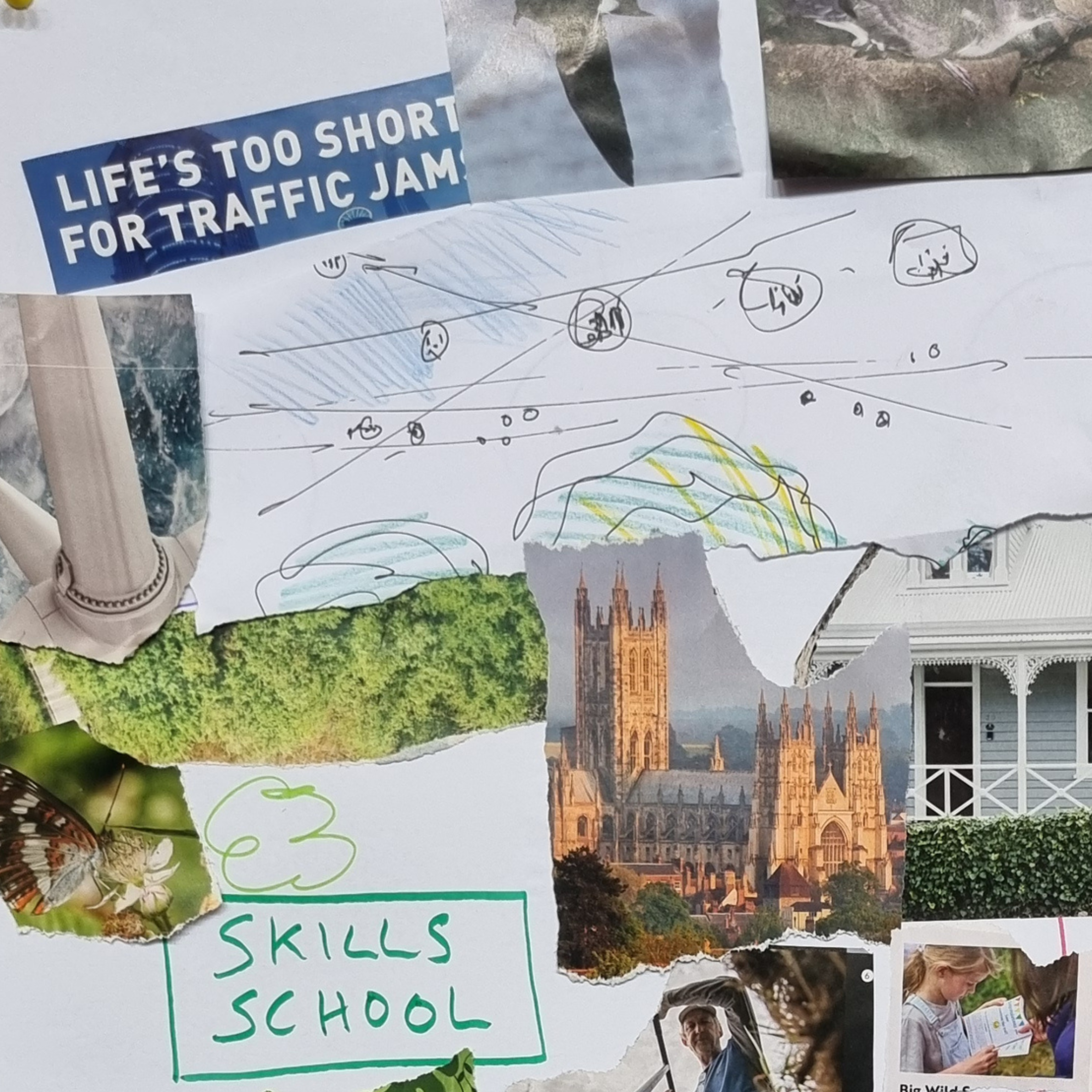
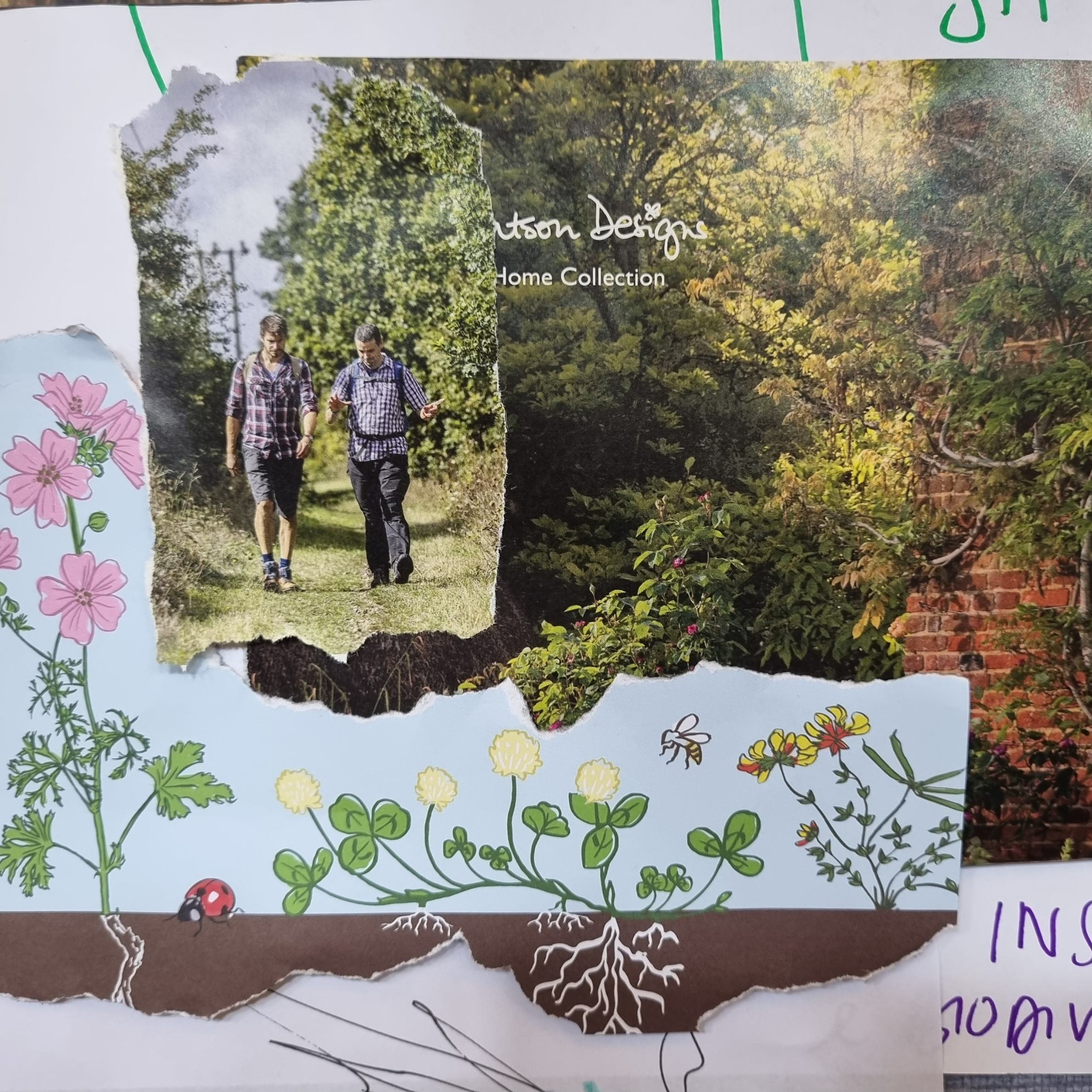
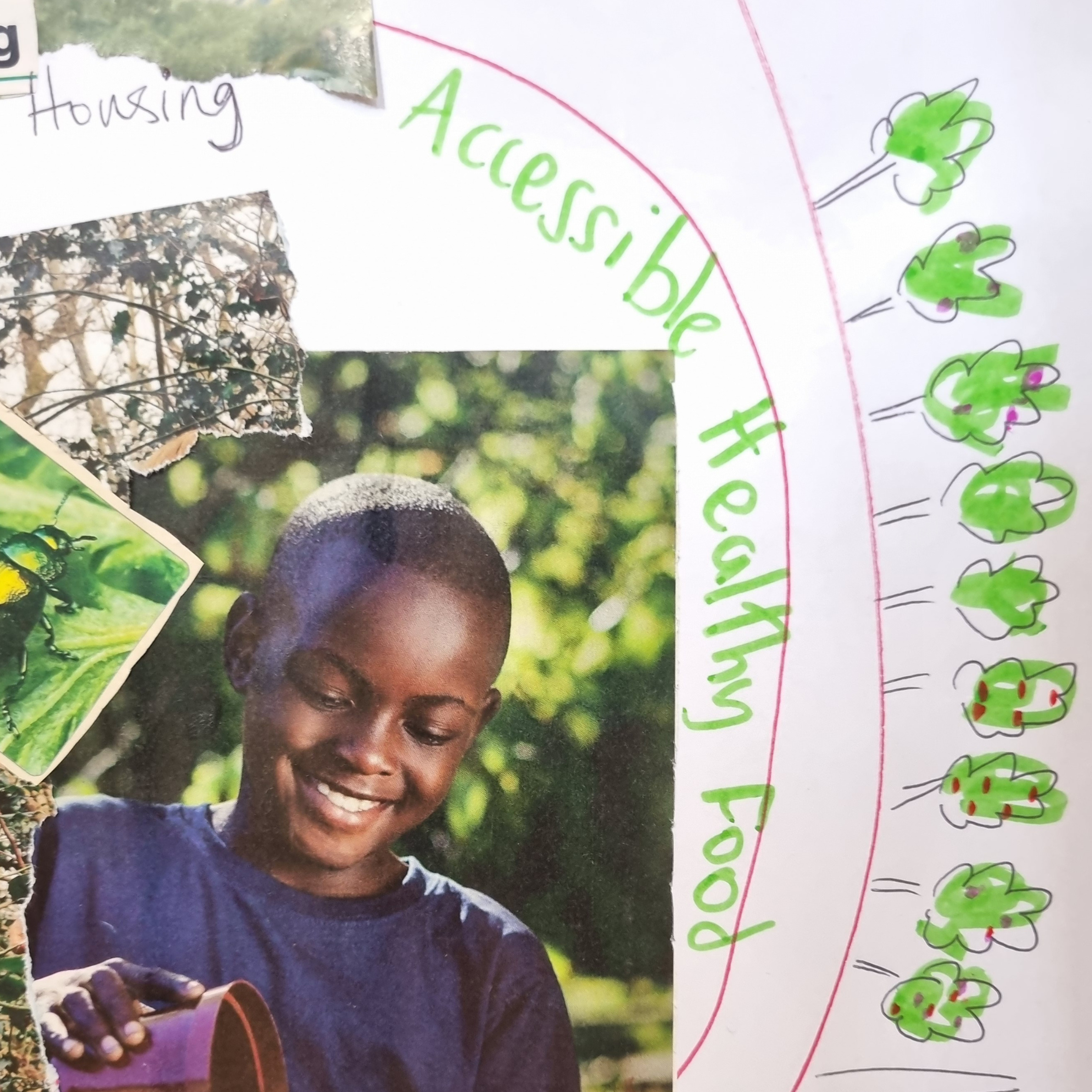
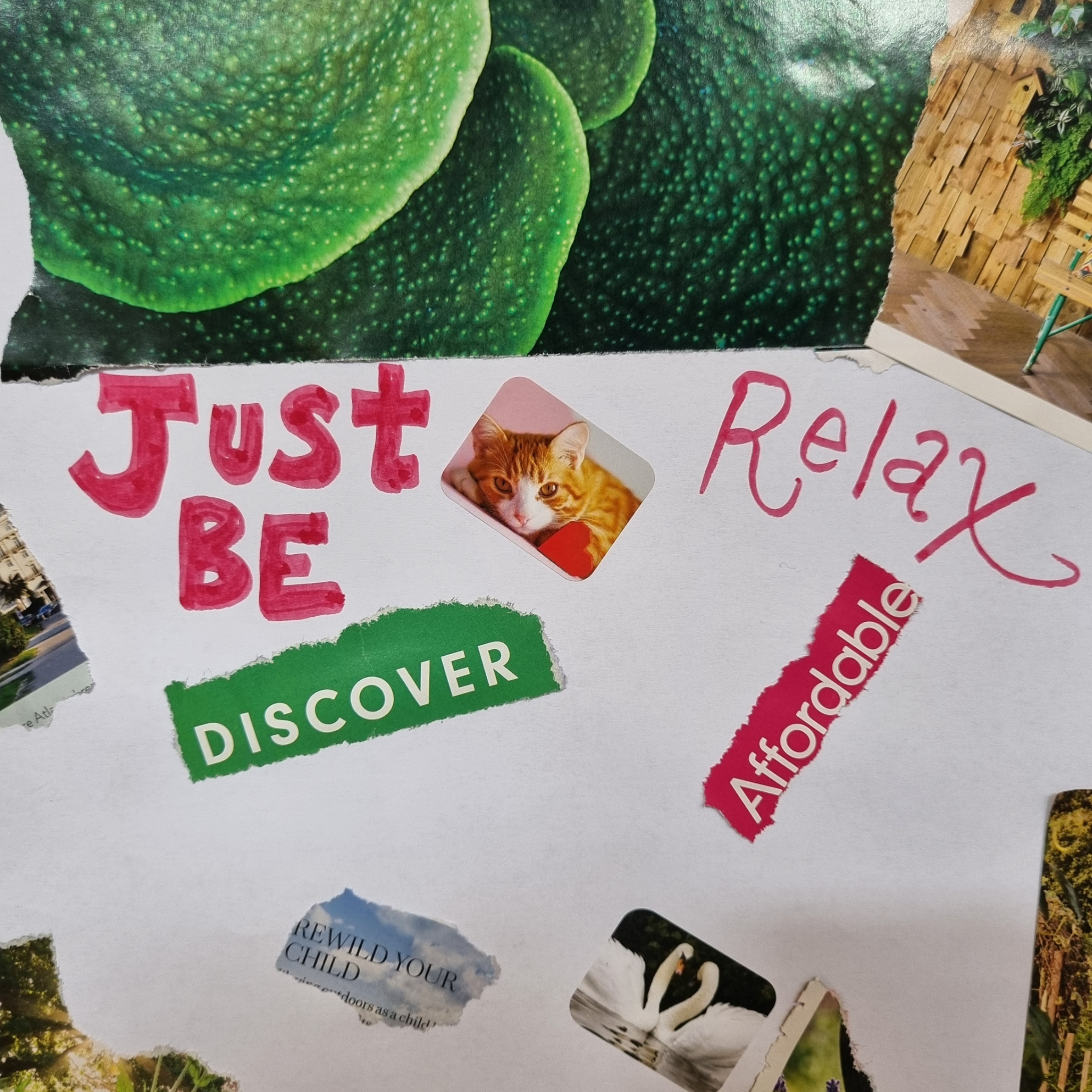
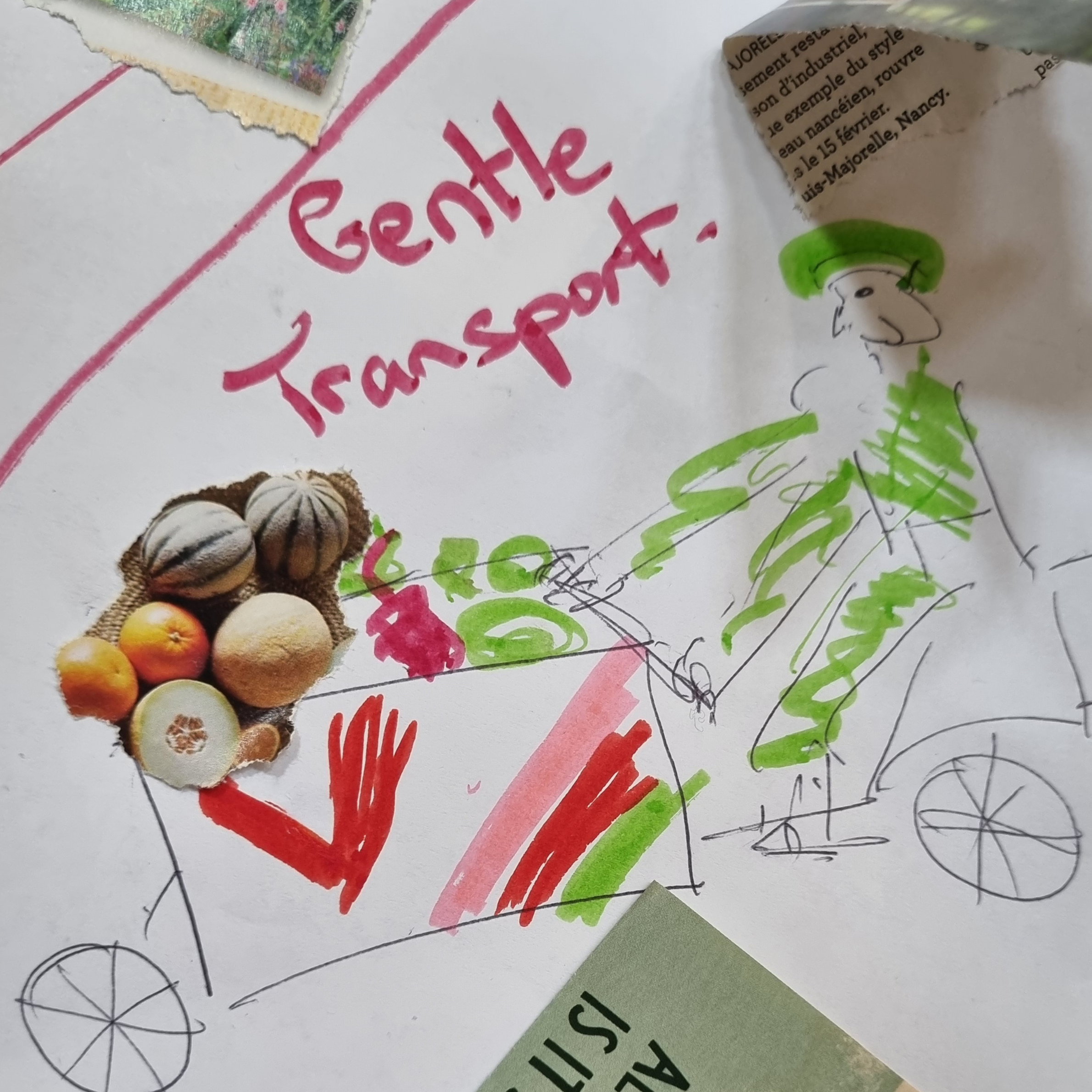
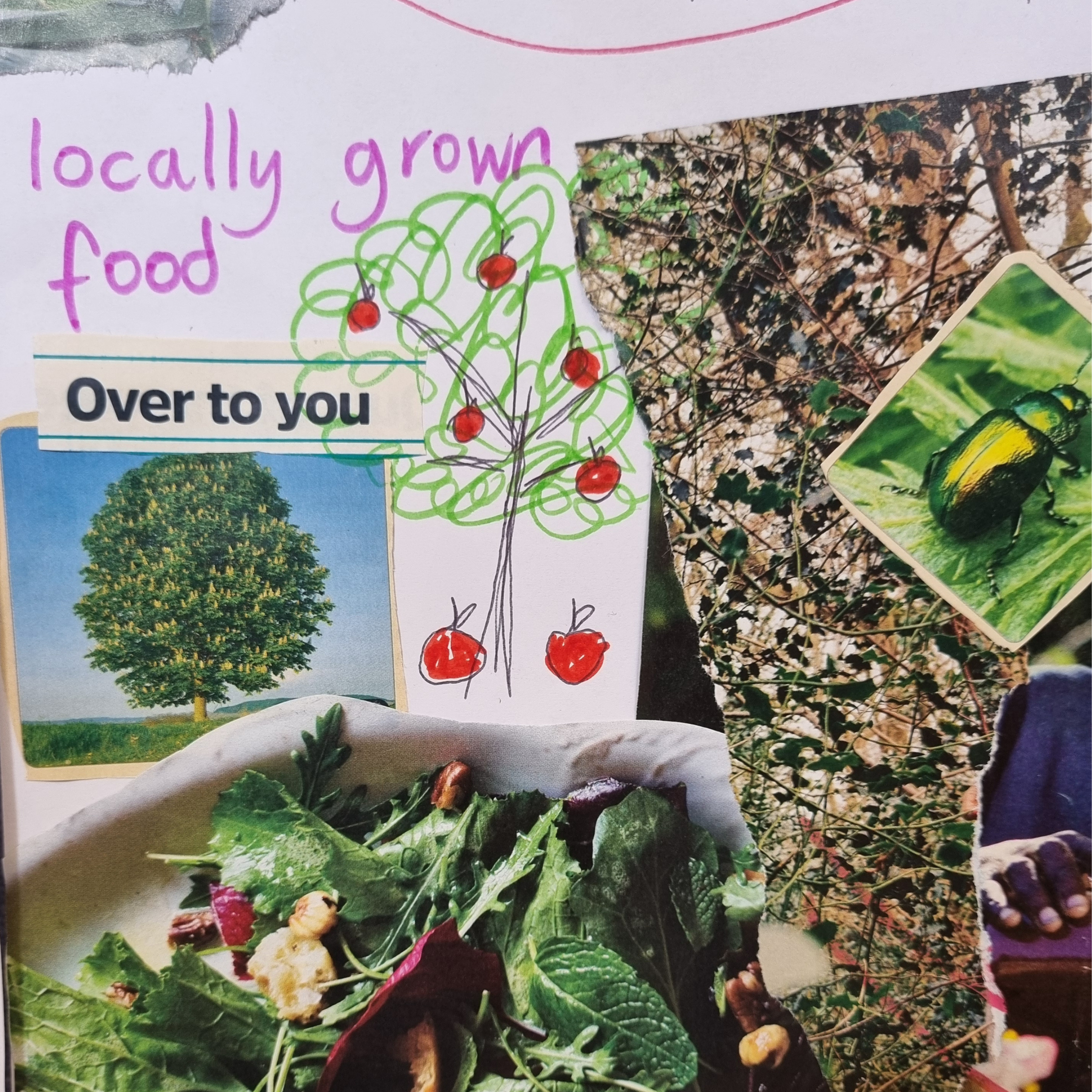
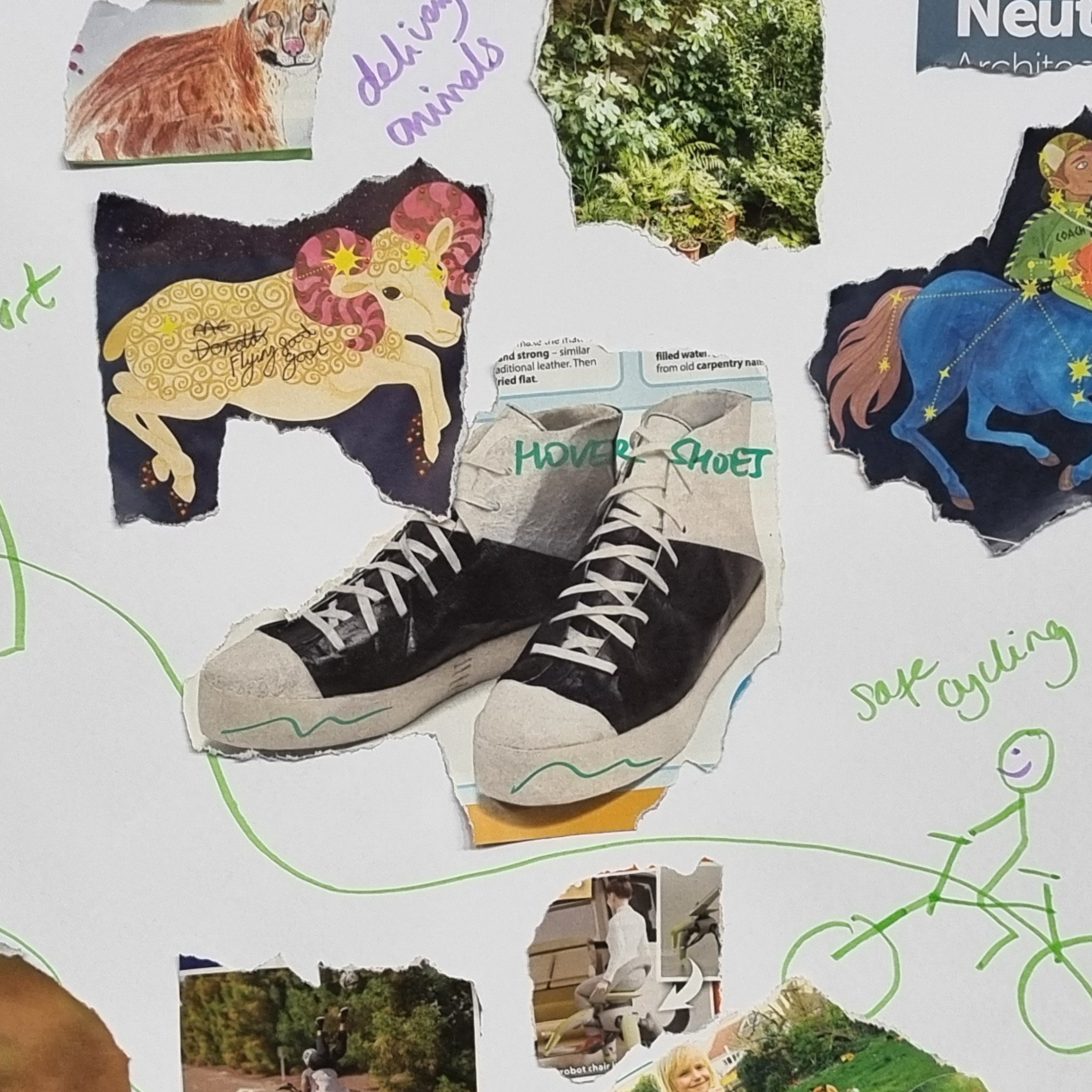
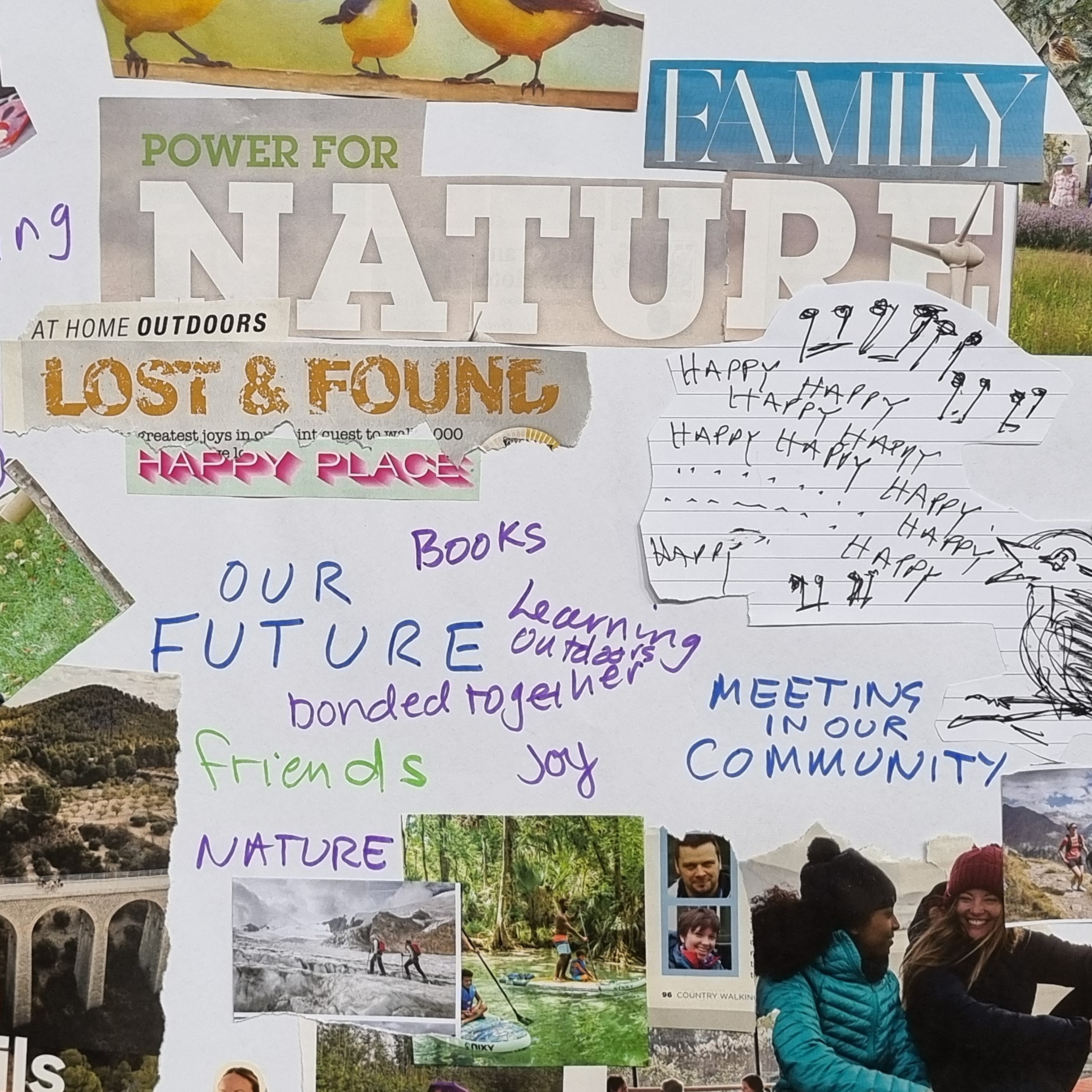
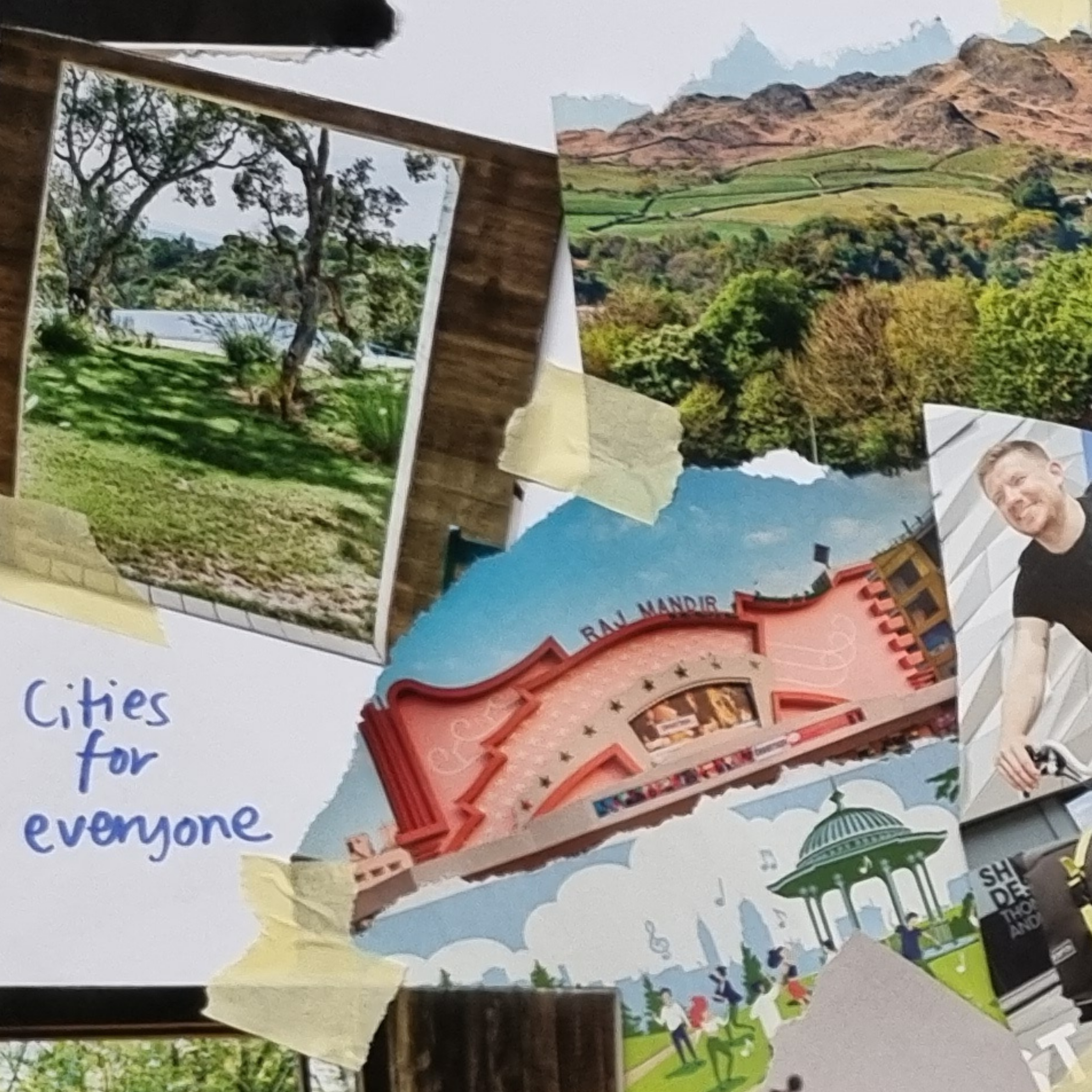
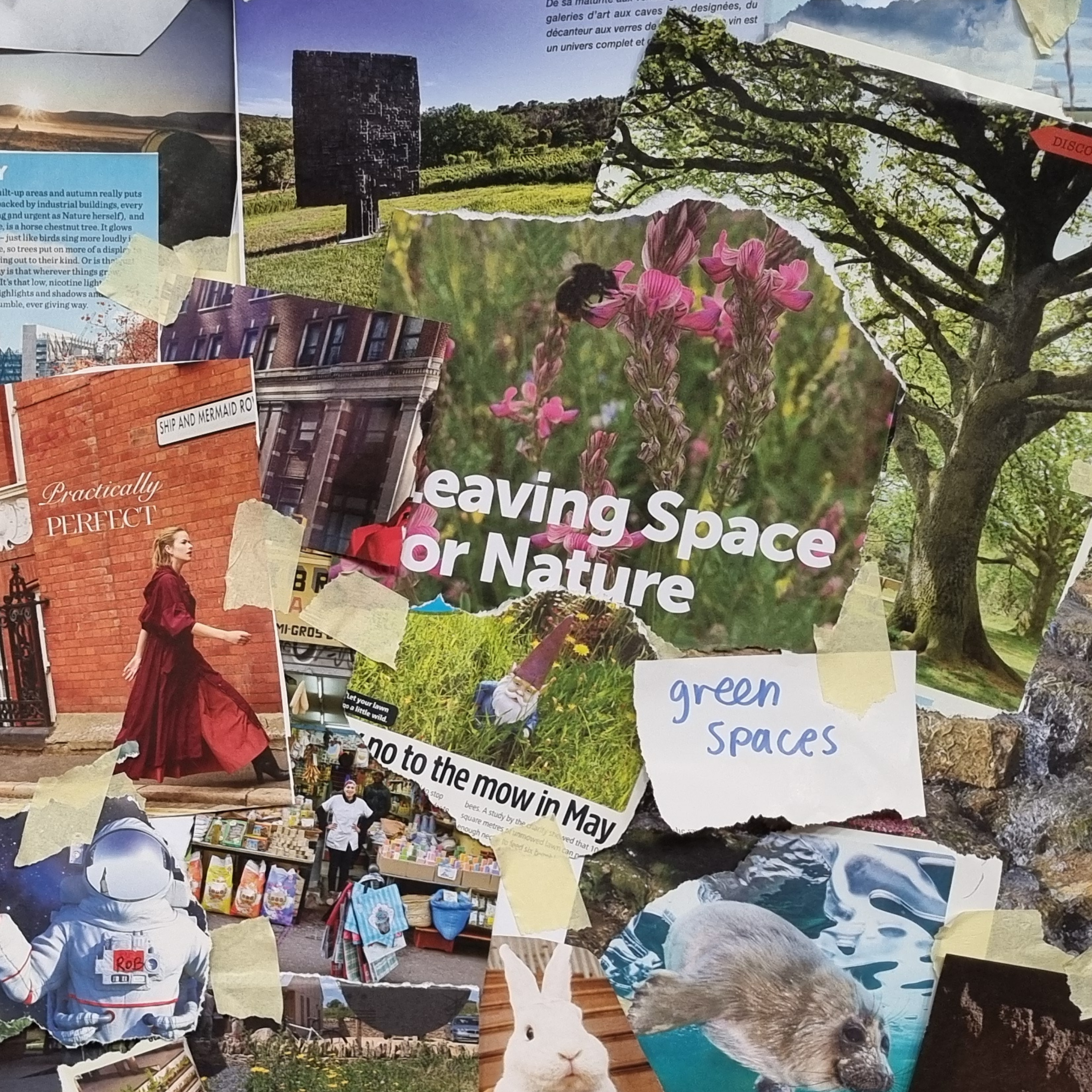
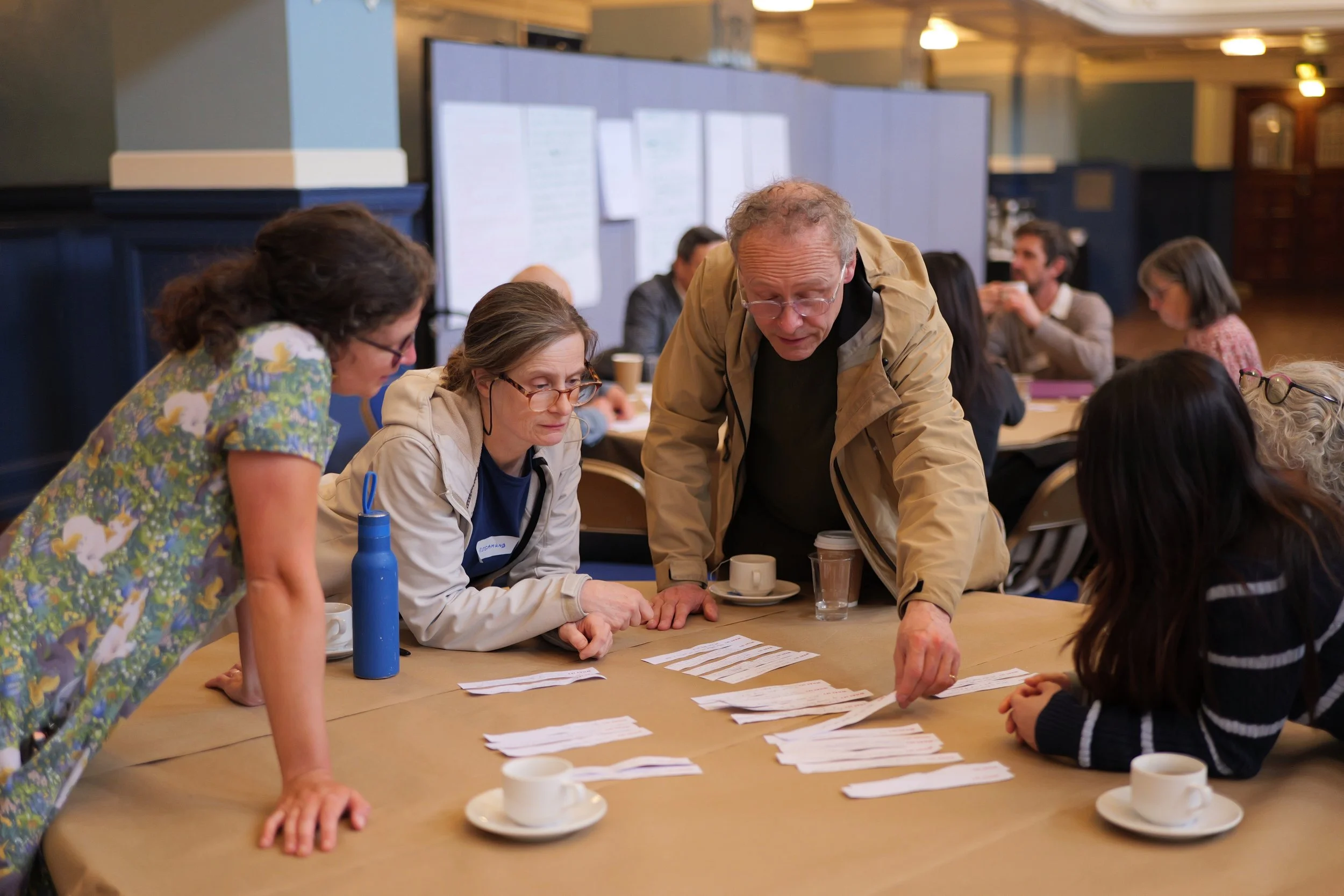
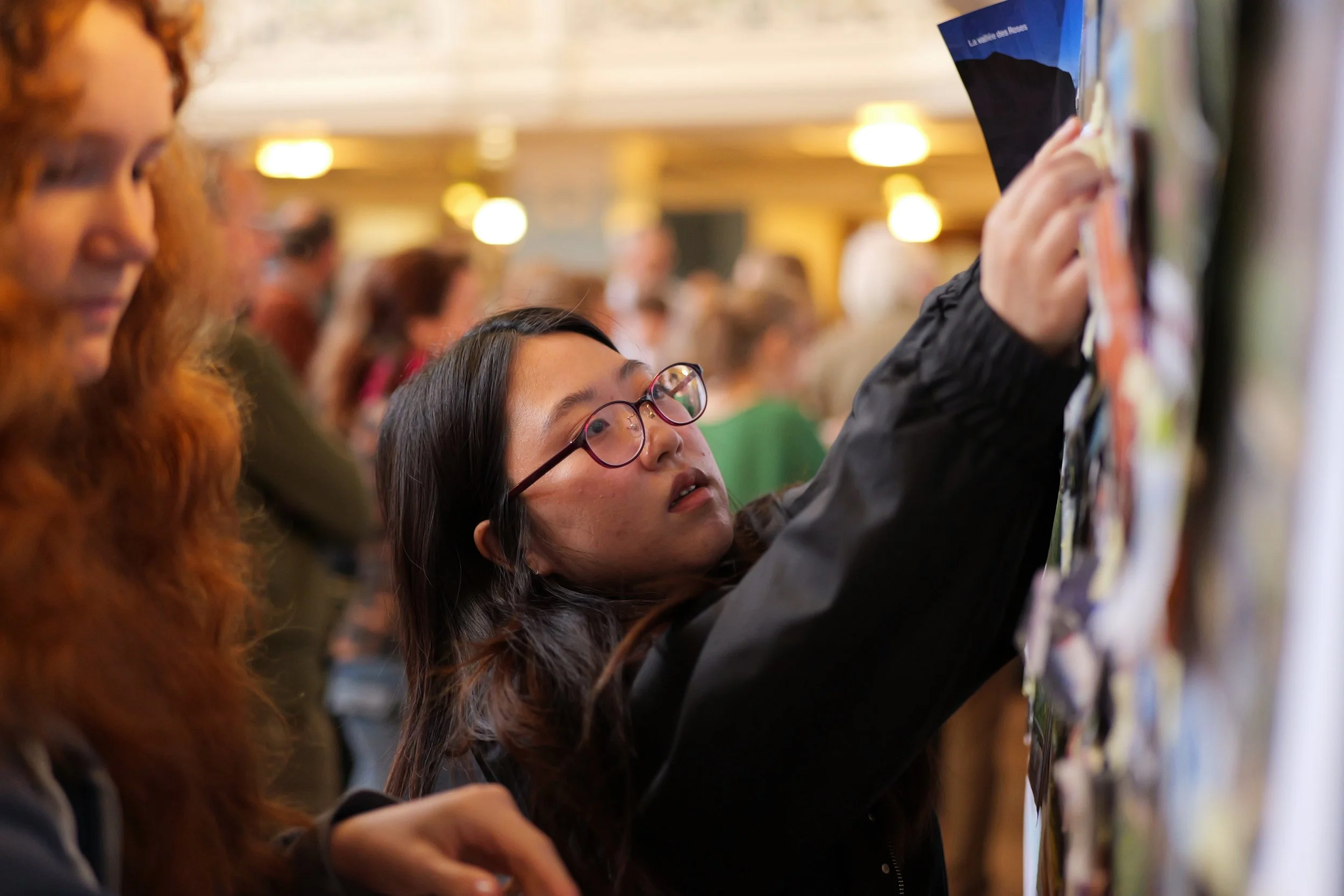
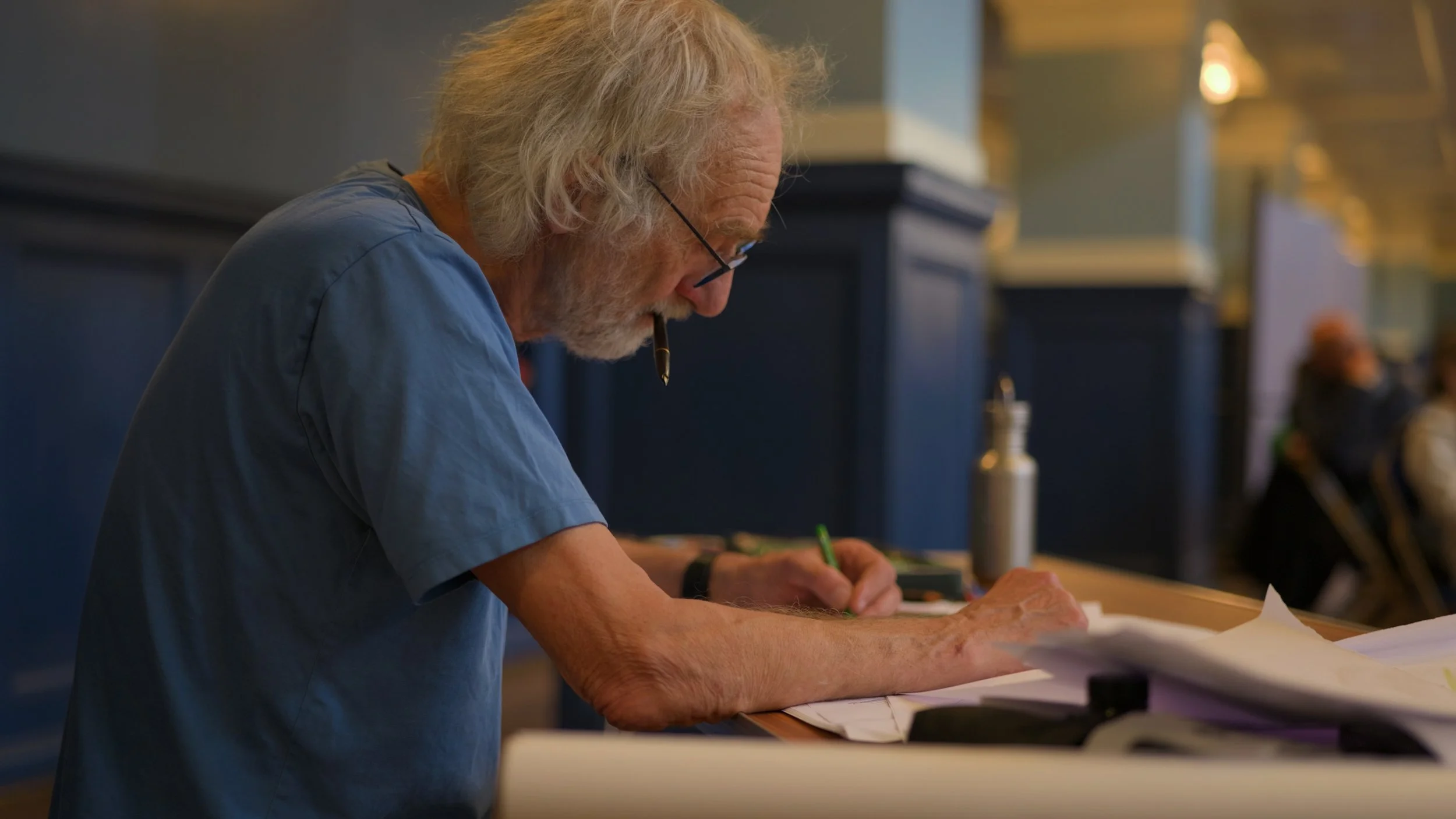
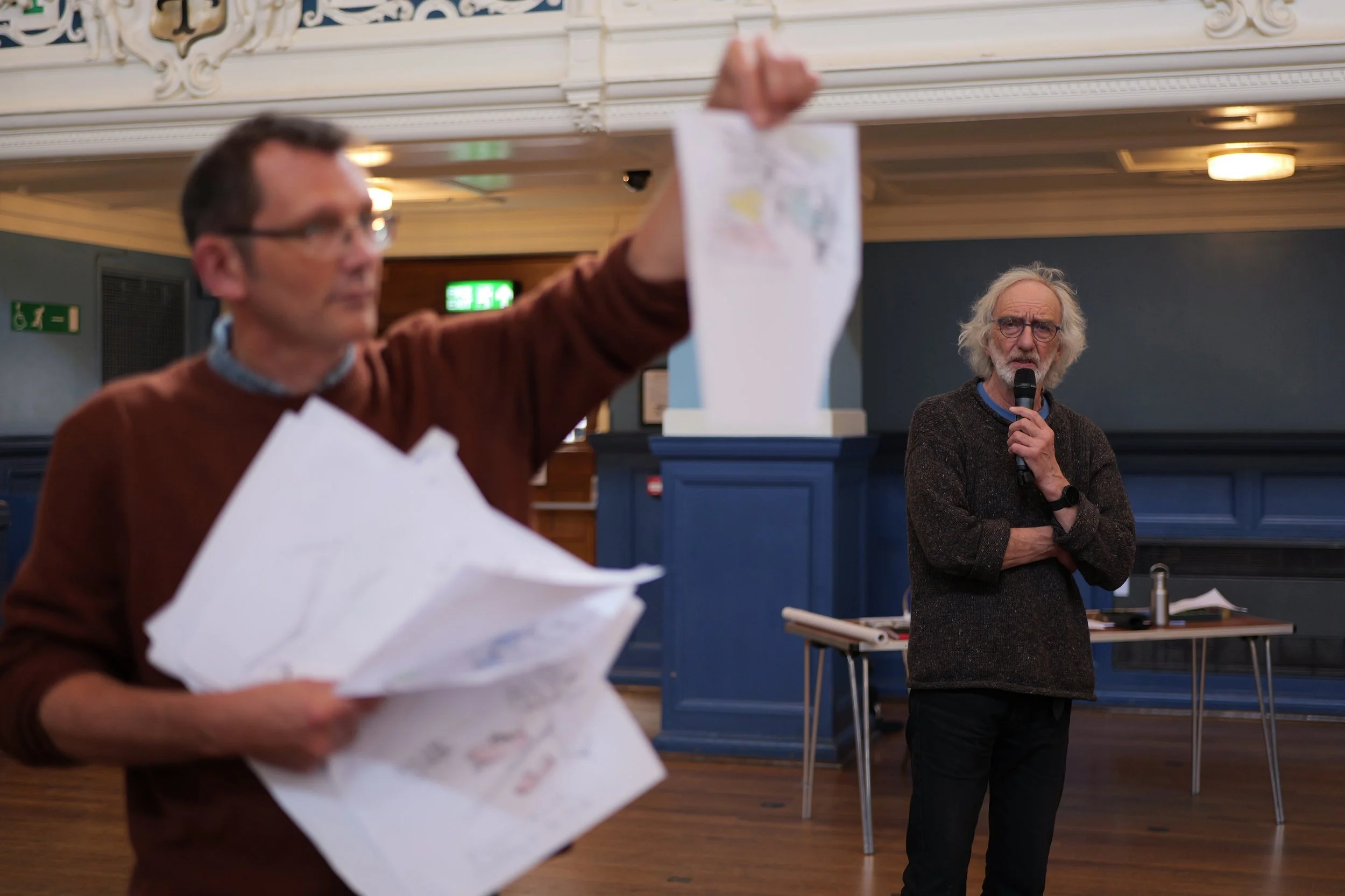
Artist and live illustrator Richard Carman worked with groups to develop their ideas on paper - sketching their imaginings independently, then checking back: "Like this? Anything to add?". Ideas were posted to a gallery space and comments invited.
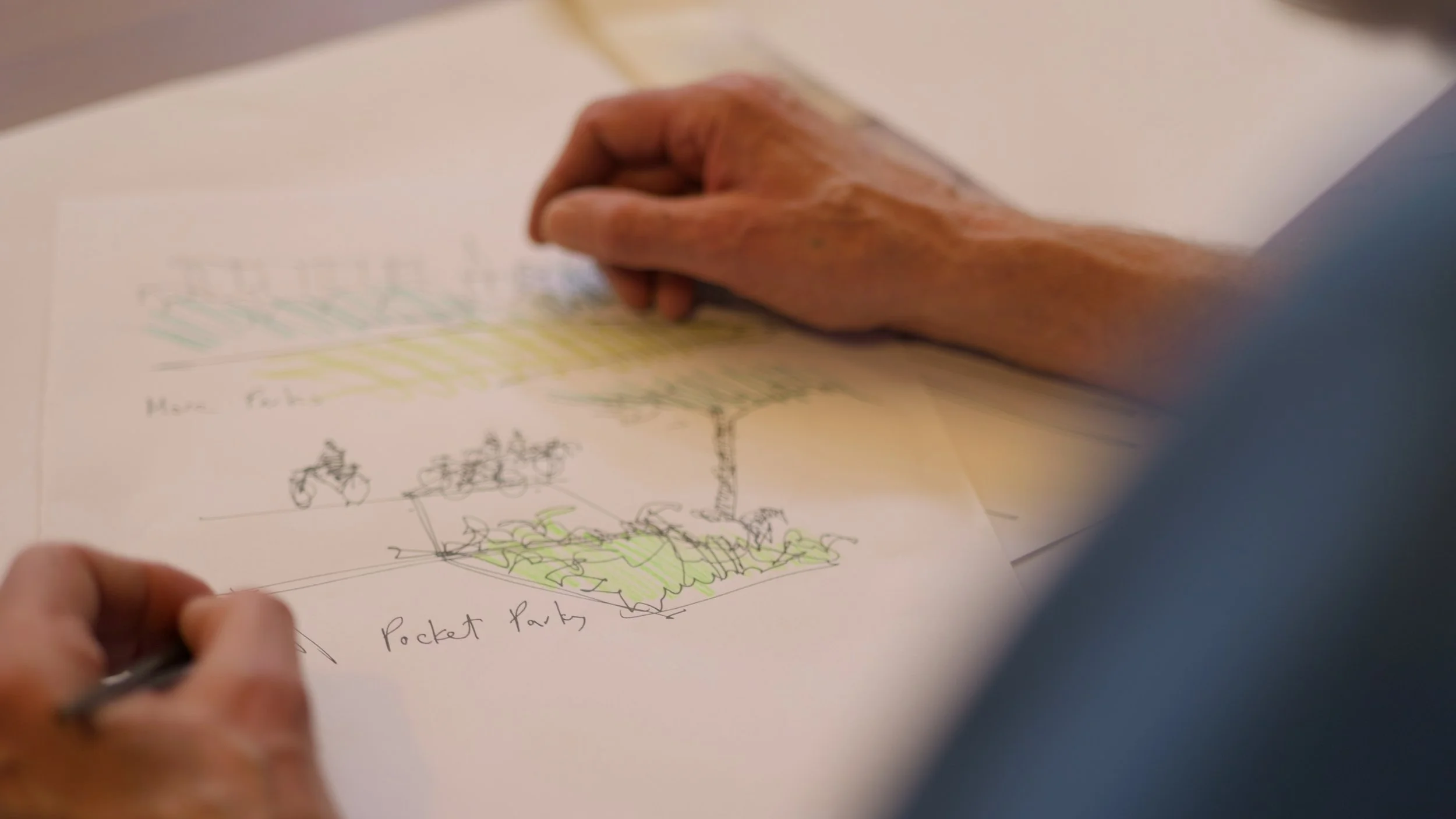
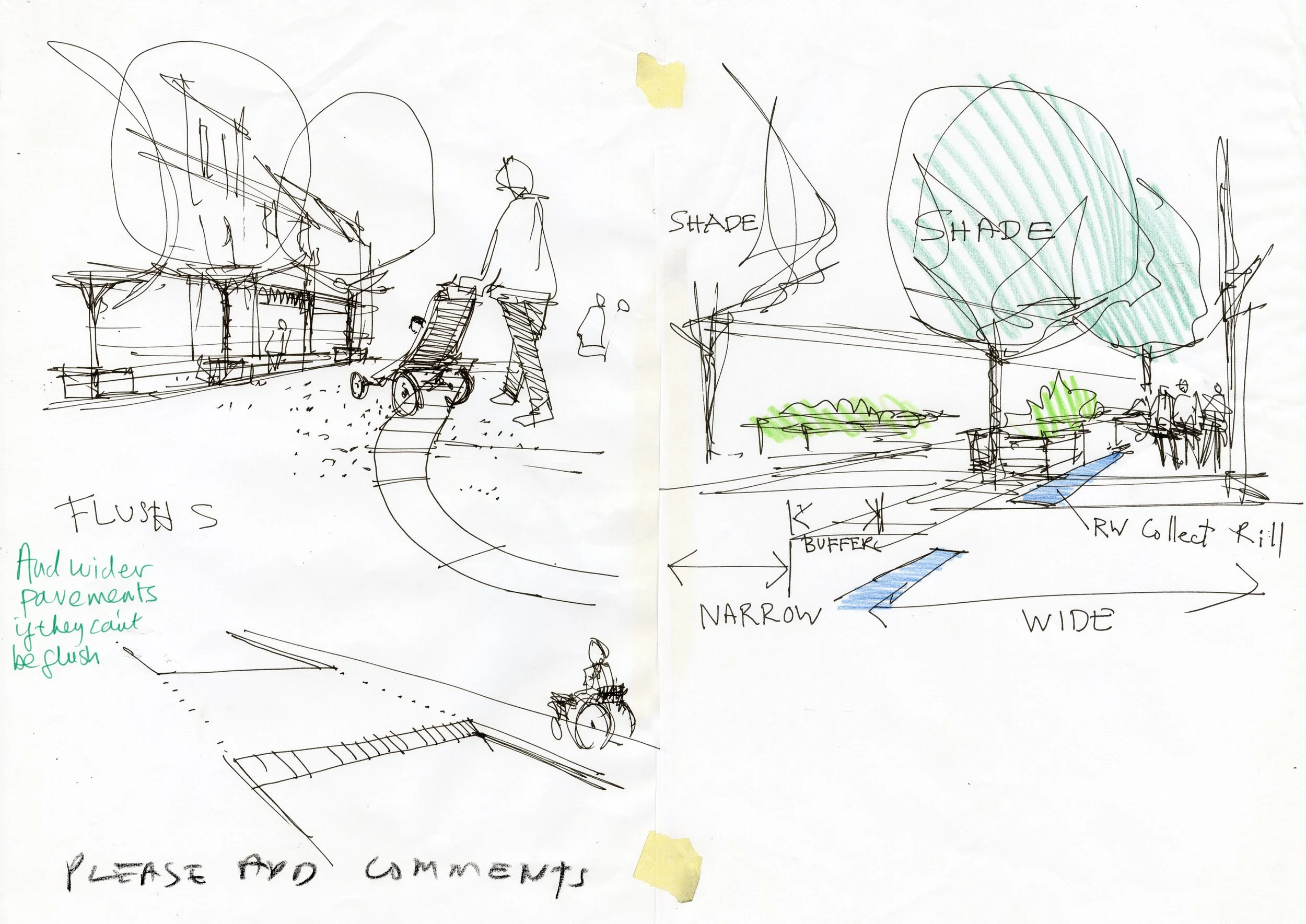
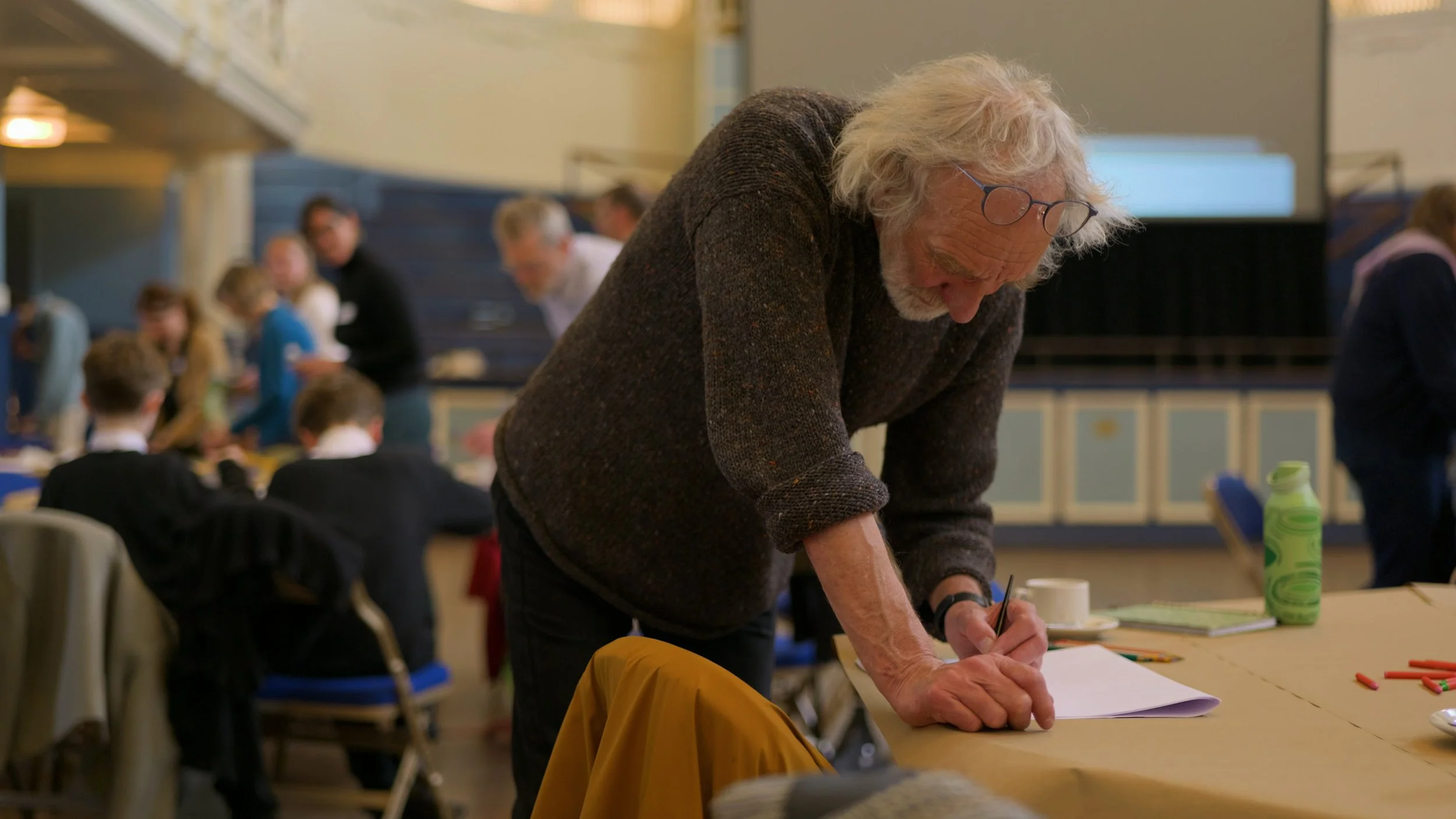
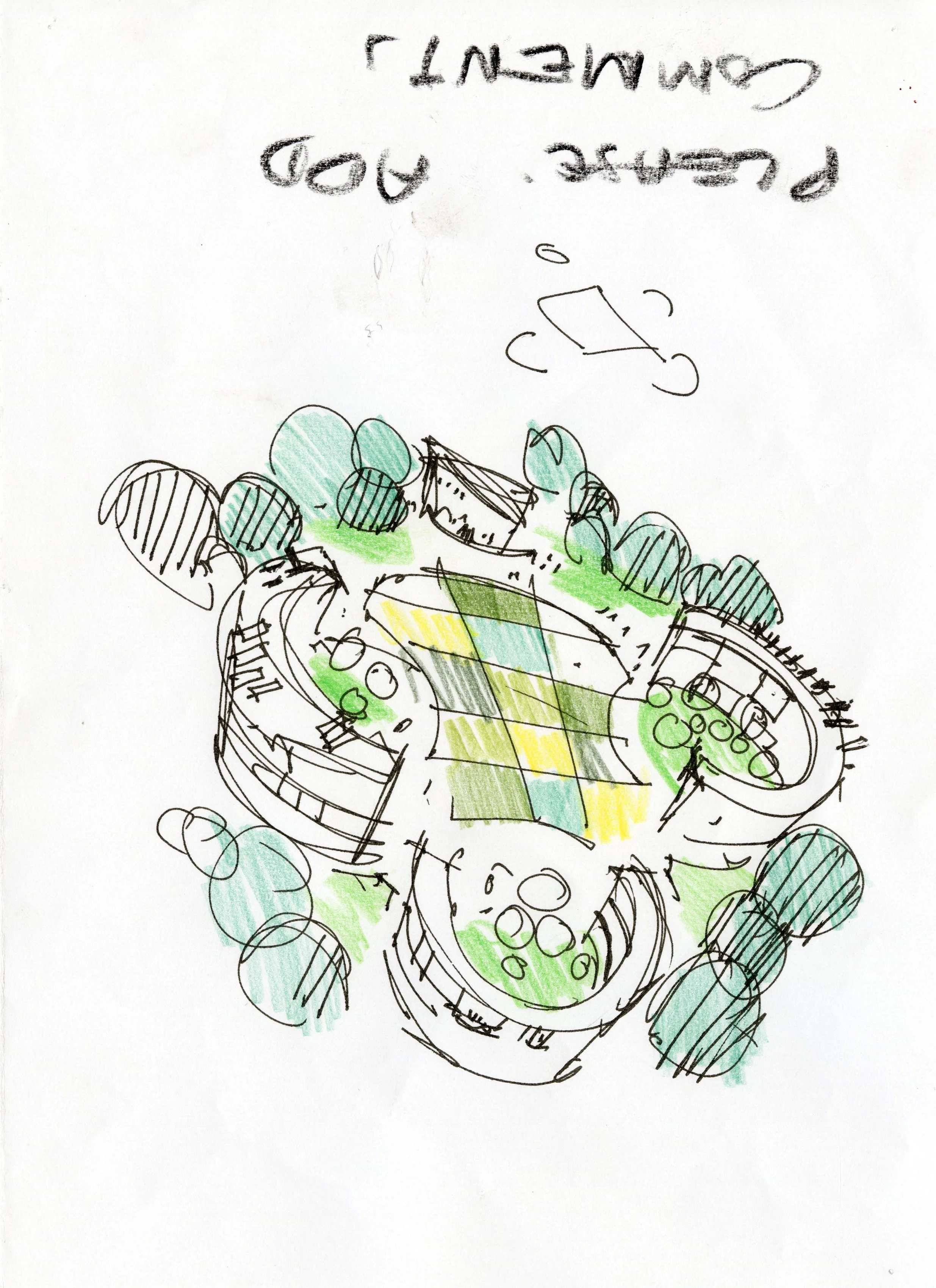
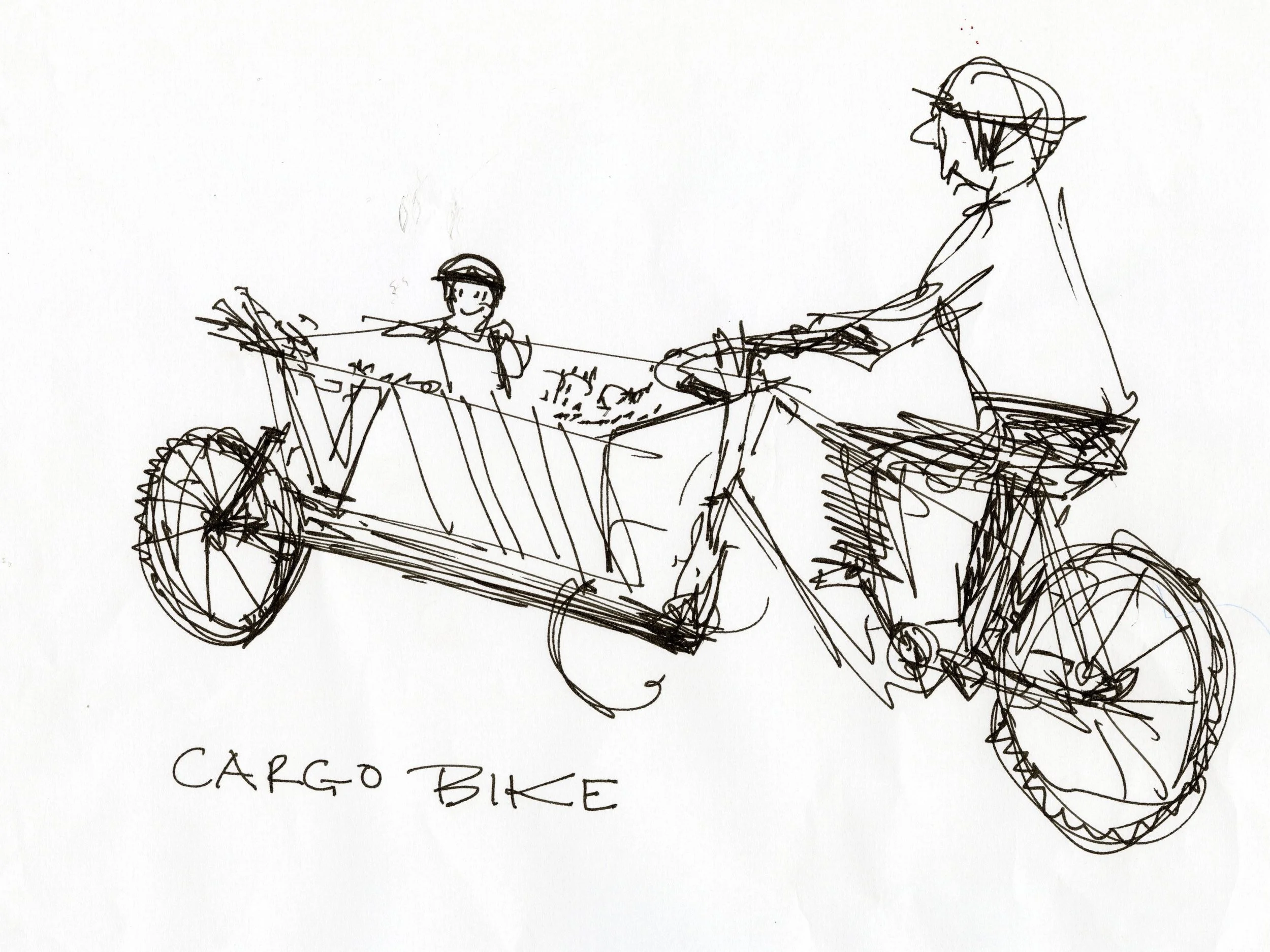
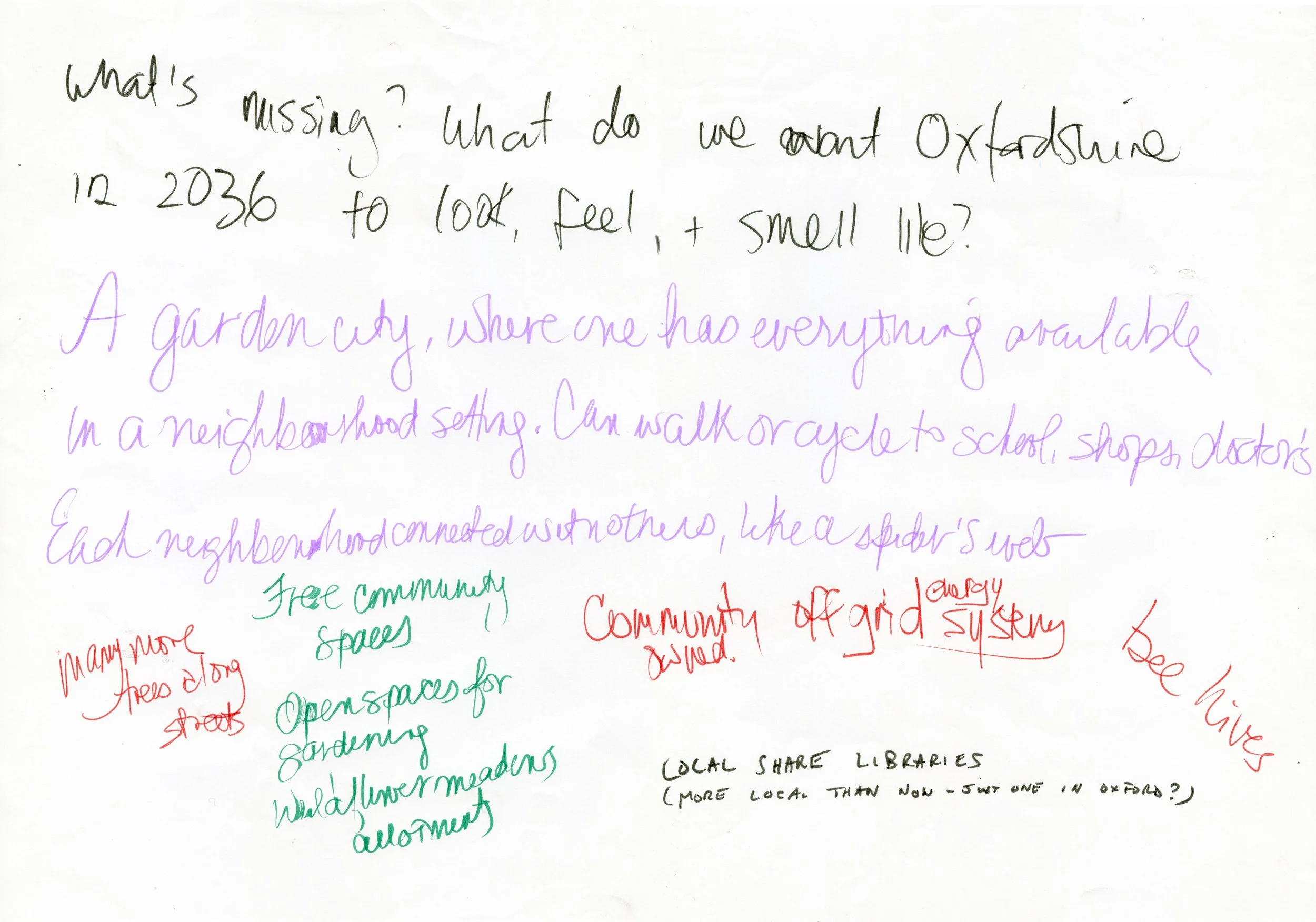
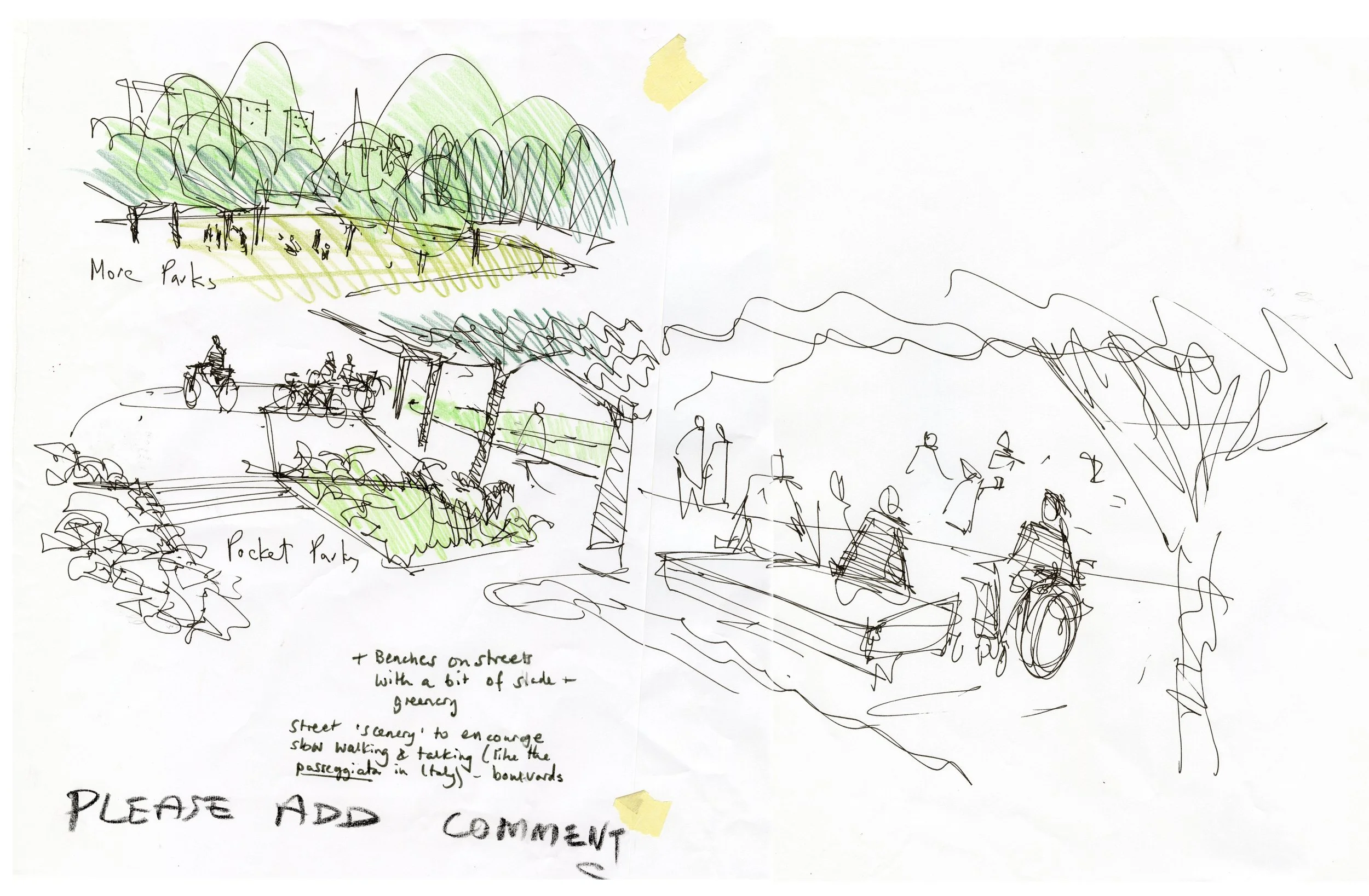
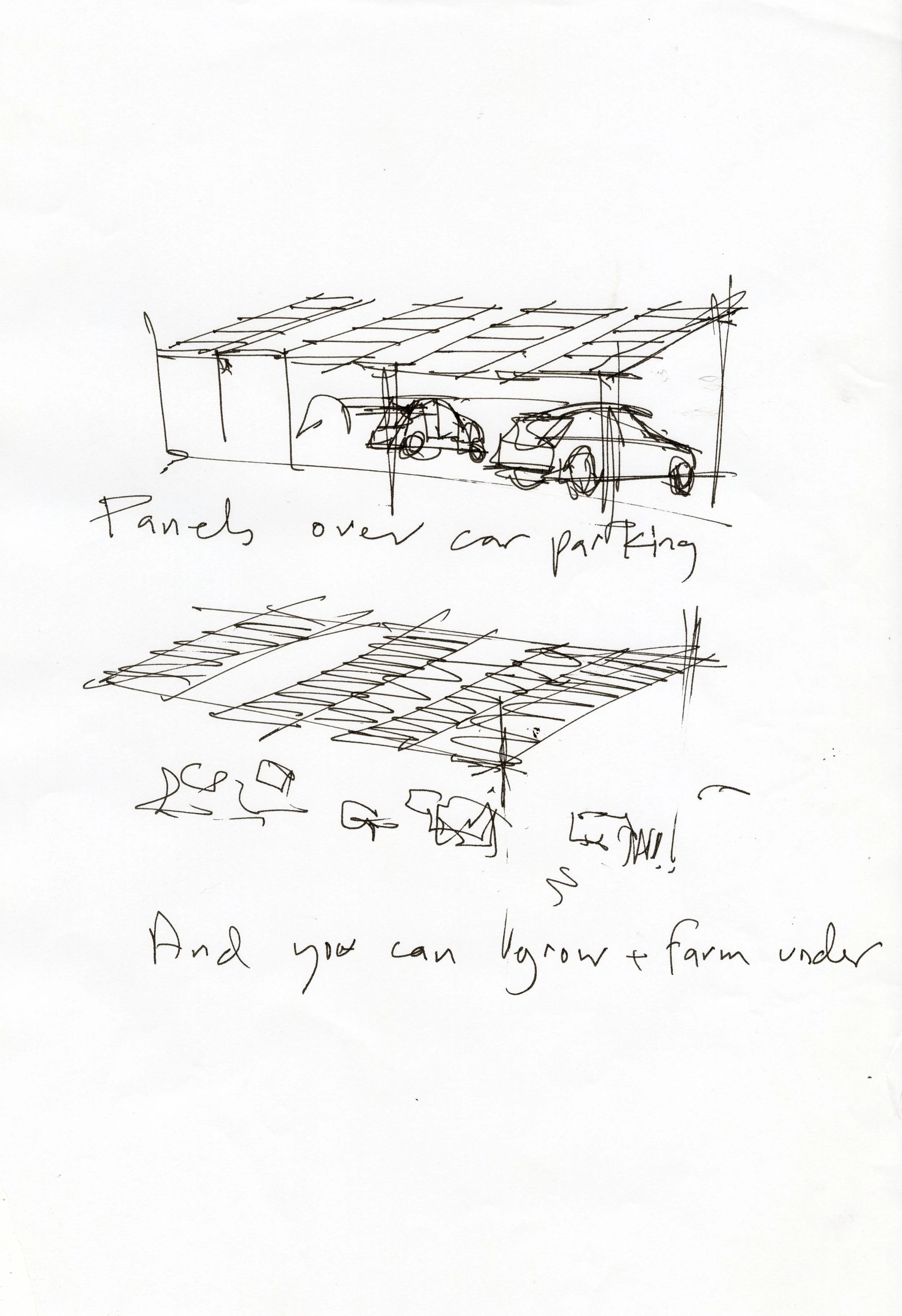
After lunch we took the energy out of the Town Hall and onto the streets of Oxford armed with one big question; "what if streets and neighbourhoods in Oxfordshire worked for everyone?”. Groups went on a ‘walk of what if’ to generate their own "What Ifs" to ladder up to it.
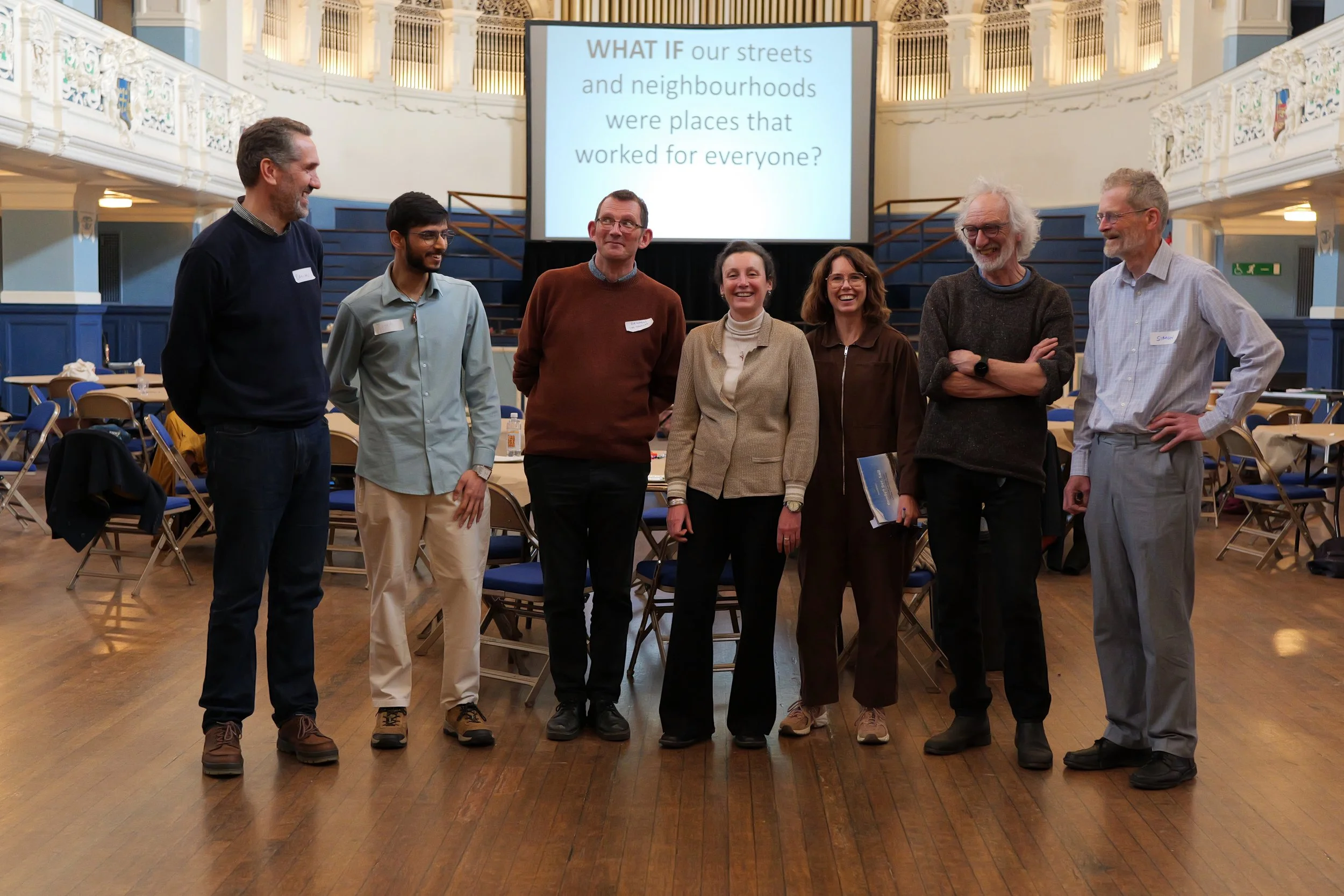
Members of the Future Streets project team and OLS board members with Rob Hopkins and Richard Carman. L to R : Damian Haywood, Suyash Sinha, Rob Hopkins, Laura DiGiacamo, Siobhann Mansel-Pleydell, Richard Carman, Simon Pratt. Photo: Keerthi Raj.
Nearly 200 What If questions filled the room when we got back. What if every street had trees? What if public transport was free? What if all schools had a food growing area integrated into the curriculum? What if bikes were supplied to those who couldn't afford cars? What if communities had control of a budget to make decisions about their own streets? What if streets became exhibition spaces - creative and playful? What if we created a cooperatively owned cycle and taxi service so good it made private cars redundant? What if in every square kilometre there was a community square - somewhere to play, chat and grow things together? What if we had edible streets? What if conveyor belts ferried people across town…?
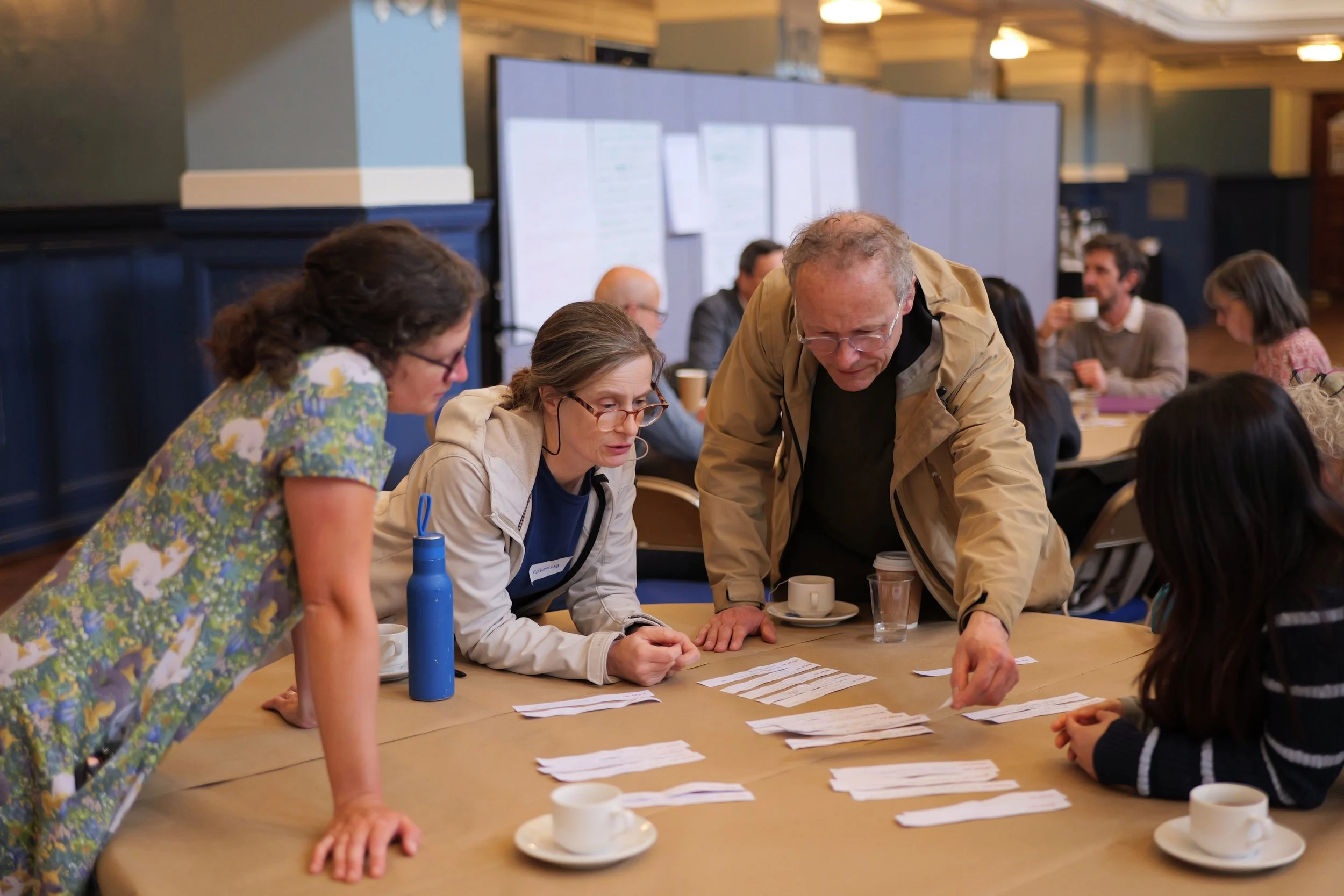
Hard at work on ‘What Ifs’. Photo: Keerthi Raj
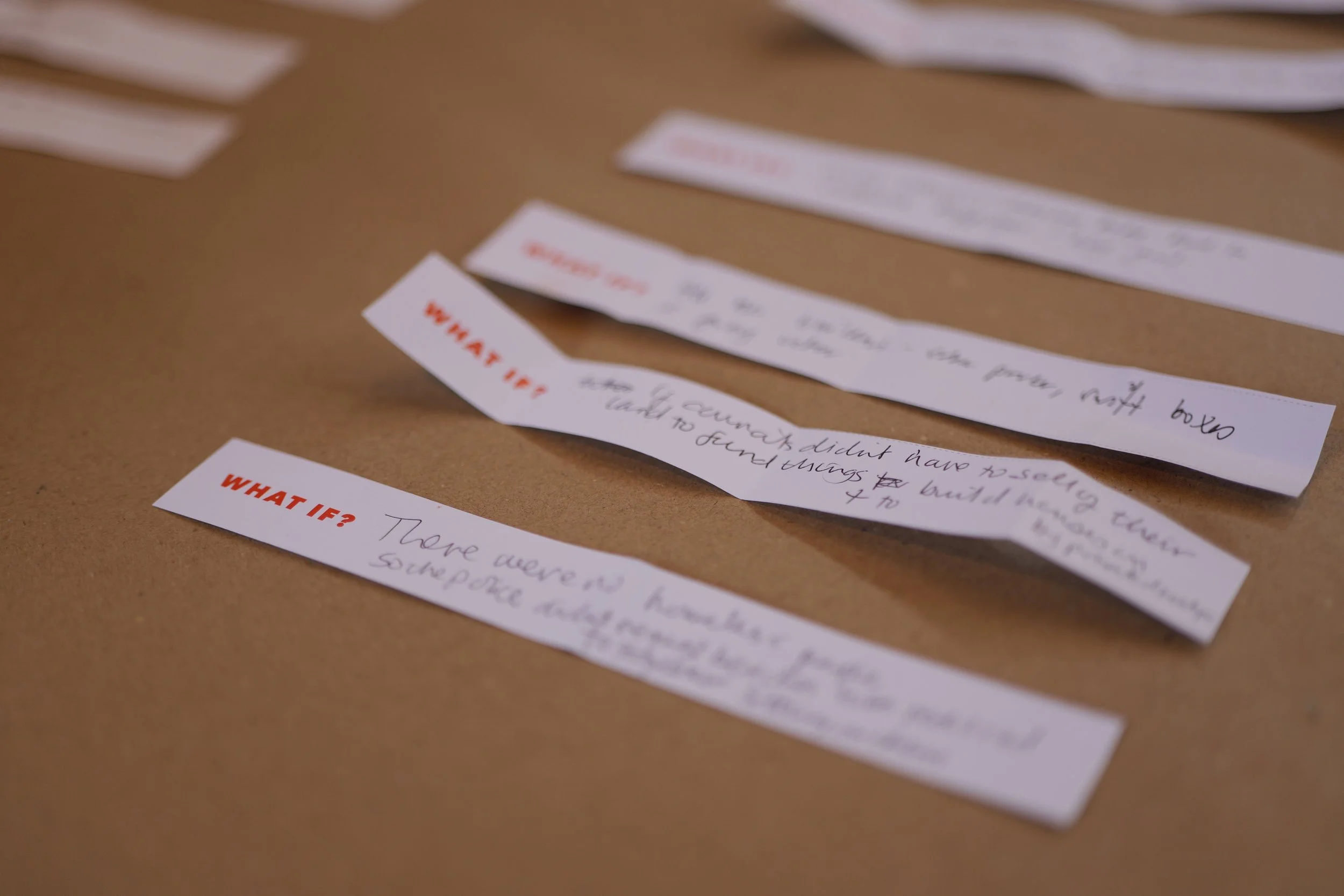
What if? Photo: Keerthi Raj
Taken together, bringing more nature, greenery and wildlife into urban spaces remained a strong theme throughout the day, alongside a positive vision of streets buzzing with people, free public transport, easy bike parking everywhere, and kids on bikes outnumbering cars and buses on the roads. A longing for more creativity, street art in public spaces also came through strongly. Community space and encounter, energy independence - rooftop solar, off-grid street energy -- and a more radical economic imagination ran through it too: cooperative ownership, community-controlled budgets, time and generosity as currency
And underneath all of it, something consistent is emerging. People don't just want different streets, they want to feel differently in them. Connected. Safe. Slow. Alive to their surroundings. When envisioning future streets and neighbourhoods, what you can't help but notice is how much LIFE there is in them when people are left to imagine freely.
If workshop 1 named what people loved about their places - what they wanted more of, less of and what they wanted to keep away - workshop 2, with the help of collective imagination, moved into a different register altogether. It was so much more about imagining a different kind of life within the street and neighbourhood and there was a tangible shift in emotional vocabulary. Belonging. Joy. Rest. Play. Being a good ancestor. Less about better street infrastructure and much more about what it would feel like to live in them.
And people went further structurally too: not just more trees, but designing with other species. Not just local food, but food woven into the built environment. Not just ‘community’, but who actually has a say in how streets and neighbourhoods are shaped.
Where to next?
“What do we DO with all this?!” I hear you ask. We're in the middle of processing of all the workshop outputs. All responses will be sorted into themes and integrated into the current catalogue of emerging themes and narratives from Workshop 1. You can now see those live in the Workshop 1 summary here . This gives you a good idea of what we’re building on.
We are also having a think about what more we can do with these incredible collages and ‘What Ifs’. The depth and richness of ideas was fairly staggering and this team want people to have full visibility. Who knows where some of these ideas might go? Watch this space on that as we’re cooking something up.
Practically speaking, the next stage of the Future Streets Oxfordshire series is where the work starts to shape something more concrete -co-designing indicators of what thriving streets and neighbourhoods actually look, feel and function like.
The next two workshops run on two different dates so you can choose what works for you: 20 May lunchtime and 9th June early evening - set at at time that you can have dinner before or after. Register here
If you haven't joined us at all yet, there's still time.
Register your interest now and we'll email you as soon as the Eventbrite links go live.
And let’s keep our collective cogs whirring on time portals. WHAT IF we installed one in Oxfordshire…? Wales has got one.