
OLS Address to Cabinet and The Open Letter : “The congestion charge is about so much more than traffic”
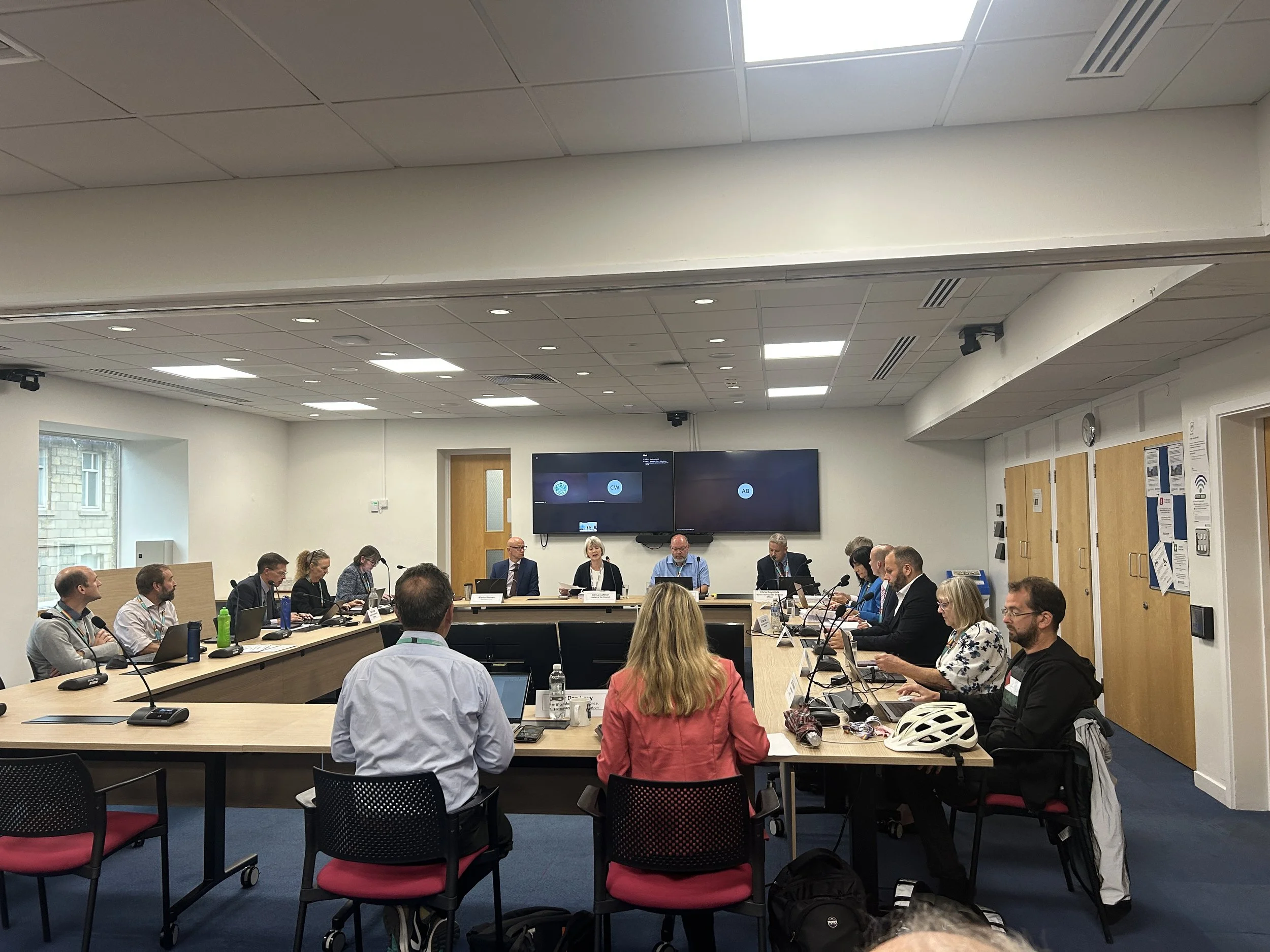
One month on from Campaign Director Siobhann Mansel-Pleydell delivering the address to Cabinet (10 September), and with the charge due to begin at the end of October, we’re publishing the address to cabinet and the open letter signed by over 40 organisations and individuals. It captures the case for action beyond simply reducing traffic congestion. We’ll follow up with a practical “what now” for residents, businesses, and partners.
—————————————————-
Cabinet Address and Open Letter – Oxfordshire Liveable Streets – 10th September 2025
Good morning Cabinet, and thank you for the opportunity to speak.
I’m Siobhann Mansel-Pleydell representing Oxfordshire Liveable Streets, and the 40+ organisations and leadership voices who signed our Open Letter in support of the proposed temporary congestion charge. This was not a petition. The letter represents careful, informed deliberation and engagement, a shared commitment to constructive dialogue, and offers a powerful signal of support for Cabinet’s leadership in this moment.
Congestion undermines liveability: not just how we move, but how we live. It affects our health, wellbeing, safety, time, and social cohesion. These are not fringe concerns. They are central to what could make Oxford and surrounding areas thriving, fair, and functioning places to live and work.
So this charge is about far more than traffic. It is a public health measure, a place-shaping tool, and a climate and equity intervention.
Tackling congestion is not only wholly aligned with the ambitions of the LTCP, it delivers cross-cutting benefits across multiple county policy areas, and is aligned with all nine priorities in OCC’s Strategic Plan.
As part of a broader suite of initiatives, It is a practical and necessary step toward better journeys, cleaner air, safer streets, and a long-term shift toward people-centred urban design that prioritises equity, health and wellbeing in a changing climate.
Our signatories understand this. The Open Letter was signed by public health leaders, climate experts, rural and community groups, business leaders and active travel advocates. It reflects a broad and deep commitment to shared values held by a quiet majority in support of bold measures
And these values are not ours alone.
Oxfordshire’s Citizens’ Assembly, one of the strongest forms of deliberative democracy, offered a rare and representative glimpse of what people across this county support when fully informed:
97% backed reducing congestion and emissions via expanded Park & Ride
88% supported car-free streets and bus prioritisation
A clear majority saw the need for both incentives and disincentives to shift behaviour — including a congestion charge.
Perhaps the greatest threat to progress in this county is the politicisation of policies that sit at the intersection of climate, health, and social equity. That’s why your leadership now matters more than ever.
But even in a noisy landscape - rife with polarisation, misinformation and politicisation - support holds.
We appreciate it might take time to get it right. But systems change is hard. It’s messy. It takes courage and a lot of listening, learning, and adapting.
And Oxfordshire has what it takes.
You’ve already created some of the most ambitious plans in the country. Now is the time to implement them.
As Martin Reeves said back in 2024 at Together100: “If Oxfordshire can’t do it, no one can.”
He was talking about the green transition — but it applies here too.
And so today, we urge you: stay the course.
Deliver the scheme.
Monitor. Learn and adapt.
Oxfordshire is ready.
——————————-
The Open Letter and Signatories July/ August 2026
Dear Members of Oxfordshire County Council Cabinet,
We, the undersigned voices and organisations representing health, business, healthy place-shaping, active travel, environmental and social justice interests across Oxfordshire, add our voices in support for the proposed temporary congestion charge.
This is not a small step. It’s a necessary and timely one, and we stand together in welcoming it.
Beyond congestion: this is about fairness, health, and how we share our city. Congestion traps buses in the same delays as cars, makes cycling to work or school more dangerous, and pollutes the air for pedestrians and neighbourhoods. It restricts access to safe, reliable and affordable journeys, especially for those who rely on public transport and active travel.
When roads are gridlocked, everyone loses but especially people on lower incomes doing vital work in our city, from care workers and NHS staff to local traders and teachers.
This temporary charge helps flip the balance. It’s a progressive step that frees up road space for those who genuinely need to drive - like Blue Badge holders, unpaid carers and community workers - while reinvesting an estimated £3.7 million a year into cheaper and better bus and park and ride services for those who need them most, both within and outside of the city.
Better journeys, fairer choices, resilient futures
When we prioritise buses and make space for efficient, inclusive travel, we create a transport system that works better for everyone. It’s a step toward a city that’s fairer, healthier, climate-resilient, and future-fit.
We see this proposal not as an end in itself, but as a step towards delivering better, more reliable journeys for everyone, cleaner air and safer streets, more choice, and - critically - a long-term shift towards people-centred urban design that prioritises equity, health and wellbeing in a changing climate.
A test of our courage and collective values
This decision is about so much more than traffic. It’s a test of our shared ability to make the fair, practical changes that a healthy, low-carbon future demands.
In a time when the impacts of climate breakdown are becoming increasingly visible, these local steps toward cleaner air, fewer car journeys, and better shared and public transport are how real progress is made.
It might not be perfect. But if we can’t support a decongestion measure that delivers cleaner air, better buses and fairer mobility, how will we find the courage to face the even harder choices ahead?
A moment to unite behind a better Oxford
The public consultation offers an opportunity to unite around a shared vision: a fairer Oxford that works better for residents, businesses, and future generations.
Our organisations work every day with communities across the county. We know that people care deeply about health, fairness, climate, and freedom of movement. The proposed charge aligns with these values, and with the recommendations of Oxford’s Citizens’ Assembly, which offers a rare and representative glimpse of what Oxfordshire residents support when fully informed.
We urge Cabinet to stay the course, to continue building trust, and to see this step not as a standalone measure, but as part of a broader transformation — toward cleaner, calmer, more connected streets that put fairness and social justice at their heart.
SUPPORTING COMMENTS
Professor Lord John Krebs, Crossbench Peer
"Air pollution causes about 30,000 deaths a year in the UK. The congestion charge is about saving lives and protecting our children."
Emily Lewis-Edwards, Co-CEO, Community First Oxfordshire
“Congestion in Oxford needs to reduce, and this is a way to do it. We fully endorse the ringfencing of investment to improve current public transport services, particularly buses, so that we can all benefit from the congestion charges.”
Melanie Tattersall, Director of Sustainability and Communications, Darcica Logistics Ltd
"We all need to take bold measures to reduce our impact and create a cleaner, greener Oxford for everyone - driving towards a better future."
Anne Maclachlan, Trustee, Climate Collective Oxford
"This is an important temporary move to ease traffic in the city. We need to get our bus services reliably back on timetable and make active travel for pedestrians and cyclists safer. We support long-term change that puts fairness, health, and clean air at the centre of Oxford’s future."
Lisa Warne, Director, CPRE Oxfordshire
“Bold decongestion measures are vital to protect Oxfordshire’s countryside and communities. By reducing traffic and pollution, we can safeguard rural landscapes, promote sustainable travel, and enhance quality of life, all are central to CPRE Oxfordshire’s mission of a thriving countryside for everyone, now and for future generations”.
Tom Hunt, Head of Secretariat, Sustainable Urban Freight Association (SUFA)
We are delighted to support Oxford council’s progressive measures to tackle congestion. The freight sector provides crucial services throughout cities, from consumer and business deliveries to waste management. SUFA welcomes initiatives that improve air quality, enable sustainable transport and support businesses.
Pete Sudbury, Climate Leader and Former Deputy Leader, Oxfordshire County Council
"Responsible politicians know we urgently need solutions to congestion; the rest are quick to complain about congestion, and quicker to oppose any suggested solution. We all know we need a mass shift from private car to public transport. Congestion charging is the best solution yet; it deserves support now, in Oxford, and in the future, across the whole County."
Rachel Stancliffe, CEO, The Centre for Sustainable Healthcare
“Air pollution in Oxford from traffic has significant impacts on public health, contributing to over 300 deaths every year from lung and heart problems, and also affecting mental health. Those most affected are the young and elderly. Studies show that living near busy roads increases the risk of hospitalization for stroke and stunts lung growth in children so any efforts to reduce vehicle use and congestion in Oxford and encourage public and active transport should be welcomed as a positive health intervention.”
Dr Sue Roberts, Chair, Bioabundance CIC
"We need a modern, clean City of Oxford. Bioabundance CIC comprises over 200 Oxfordshire organisations and individuals: parish councils, councillors at all levels, MPs, planners, ecologists, and concerned citizens. We seek the restoration of nature to its best state since 1970; alongside climate action. Reducing car traffic is paramount and will save thousands of lives from toxic air fumes."
Chris Church, Oxford Friends of the Earth
"Oxford needs a public transport system that works well for everyone — but at present our buses are often badly delayed. This new approach will improve access and journey times for buses and those who really need to drive around the city, giving us faster journeys and cleaner air — it is a good step forward."
Trustees of Low Carbon Oxford North
"The temporary congestion charge is expected to cut traffic, giving priority to essential car use while generating money for faster, cheaper buses and safer cycling and walking. It’s a win-win for the city and for the climate."
John Tranter, Wantage and Grove Active Travel
Many people in Wantage & Grove commute daily to Oxford. These changes will help them in their journeys and hopefully incentivise them to consider public transport options
Jake Swinhoe, Director, Velocity Cycle Couriers
"One of the key missions of Velocity is to help reduce congestion and air pollution in our city, so a fairly administered congestion charge seems like a positive and highly rational move for Oxford."
Paul Bonser, Banbury Active Travel
"It's great to see Oxford flying the flag for active travel and it provides a brilliant model and inspiration for the market towns in the county."
Kevin Hickman, Director, Windrush Bike Project
"This is an opportunity to assess and learn from a small-scale intervention aimed at improving our health and wellbeing sooner rather than later."
Eleanor Watts, Director, Rose Hill and Iffley Low Carbon
"To reduce air pollution and traffic accidents, we need to make it easier for motorists to switch to public transport, cycling or walking. This means buses should be more reliable and frequent. The proposed measures will do for Oxford what the congestion charge has done for London — make it a safer and cleaner city."
Rosie Pearson, Oxfordshire resident and District councillor, WODC
“It's time to move towards a vision of a future with cleaner air and greater freedom to move for everyone”.
Dr Alison Hill MBE, Public Health Doctor, Cycling Advocate
Reducing motor traffic will encourage more people to walk or cycle for everyday journeys. - Physical activity is the best public health intervention there is and better than any medicines!
Christine Collin, Trustee, Bike Safe
“A no brainer! Fewer cars will make our streets safer cleaner, more pleasant, and more accessible for everyone, including those on foot, in wheelchairs or on push bikes”
Caroline Townsend, Abingdon Carbon Cutters
"We support active travel and use of public transport to reduce carbon emissions and make our population fitter."
Roger Postbeschild, Chair, Cycling UK
Oxford is already a city with a strong cycling culture, but cycling still has space to grow compared to Cambridge and European comparators. We support this measure because it will make the roads safer and more accessible for cycling by a wider diversity of people.
Robin Tucker, Co-Chair, CoHSAT
"High levels of traffic slow down buses and essential services, make healthy active travel less safe, pollute the air, and damage the climate. All these effects have the worst impacts on the most disadvantaged in society. We need to unblock the congestion, return the streets to the people, and allow their safe and reliable use by effective transport for everyone."
Luke Marion, Managing Director, Oxford Bus Company
"The proposed congestion charge will be a game-changer for Oxford’s buses, making them faster and cheaper to operate, and allowing us to free up resources to improve services."
ORGANISATIONS & BUSINESSES
CPRE Oxfordshire - The Countryside Charity
Climate Collective Oxford
Community First Oxfordshire
Velocity Cycle Couriers
Abingdon Carbon Cutters
Jessop and Cook Architects
Pedal and Post
Darcica Logistics Ltd
Oxford Friends of the Earth
Bioabundance Community Interest Company
Sustainable Urban Freight Association
Headington Liveable Streets
Abingdon Liveable Streets
Wantage and Grove Active Travel
Low Carbon Oxford North, Trustees
Rose Hill and Iffley Low Carbon
Sustainable Kirtlington
Windrush Bike Project
Banbury Active Travel Supporters
Oxfordshire Liveable Streets
Cyclox
Bike Safe
Coalition for Healthy Streets and Active Travel
Oxford Pedestrians Association
LEADERSHIP CITIZEN VOICES
Professor Lord John Krebs, Oxford Resident and Cross Bench Peer
Rachel Stancliffe, CEO, The Centre for Sustainable Healthcare, Oxford Resident
Pete Sudbury, Climate Leader, Former Deputy Leader Oxfordshire County Council, Oxford resident
Rebecca Nestor, Co-Chair, Climate Psychology Alliance
Sian Liwicki, Founder, Bothy Vineyard Abingdon
Christine Collin, Trustee. Of Bike Safe
Dr Alison Hill MBE, Public Health Doctor and Cycling Advocate, Oxford resident
Rosie Pearson, Oxfordshire resident and District councillor, WODC
Roger Postbeschild, Chair, Cycling UK
Simon Grove-White, Oxford-based Researcher: Public Policy and Economic Development
Jack Collin, Oxford resident / Cycling UK and Sustrans
Julie Martin, Oxford resident
Grainne Darnton, Oxford resident
David Winter, Oxford resident
Hannah Kirby, Chair, Headington Liveable Headington, Director OLS
SUPPORTING SIGNATORIES FROM THE TRANSPORT SECTOR
Luke Marion, Managing Director, Oxford Bus Company
Sajad Khan, General Secretary, City of Oxford Licensed Taxicab Association (Colta)